

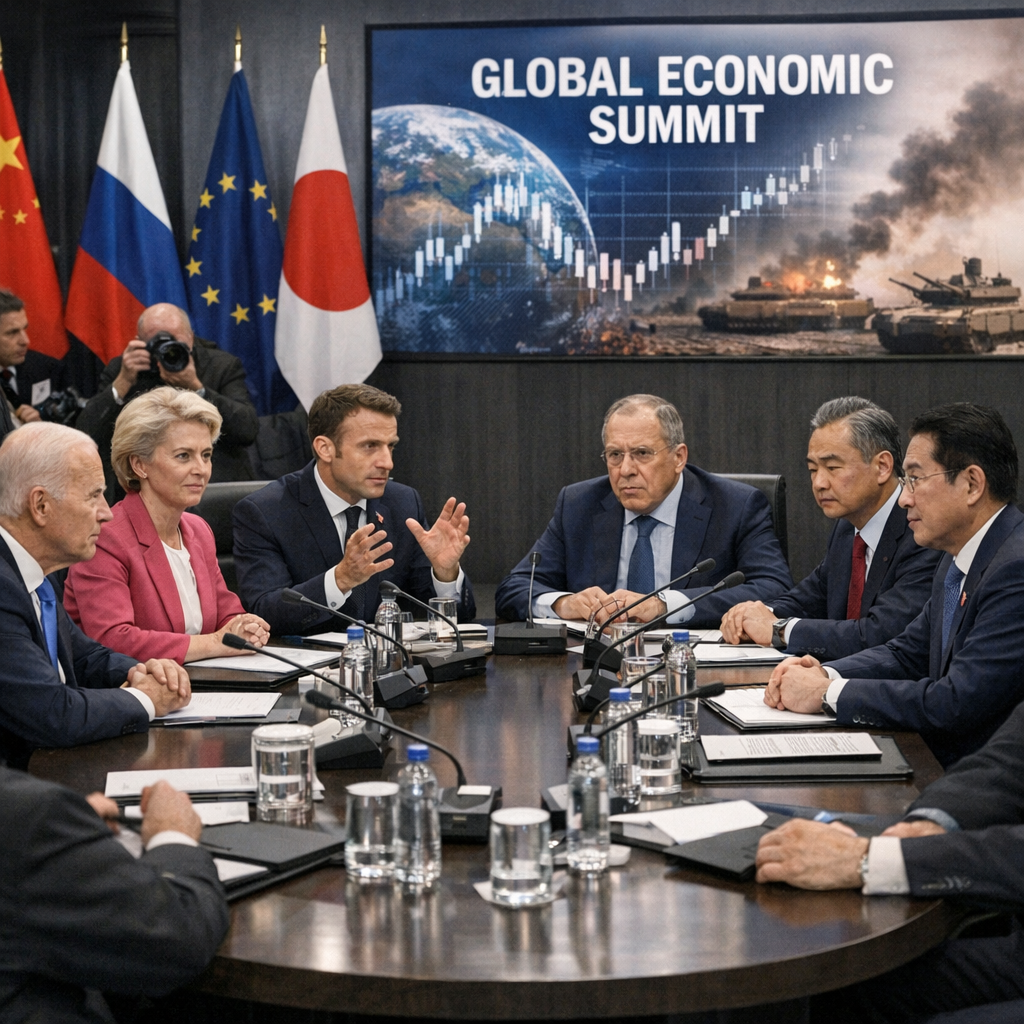
The global economy in 2026 presents a nuanced picture, characterized by moderate growth tempered by geopolitical tensions and rapid technological advancements. According to the International Monetary Fund (IMF), global economic growth is projected at 3% for the year, a slight decrease from the 3.5% observed in 2025. This slowdown is largely attributed to the ongoing conflict in Iran, which has disrupted energy supplies and led to a significant increase in oil prices.
The closure of the Strait of Hormuz by Iran, in response to military actions, has severely impacted global oil and gas supplies, causing a nearly 32% surge in oil prices. This escalation has stalled progress against inflation, posing challenges for economies worldwide. Despite these hurdles, investments in artificial intelligence (AI) and technological advancements are providing some counterbalance, fostering resilience in certain sectors.
Regional economic performances vary. The United States is expected to experience a growth rate of 2.3%, bolstered by tax cuts, productivity gains, and a robust stock market. In contrast, the eurozone faces slower growth at 0.9%, primarily due to energy challenges stemming from the Middle East conflict. China anticipates a growth rate of 4.6%, with infrastructure investments and technological exports mitigating the effects of a struggling property market. India stands out with a projected growth of 6.4%, maintaining its position as the fastest-growing major economy.
In the Middle East, the economic landscape is particularly complex. The region’s heavy reliance on oil exports makes it vulnerable to the current energy crisis. Countries like the United Arab Emirates are navigating these challenges by diversifying their economies and investing in non-oil sectors to mitigate the impact of fluctuating oil prices.
Looking ahead, the IMF forecasts a rebound in global economic growth to 3.4% in 2027. However, this outlook is contingent upon the resolution of ongoing geopolitical conflicts and the stabilization of energy markets. The current scenario underscores the importance of strategic investments in technology and infrastructure to build economic resilience in an increasingly uncertain global environment.