

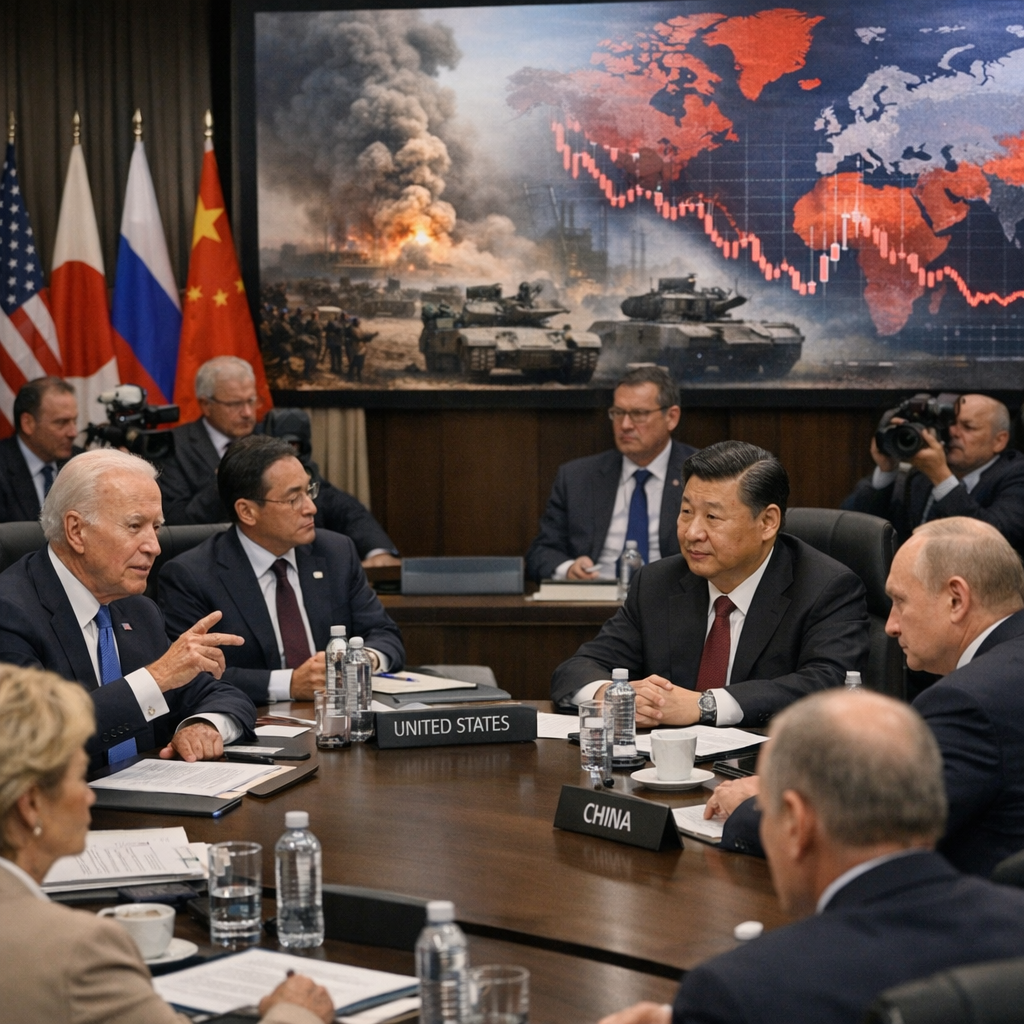
The global economy is currently navigating a complex landscape marked by geopolitical tensions and energy crises. Recent conflicts in the Middle East have disrupted oil exports, leading to a surge in energy prices and inflationary pressures worldwide. The International Monetary Fund (IMF) has revised its 2026 global economic growth forecast down to 3%, citing the economic impact of the Iran war and the resulting spike in energy prices. This projection is lower than the 3.5% growth seen in 2025 and the earlier 3.1% forecast for 2026. The conflict caused Iran to shut the Strait of Hormuz in response to U.S. and Israeli attacks, severely disrupting global oil and gas supply and pushing oil prices up by nearly 32%, which stalled progress against inflation. Despite the geopolitical tensions, the negative impact is partly balanced by increased investment in artificial intelligence and technological advancements.
In the United States, the economy remains relatively resilient due to strong domestic energy production and investments in AI, defense, and energy, supporting a projected GDP growth of 2.1%. However, consumers are tightening spending due to rising inflation and unemployment. Europe is experiencing stagflation, with eurozone growth predicted at just 0.8% and energy costs severely impacting industrial output, especially in Germany and the U.K.
India stands out with 6.5% growth, driven by strong domestic momentum, while China slows to 4.5% amid ongoing real estate issues but gains in green-tech and AI exports. Japan will see minimal growth at 0.4%. Latin America faces pressure from weaker Chinese demand, tighter U.S. monetary conditions, and rising fuel costs.
Interest rates are unlikely to drop soon due to added inflation concerns. Central banks remain cautious, and U.S. private credit markets are showing early signs of distress, particularly in software loans, potentially marring investor sentiment later in the year.
In this uncertain environment, businesses and policymakers must remain vigilant, adapting strategies to mitigate risks associated with geopolitical developments and energy market volatility. Emphasizing investments in technology and sustainable energy sources may offer pathways to resilience and growth amidst these challenges.