

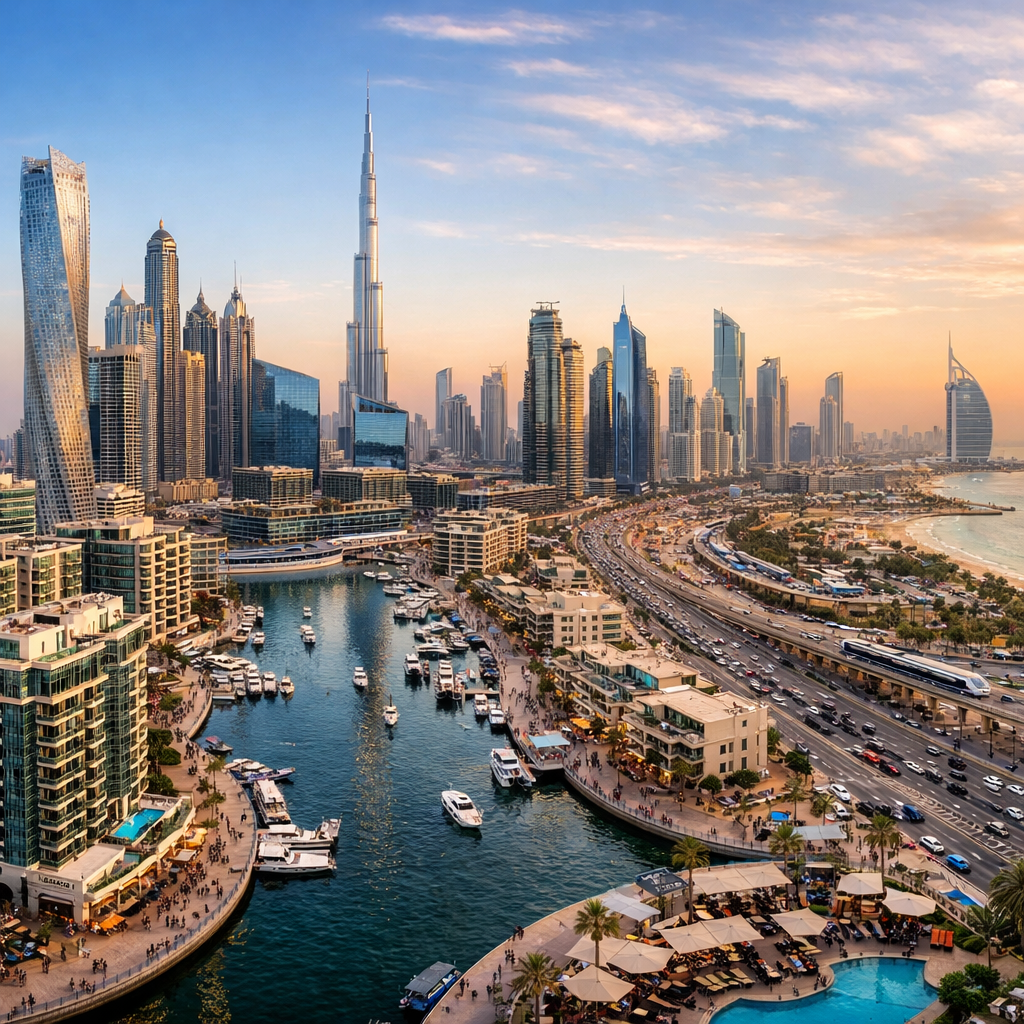
Dubai’s real estate market continues to evolve, reflecting the city’s dynamic growth and the diverse needs of its residents and investors. Understanding current trends in property sales, rentals, and new developments is essential for making informed decisions in this vibrant market.
Market Trends: A Shift Towards Homeownership
Recent data indicates a notable shift from renting to buying among home-seekers in Dubai. The share of sale-listing impressions increased from 47% in 2024 to 49% in 2025, while rental impressions declined from 53% to 51%. This trend is driven by favorable long-term residency policies, such as the UAE Golden Visa, and initiatives like Dubai’s First-Time Home Buyer Programme, which has facilitated over 2,000 residents in purchasing their first homes, contributing more than AED 3.25 billion in residential property sales.
Rental Market: Competitive Yet Stable
Dubai’s rental market remains competitive, with average gross residential rental yields standing at 6.58% as of July 2026. Apartments yield an average of 6.9%, townhouses 5.1%, and villas 4.5%. While rental growth has moderated compared to previous years, continued population growth and inward migration support healthy occupancy levels across many established communities.
Development Projects: Expanding Horizons
The off-plan market is a significant driver in Dubai’s real estate sector, accounting for 62% of all transactions in Q1 2026. Developers have responded with an unprecedented volume of new launches, introducing over 28,000 new residential units in Q1 2026 alone. Major master-community launches include new phases in Dubai South (Expo Living), MBR City (District 11), and Dubailand, reflecting the city’s commitment to expanding its housing options.
Conclusion
Dubai’s real estate market is characterized by a shift towards homeownership, a competitive yet stable rental environment, and a robust pipeline of new developments. Staying informed about these trends is crucial for residents and investors aiming to navigate the city’s dynamic housing landscape effectively.