

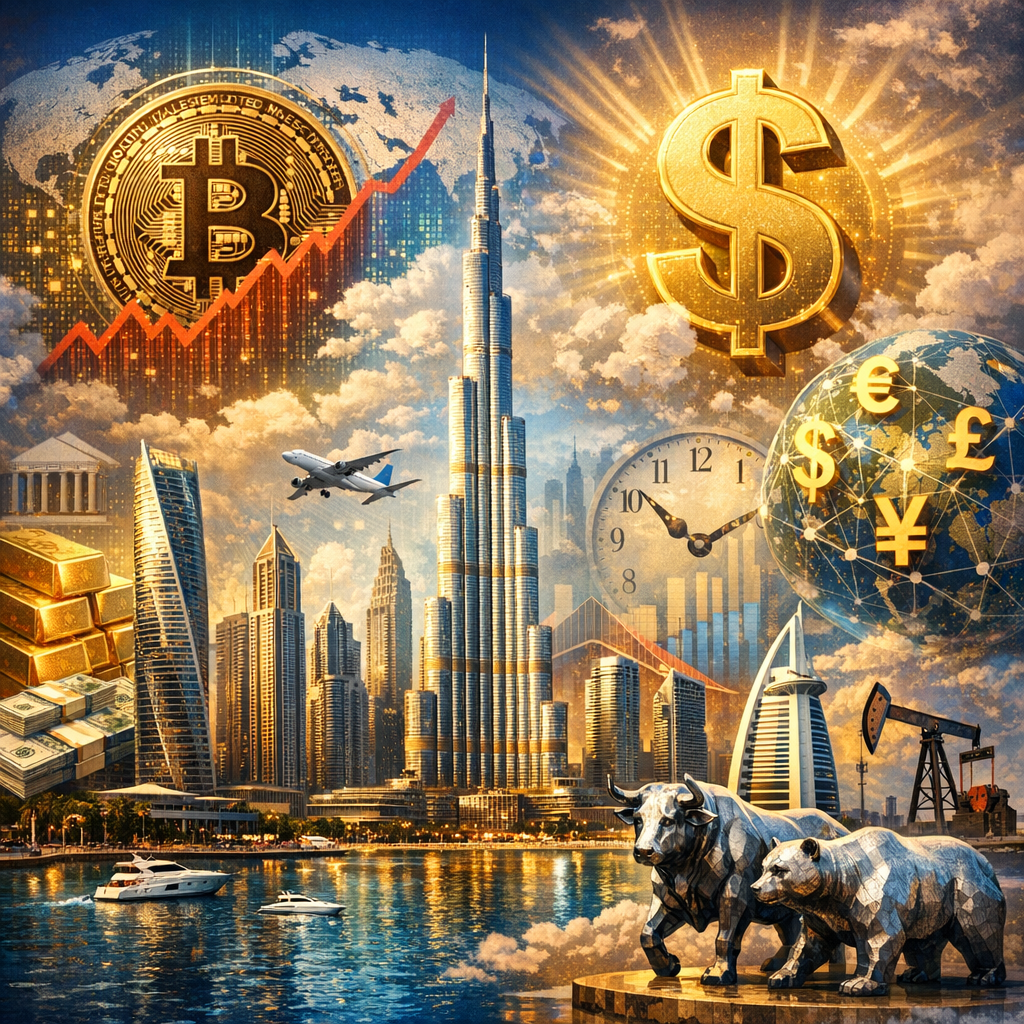
The global economic landscape is undergoing significant transformations, influenced by geopolitical tensions, technological advancements, and shifting trade dynamics. Understanding these changes is crucial for Dubai, a city deeply integrated into the global economy.
Global Economic Outlook
Recent forecasts indicate a moderation in global economic growth. The International Monetary Fund (IMF) projects a global growth rate of 3% for this year, a slight decrease from the previous year’s 3.5%. This slowdown is attributed to factors such as geopolitical conflicts and energy market disruptions. Despite these challenges, investments in artificial intelligence and technological innovations are providing some counterbalance to the economic deceleration.
Impact on Dubai’s Economy
Dubai’s strategic position as a global trade and financial hub means that global economic trends have direct implications for its economy. The city’s diversified economy, encompassing sectors like tourism, real estate, and finance, is both a strength and a vulnerability in the face of global shifts.
Energy Market Volatility
Fluctuations in global energy prices can influence Dubai’s economic performance. While the city is not a major oil producer, its economy is intertwined with the broader Gulf Cooperation Council (GCC) region, where energy exports play a significant role. Rising energy prices can lead to increased operational costs and impact sectors such as aviation and logistics.
Technological Advancements
The global emphasis on artificial intelligence and digital transformation presents opportunities for Dubai. The city’s commitment to becoming a smart city aligns with these global trends, potentially attracting investments and fostering innovation. However, it also necessitates continuous upskilling of the workforce to remain competitive.
Trade Dynamics
As global trade patterns evolve, Dubai’s role as a logistics and trade hub may be affected. Changes in trade agreements, tariffs, and supply chain strategies can influence the volume and nature of goods passing through the city’s ports and free zones.
Strategic Considerations
To navigate these global economic shifts, Dubai may consider the following strategies:
- Diversification: Further expanding non-oil sectors to reduce dependency on any single industry.
- Innovation: Investing in research and development to foster a knowledge-based economy.
- Resilience Planning: Developing policies to mitigate the impact of global economic fluctuations, ensuring sustainable growth.
By proactively addressing these areas, Dubai can position itself to adapt to global economic changes and continue its trajectory as a leading global city.