

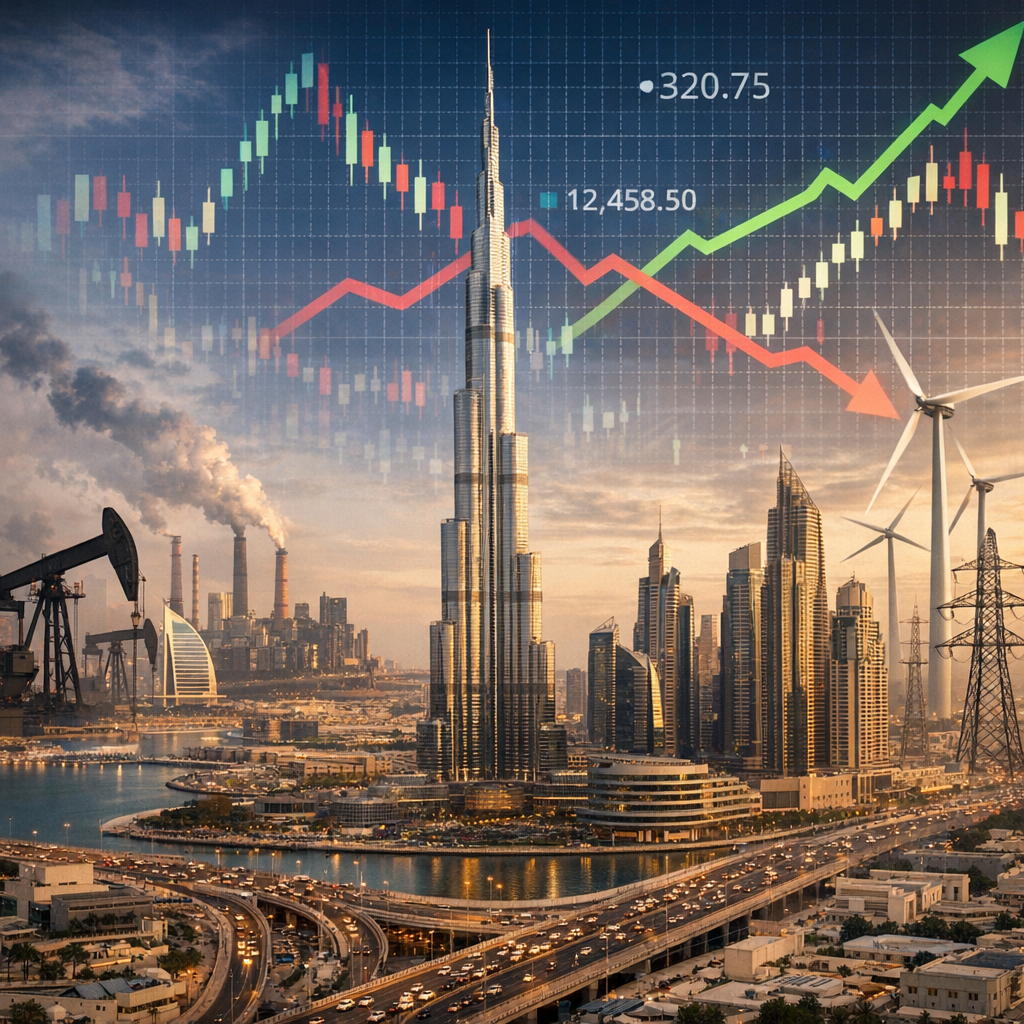
The global economic landscape is undergoing significant transformations, influenced by geopolitical tensions, energy market disruptions, and rapid technological advancements. These developments have far-reaching implications for economies worldwide, including Dubai’s.
Global Economic Outlook
Recent forecasts indicate a slowdown in global economic growth. The International Monetary Fund (IMF) projects a growth rate of 3% for this year, a decline from the previous year’s 3.5%. This deceleration is largely attributed to geopolitical conflicts, notably in the Middle East, which have disrupted energy supplies and escalated inflationary pressures. The Organization for Economic Cooperation and Development (OECD) echoes this sentiment, highlighting that the ongoing conflict in the Middle East has become a dominant factor shaping global economic prospects, leading to an energy shock that is driving inflationary pressures and adversely impacting growth.
Impact on Energy Markets
The Middle East conflict has led to significant disruptions in energy production and trade, particularly affecting Gulf economies. The OECD outlines two scenarios: a time-limited disruption where energy markets gradually stabilize, and a prolonged disruption scenario with persistent energy price hikes and supply shortages. Both scenarios pose challenges for energy-dependent economies.
Technological Advancements and Economic Resilience
Amid these challenges, technological advancements, especially in artificial intelligence (AI), are providing some economic resilience. Increased investment in AI and related technologies is bolstering productivity and offering new avenues for growth. The IMF notes that despite geopolitical tensions, the negative impact is partly balanced by increased investment in artificial intelligence and technological advancements.
Implications for Dubai
Dubai’s strategic position as a global trade hub and its diversified economy make it both susceptible to and capable of navigating these global economic shifts. The energy market disruptions may impact sectors reliant on stable energy prices, while the emphasis on AI and technology aligns with Dubai’s vision of becoming a leading smart city. By investing in technological infrastructure and fostering innovation, Dubai can mitigate some adverse effects of global economic slowdowns and position itself as a resilient and forward-thinking economy.
In conclusion, while the global economic outlook presents challenges, Dubai’s proactive approach to technological adoption and economic diversification offers a pathway to sustained growth and stability in an evolving global landscape.