

Dubai has embarked on a series of ambitious initiatives aimed at promoting environmental sustainability and addressing climate change. These efforts encompass clean energy projects, waste management strategies, and the preservation of natural ecosystems.
Advancements in Clean Energy
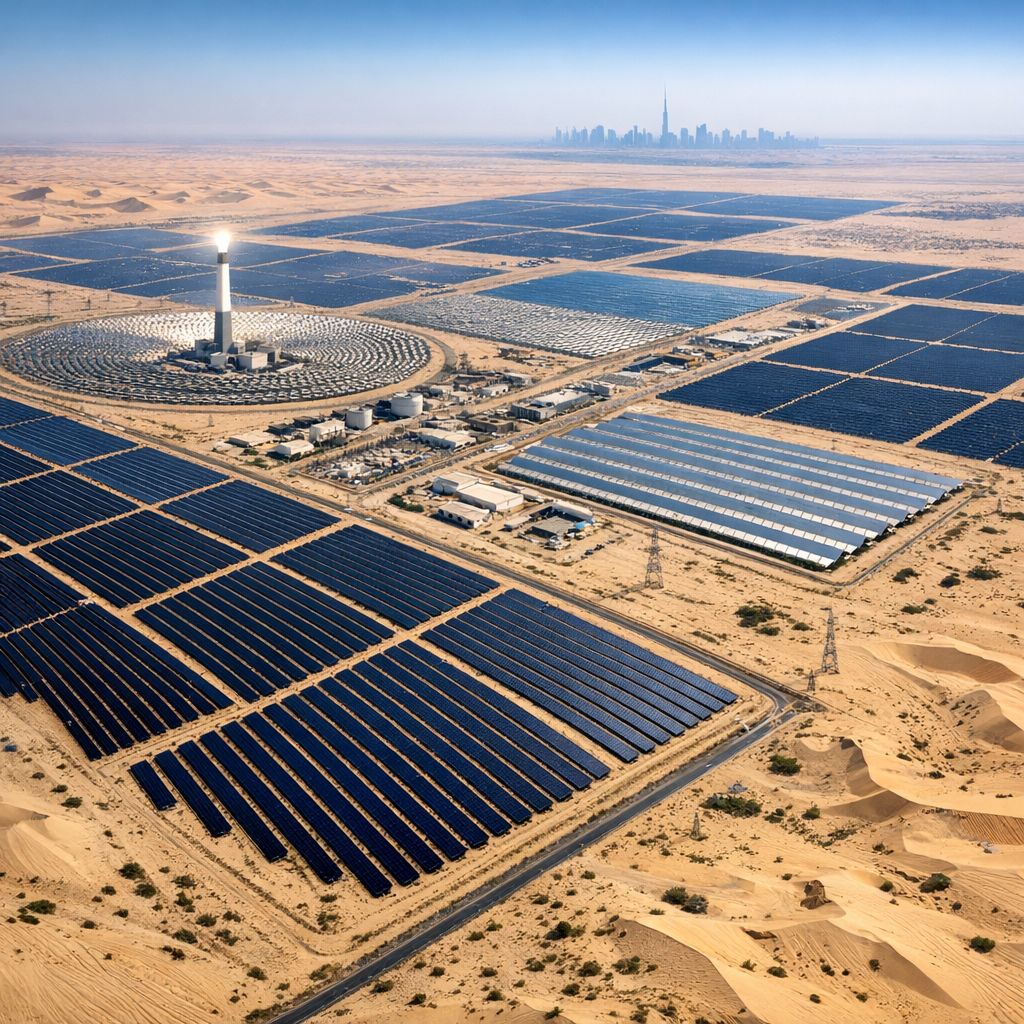
The Mohammed bin Rashid Al Maktoum Solar Park stands as a testament to Dubai’s commitment to renewable energy. As the largest single-site solar park globally, it is projected to achieve a production capacity of 5,000 MW by 2030, significantly reducing carbon emissions and supporting the emirate’s transition to a low-carbon economy.
Innovative Waste Management
In line with its sustainability goals, Dubai has implemented the Integrated Waste Management Strategy 2041. This strategy focuses on encouraging innovation in waste management, recycling, and energy conversion, aiming to minimize landfill dependency and promote a circular economy.
Preserving Natural Ecosystems
Dubai’s dedication to environmental conservation is evident in its efforts to protect and restore natural habitats. The emirate has established eight protected areas covering approximately 31% of its total area, representing diverse ecosystems such as mountains, deserts, and coastal regions. These reserves are managed with the goal of conserving biodiversity and promoting sustainable recreational activities.
Furthermore, initiatives like the planting of 216,500 new trees in 2024 have expanded green spaces by 391.5 hectares, enhancing urban landscapes and improving air quality. Advanced irrigation systems powered by recycled water have been introduced to ensure sustainable urban greening.
Through these comprehensive initiatives, Dubai continues to demonstrate its unwavering commitment to environmental sustainability, striving to create a greener and more sustainable future for its residents and visitors.