

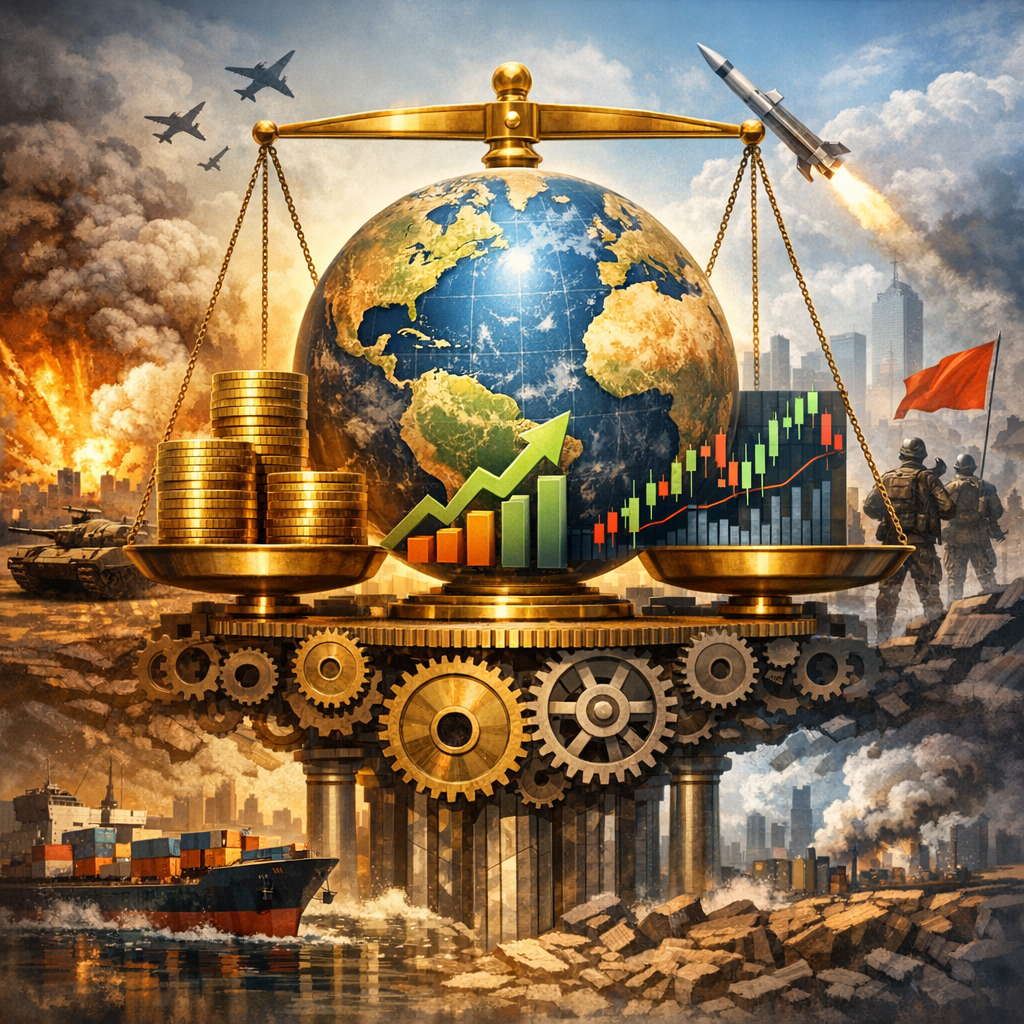
The global economy continues to exhibit resilience in the face of ongoing geopolitical tensions and policy uncertainties. Recent analyses indicate that while growth rates may moderate, strategic investments and policy interventions are providing a buffer against potential downturns.
Moderate Growth Projections
According to the World Bank’s latest Global Economic Prospects report, global growth is projected to ease to 2.6% in 2026 before rising to 2.7% in 2027. This outlook reflects better-than-expected growth, particularly in the United States, which accounts for a significant portion of the upward revision in the forecast. However, the report also notes that the 2020s are on track to be the weakest decade for global growth since the 1960s.
Regional Variations
Growth projections vary across regions. The United States is expected to experience a slight slowdown, with growth easing from 2.1% in 2025 to 2.0% in 2026, influenced by factors such as declining purchasing power and labor force dynamics. The Eurozone faces more pronounced challenges, with growth anticipated to slow from 1.4% in 2025 to 0.8% in 2026, largely due to rising energy prices. Japan’s growth is also expected to decelerate, from 1.2% in 2025 to 0.9% in 2026, as increased energy import costs offset the benefits of new fiscal policies.
Inflation and Policy Responses
Inflation remains a critical concern. The World Bank projects global inflation to edge down to 2.6% in 2026, reflecting softer labor markets and lower energy prices. However, the Organization for Economic Cooperation and Development (OECD) highlights that recent conflicts in the Middle East have led to upward revisions in inflation forecasts, with G20 countries expected to see inflation rates of 4.0% in 2026, up 1.2 percentage points from previous estimates. In response, central banks are adopting cautious monetary policies, balancing the need to control inflation with the imperative to support economic growth.
Technological Investments as Growth Drivers
Investments in artificial intelligence (AI) and digital infrastructure are emerging as significant drivers of economic activity. In the United States, capital spending on AI, data centers, power generation, and digital infrastructure remains a key growth driver. This trend underscores the importance of technological advancements in sustaining economic resilience amidst global uncertainties.
Conclusion
While the global economic landscape is fraught with challenges, including geopolitical tensions and policy uncertainties, strategic investments in technology and prudent policy measures are contributing to a resilient economic outlook. Continuous monitoring and adaptive strategies will be essential to navigate the complexities of the global economy in the coming years.