

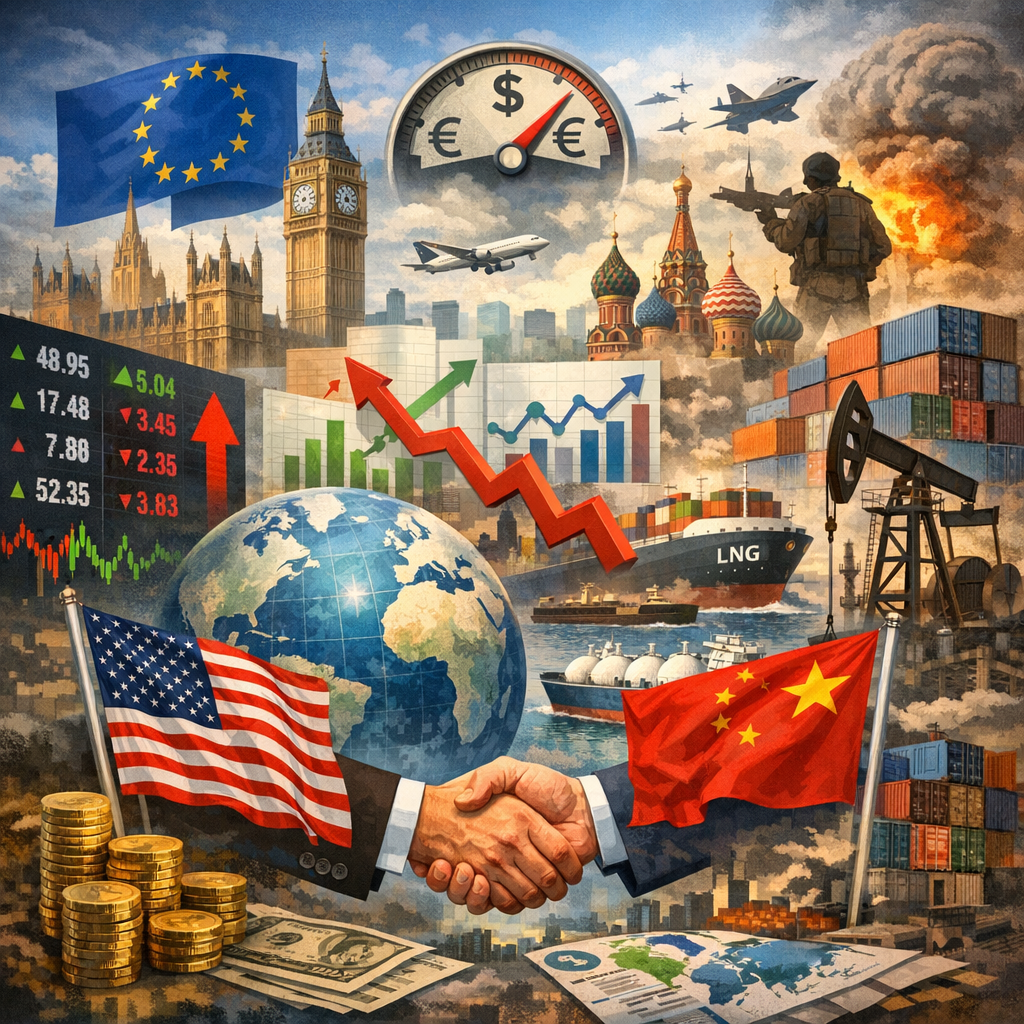
The global economy in 2026 demonstrates resilience despite facing significant challenges, including geopolitical tensions and energy crises. These factors have led to a complex economic landscape, affecting growth and inflation across various regions.
Global Growth Projections
According to the World Bank, global growth is projected to remain steady over the next two years, easing to 2.6% in 2026 before rising to 2.7% in 2027. This resilience reflects better-than-expected growth, especially in the United States, which accounts for about two-thirds of the upward revision to the forecast in 2026. However, if these forecasts hold, the 2020s are on track to be the weakest decade for global growth since the 1960s.
Regional Economic Insights
United States
The U.S. economy remains relatively resilient due to strong domestic energy production and investments in artificial intelligence (AI), defense, and energy sectors, supporting a projected GDP growth of 2.1%. However, consumers are tightening spending due to rising inflation and unemployment.
Europe
Europe is experiencing stagflation, with eurozone growth predicted at just 0.8%. Energy costs are severely impacting industrial output, especially in Germany and the U.K.
Asia
India stands out with 6.5% growth, driven by strong domestic momentum. In contrast, China’s growth is slowing to 4.5%, hindered by property sector issues but gaining in green-tech and AI exports. Japan is expected to see minimal growth at 0.4%.
Latin America
Latin America faces economic pressures from weaker Chinese demand, tighter U.S. monetary conditions, and rising fuel costs.
Inflation and Monetary Policies
Global inflation is projected to edge down to 2.6% in 2026, reflecting softer labor markets and lower energy prices. However, the energy crisis sparked by the Iran war has led to rising commodity prices and inflation, expected to reach around 4.5% globally. Central banks are likely to vary in policy: the Federal Reserve may cut rates modestly, the European Central Bank is likely to hold rates stable, and the Bank of Japan may increase them.
Conclusion
While the global economy shows signs of resilience, it continues to navigate a landscape fraught with challenges. Geopolitical tensions, energy crises, and varying regional dynamics contribute to an uncertain economic outlook. Policymakers and businesses must remain vigilant and adaptable to steer through these complexities.