

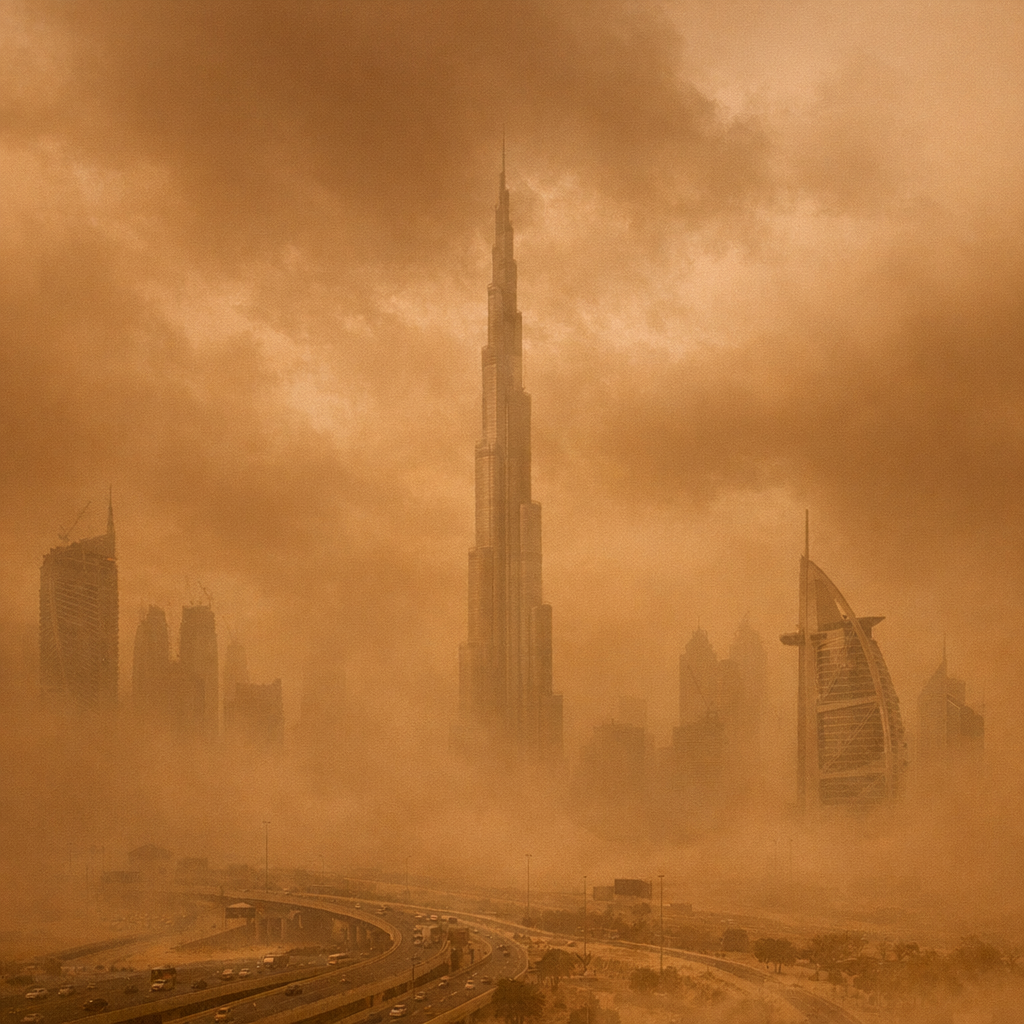
Dubai’s climate is characterized by its hot desert environment, marked by extreme temperatures, high humidity, and minimal rainfall. Understanding these patterns is essential for residents and visitors alike.
Seasonal Overview
Summer (June to September)
During summer, daytime temperatures often exceed 40°C (104°F), with highs reaching up to 50°C (122°F). Humidity levels can soar to 80-90%, especially near the coast, making outdoor activities challenging. The combination of heat and humidity can lead to a wet-bulb temperature approaching the human survivability limit of 35°C, making outdoor activity dangerous.
Winter (December to February)
Winter offers a respite with daytime temperatures ranging from 20°C to 26°C (68°F to 79°F) and cooler evenings. This period is ideal for outdoor activities, with occasional short, heavy bursts of rainfall.
Environmental Challenges
Sandstorms
Sandstorms, locally known as ‘shamal’ winds, are common during summer. These strong north-westerly winds pick up loose sand and dust, reducing visibility and affecting air quality. Such storms can last for days, prompting residents to stay indoors and causing disruptions to daily life.
Air Quality
Air quality in Dubai is influenced by natural factors like sandstorms and human activities such as traffic congestion and construction. High humidity can exacerbate the effects of pollutants, leading to health concerns, especially for individuals with respiratory conditions.
Adaptation and Mitigation
Dubai has implemented various measures to adapt to its harsh climate, including the development of extensive indoor facilities, green building initiatives, and urban planning that considers environmental sustainability. These efforts aim to mitigate the impact of extreme weather conditions and promote a more livable environment for residents and visitors.
Understanding Dubai’s climate and environmental challenges is crucial for planning daily activities and long-term strategies to ensure comfort and safety in this dynamic city.