

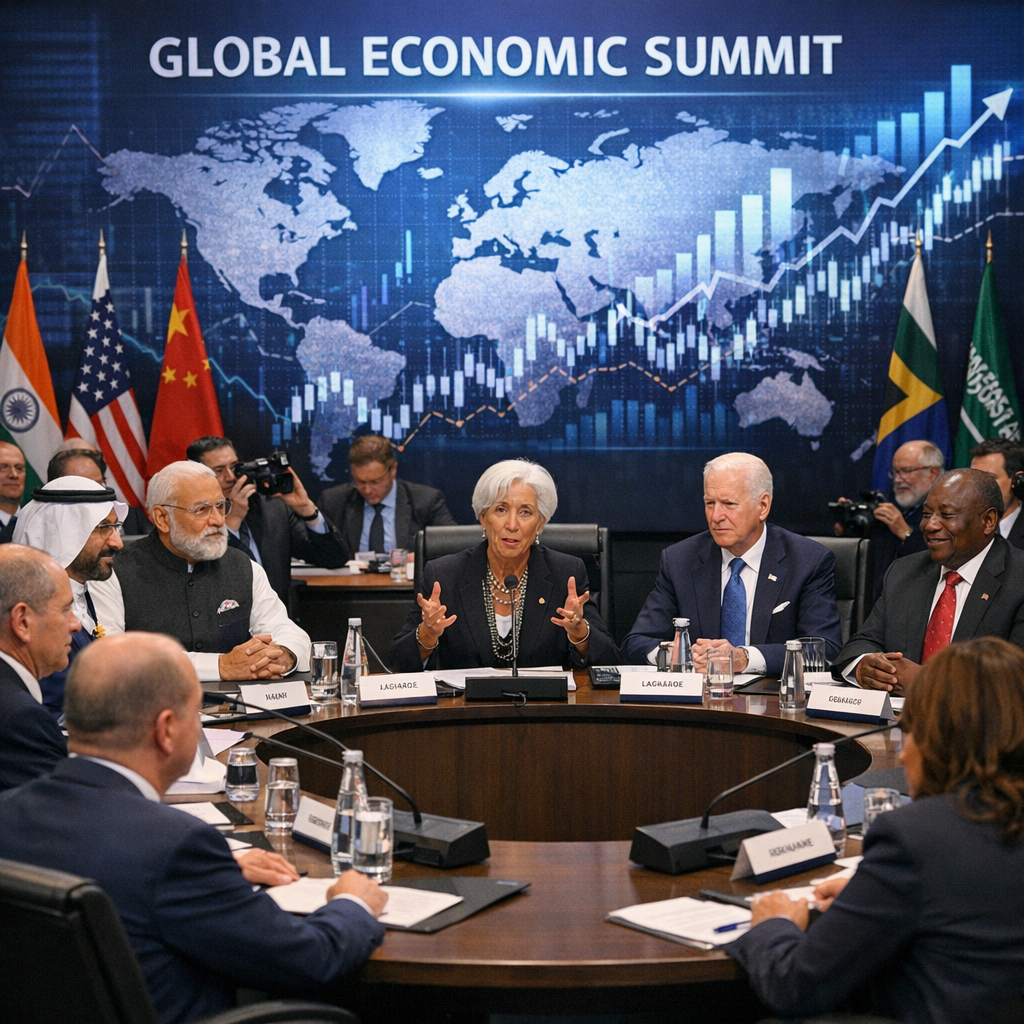
The global economy is projected to experience moderate growth in the coming years, with forecasts indicating a 3.0% increase in 2026 and a slight uptick to 3.4% in 2027. This outlook reflects a complex interplay of factors, including geopolitical tensions, technological advancements, and regional economic disparities.
Regional Economic Projections
In the United States, consumer spending and investments in artificial intelligence (AI) are expected to drive moderate growth. The U.S. economy is anticipated to expand by 2.0% in 2026, supported by resilient consumption patterns and capital expenditures in AI technologies.
Europe faces a more subdued outlook, with growth projected at 0.8% in 2026. Rising energy prices and geopolitical uncertainties are contributing to this slower pace, particularly affecting industrial output in countries like Germany and the United Kingdom.
Asia presents a mixed picture. India is poised for robust growth, with projections of 6.4% in 2026, driven by strong domestic demand. Conversely, China’s growth is expected to slow to 4.5%, influenced by challenges in the property sector and a shift towards green technologies and AI exports.
Impact of Technological Innovations
Technological advancements, particularly in AI, are playing a pivotal role in shaping the global economic landscape. Increased capital spending on AI, data centers, and digital infrastructure is anchoring growth in several economies. However, the rapid expansion of AI technologies also brings challenges, including potential disruptions in labor markets and the need for regulatory frameworks to manage ethical considerations.
Geopolitical Tensions and Energy Markets
Geopolitical conflicts, notably in the Middle East, have led to disruptions in oil exports, resulting in rising commodity prices and inflationary pressures. The global inflation rate is expected to reach approximately 4.5% in 2026, influenced by these energy market dynamics. Economies heavily reliant on energy imports are particularly vulnerable to these fluctuations.
Policy Responses and Future Outlook
Central banks are navigating a delicate balance between controlling inflation and supporting economic growth. While some regions may see interest rate cuts to stimulate activity, others remain cautious due to persistent inflationary pressures. The global economic outlook remains fragile, with uncertainties stemming from geopolitical developments, technological disruptions, and varying regional performances.
In conclusion, while the global economy demonstrates resilience, it faces a landscape marked by uncertainty. Policymakers and businesses must remain agile, adapting to technological changes and geopolitical shifts to foster sustainable growth in the years ahead.