

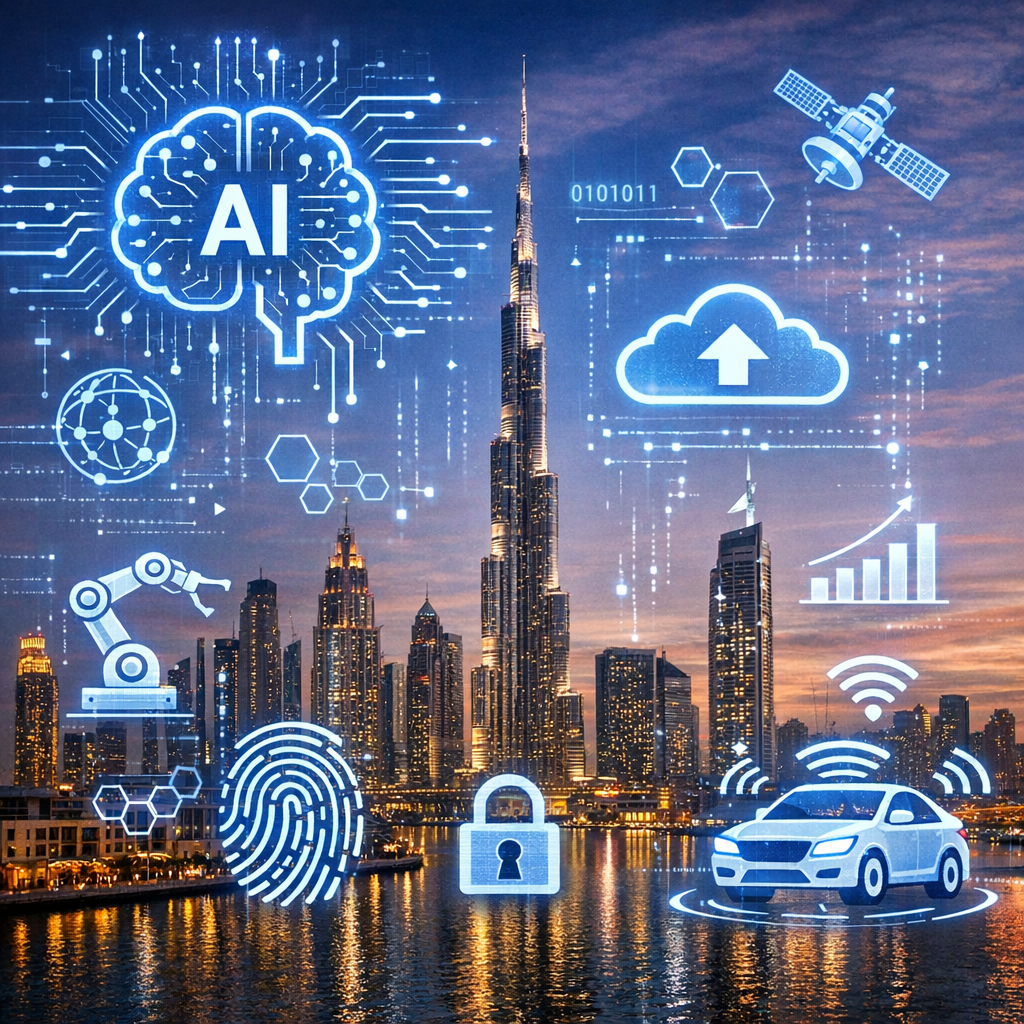
As the global economy undergoes significant transformations, Dubai stands at a pivotal juncture, poised to adapt and thrive amidst these changes. Key global trends, notably the surge in artificial intelligence (AI) investments and evolving geopolitical dynamics, are set to influence the emirate’s economic trajectory.
Global Economic Landscape
Recent analyses indicate a moderate global growth outlook. The International Monetary Fund projects a global growth rate of 3.0% for 2026, with a slight increase to 3.4% in 2027. This stability is attributed to resilient consumption patterns and substantial capital expenditures, particularly in AI technologies.
However, the economic landscape is not without challenges. Geopolitical tensions, especially in the Middle East, have introduced uncertainties. The World Economic Forum highlights concerns over asset valuations, mounting debt, and rapid AI deployment, all of which present both opportunities and risks.
Impact on Dubai
Dubai’s strategic position as a global trade and business hub means that these global shifts have direct implications for its economy. The emirate’s proactive approach to integrating AI and digital technologies aligns with global investment trends, potentially enhancing its competitive edge in various sectors.
Nevertheless, geopolitical tensions in the region could affect trade routes and energy prices, influencing Dubai’s trade and logistics sectors. The emirate’s diversified economy and robust infrastructure position it well to navigate these challenges, but continuous monitoring and adaptive strategies will be essential.
Strategic Adaptations
To capitalize on global AI investment trends, Dubai has been fostering a conducive environment for tech startups and innovation. Initiatives aimed at developing AI capabilities and digital infrastructure are expected to attract international investments and talent.
In response to geopolitical uncertainties, Dubai is likely to continue strengthening its economic diversification efforts, reducing reliance on any single sector or market. Enhancing trade partnerships beyond the region and investing in sustainable energy sources could further bolster economic resilience.
In conclusion, while global economic trends present both opportunities and challenges, Dubai’s strategic initiatives and adaptive policies position it to navigate these shifts effectively, ensuring sustained growth and prosperity.