

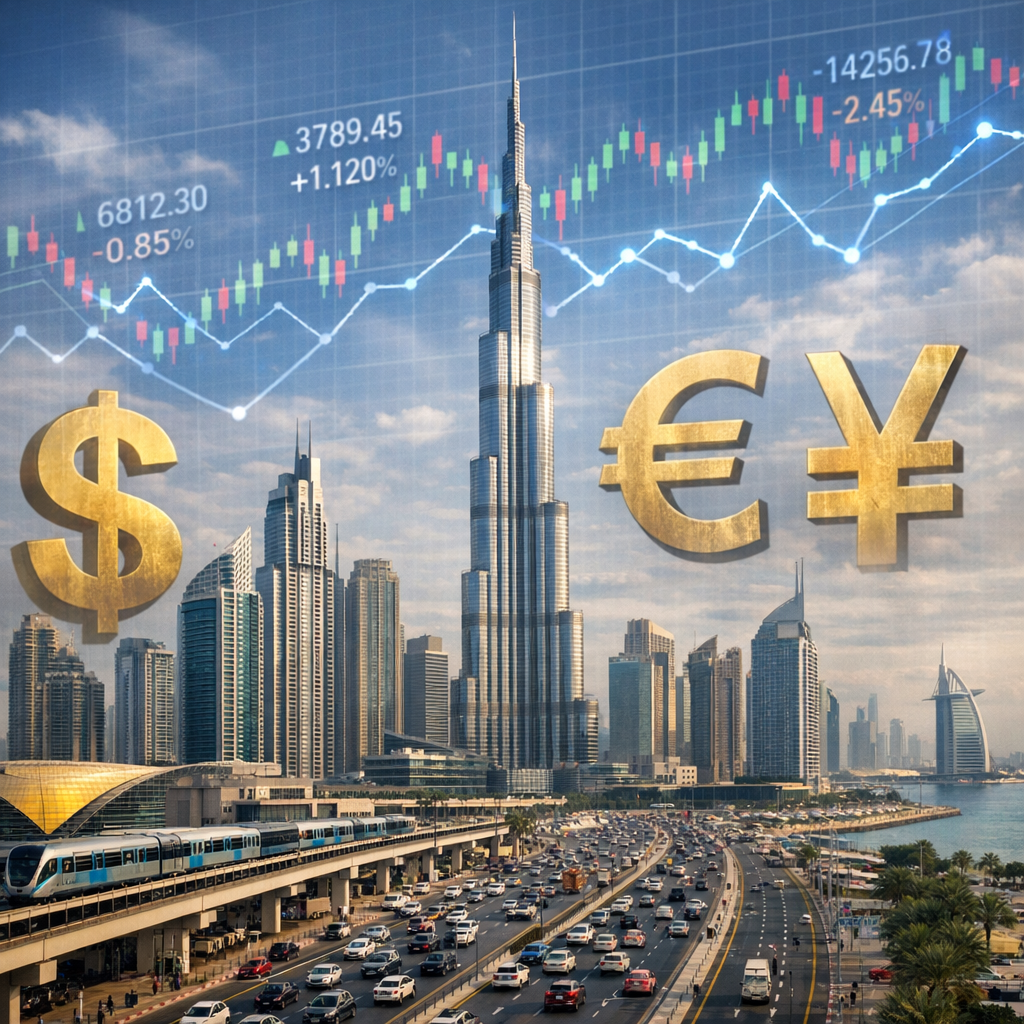
The global economic landscape in 2026 presents a complex interplay of challenges and opportunities, with significant implications for the United Arab Emirates (UAE). As a nation deeply integrated into the global economy, understanding these dynamics is crucial for policymakers, businesses, and residents alike.
Global Growth and Inflation Trends
According to the International Monetary Fund (IMF), global growth is projected at 3.0% for 2026, with a slight increase to 3.4% in 2027. This stability is attributed to resilient consumption and capital spending, particularly in sectors like artificial intelligence (AI). However, the IMF also notes that global disinflation has stalled, indicating persistent inflationary pressures.
Geopolitical Tensions and Energy Markets
Geopolitical tensions, notably in the Middle East, have introduced volatility in energy markets. The Organization for Economic Cooperation and Development (OECD) highlights that recent conflicts have tested the resilience of the global economy, leading to fluctuations in oil prices. For the UAE, a major oil exporter, these developments necessitate strategic planning to navigate potential revenue fluctuations.
Technological Advancements and Economic Resilience
The rapid deployment of AI and other technological innovations is reshaping global economic structures. The World Economic Forum emphasizes that while these advancements offer growth opportunities, they also pose challenges related to asset valuations and debt. The UAE’s commitment to becoming a global technology hub positions it well to leverage these trends, provided it continues to invest in digital infrastructure and skills development.
Implications for the UAE
For the UAE, these global trends underscore the importance of economic diversification. While oil remains a cornerstone of the economy, enhancing sectors like technology, tourism, and finance can provide buffers against external shocks. Additionally, fostering strong trade relations and participating in international economic dialogues will be vital in navigating the complexities of the global economic environment.
In conclusion, while the global economic outlook for 2026 presents both challenges and opportunities, the UAE’s proactive approach to economic planning and diversification positions it to adapt and thrive in this evolving landscape.