

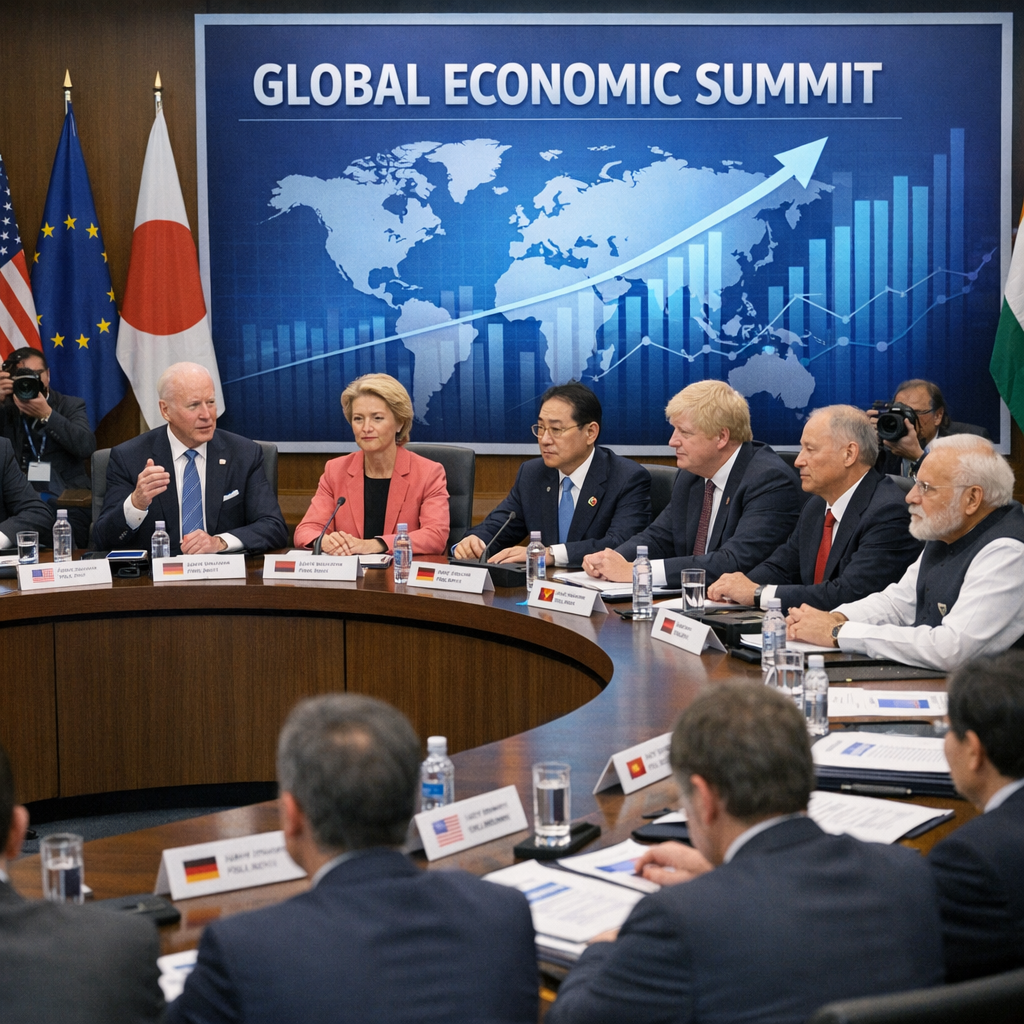
The global economy is currently navigating a complex landscape marked by geopolitical tensions, technological advancements, and varying regional growth patterns. Understanding these dynamics is crucial for policymakers, businesses, and individuals alike.
Global Growth Projections
Recent analyses indicate a moderation in global economic growth. The International Monetary Fund (IMF) projects a global growth rate of 3.0% for 2026 and 3.4% for 2027. This outlook reflects a balance between the positive impacts of technological investments and the negative effects of ongoing geopolitical conflicts.
Regional Economic Trends
In the United States, consumer spending and capital expenditures on artificial intelligence (AI) are expected to drive moderate growth. Morgan Stanley forecasts that these factors will contribute to a global GDP growth of 3.2% in 2026. However, the range of possible economic outcomes remains wide, influenced by factors such as inflation and monetary policy decisions.
Europe faces a more subdued growth trajectory. The United Nations Conference on Trade and Development (UNCTAD) anticipates that world output will slow to 2.7% in 2026, with Europe experiencing weaker growth due to trade tensions and fiscal strains.
In Asia, India’s economy is projected to lead with robust growth, propelled by strong consumer demand. Conversely, China’s growth is expected to slow, hindered by challenges in the property sector.
Impact of Geopolitical Tensions
Geopolitical conflicts, particularly in the Middle East, are exerting pressure on the global economy. The Organization for Economic Cooperation and Development (OECD) notes that recent conflicts have tested the resilience of the global economy, affecting growth and inflation rates. For instance, the OECD projected global growth at 2.9% in 2026, with the Middle East conflict offsetting potential upward revisions.
Technological Advancements and Economic Implications
The rapid deployment of AI is reshaping economic landscapes. The World Economic Forum highlights that surging AI investment presents both opportunities and risks, influencing asset valuations and geoeconomic alignments. While AI-driven demand is lifting economies integrated into the global technology value chain, it also introduces challenges related to workforce displacement and ethical considerations.
Conclusion
The global economic outlook is characterized by a delicate balance between growth opportunities and emerging challenges. Stakeholders must remain vigilant, adapting to the evolving economic environment shaped by technological innovations and geopolitical developments.