

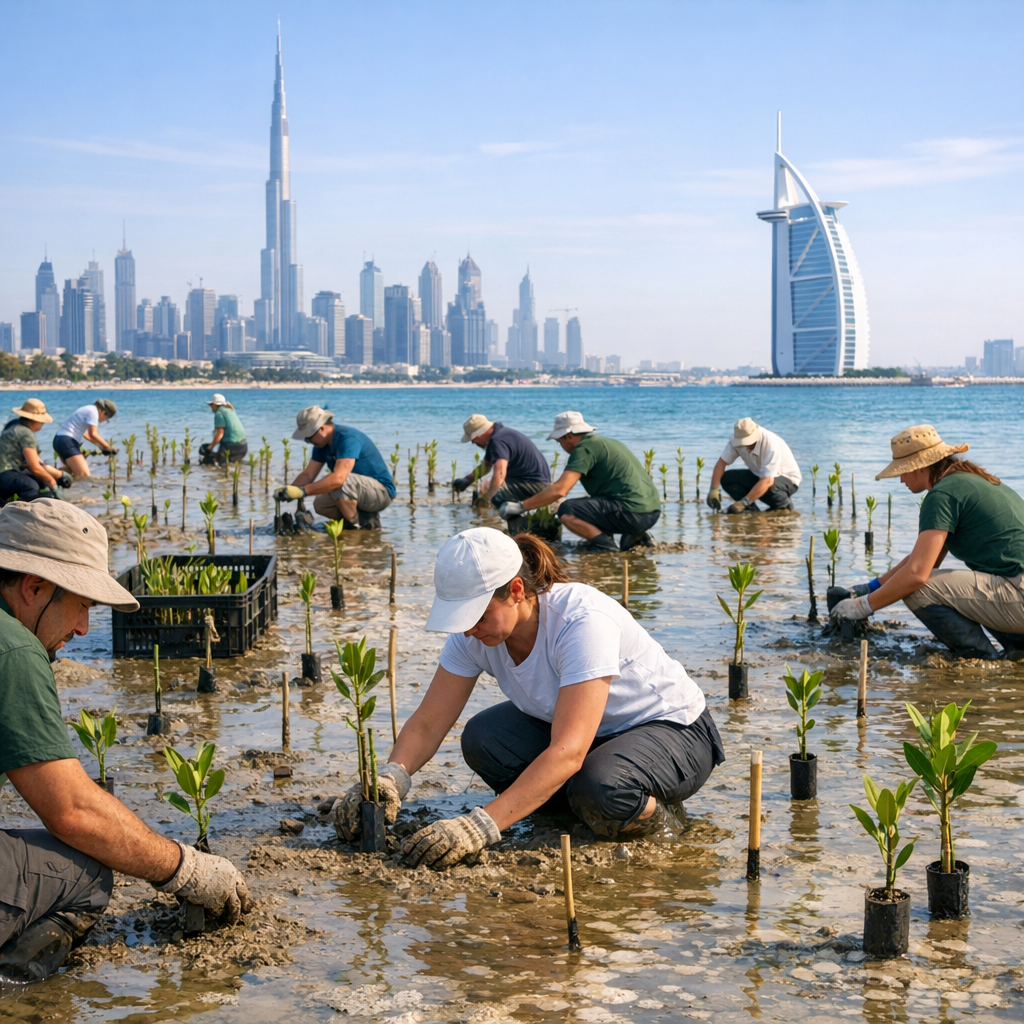
Dubai has long been recognized for its rapid development and architectural marvels. However, beyond the skyscrapers and luxury, the city has been making significant strides in environmental sustainability, aiming to balance urban growth with ecological preservation.
Expanding Green Spaces
In 2024, Dubai Municipality planted 216,500 new trees, marking a 17% increase from the previous year. This initiative expanded the emirate’s green spaces by 391.5 hectares, enhancing the urban landscape and improving air quality. Advanced irrigation systems powered entirely by recycled water were introduced to ensure a sustainable approach to urban greening.
Protecting Marine Biodiversity
The Dubai Electricity and Water Authority (DEWA), in collaboration with the Dubai Environment and Climate Change Authority, has been actively involved in marine conservation. In 2026, they planted 700 mangrove trees at the Jebel Ali Marine Sanctuary, engaging 254 volunteers who contributed 508 hours of service. These efforts aim to protect marine biodiversity and support the UAE’s goal to plant 100 million mangrove trees by 2030.
Advancing Clean Energy
Dubai is making significant investments in clean energy. The Mohammed bin Rashid Al Maktoum Solar Park, the largest single-site solar park globally, is set to have a production capacity of over 5,000 MW by 2030. This project is expected to reduce more than 6.5 million tonnes of carbon emissions annually, aligning with the Dubai Clean Energy Strategy 2050.
Waste Management Initiatives
To address waste management challenges, Dubai has implemented the Integrated Waste Management Strategy 2041. This strategy encourages innovation in waste management, recycling, and energy conversion, with a budget of AED 74.5 billion, including AED 70.5 billion from the private sector. The new Waste to Energy Center in Warsan, the largest and most efficient waste-to-energy conversion facility globally, has the capacity to treat around 2 million tonnes of solid waste annually, generating power for over 135,000 homes.
Community Engagement
Community involvement is a cornerstone of Dubai’s environmental initiatives. DEWA’s mangrove planting and beach clean-up campaigns have engaged thousands of volunteers, including employees, their families, and students. These activities not only contribute to environmental conservation but also raise awareness about the importance of protecting natural resources.
Dubai’s commitment to environmental sustainability is evident through its multifaceted initiatives. By expanding green spaces, protecting marine biodiversity, advancing clean energy, and promoting effective waste management, the city is paving the way for a sustainable future that harmonizes urban development with ecological preservation.