

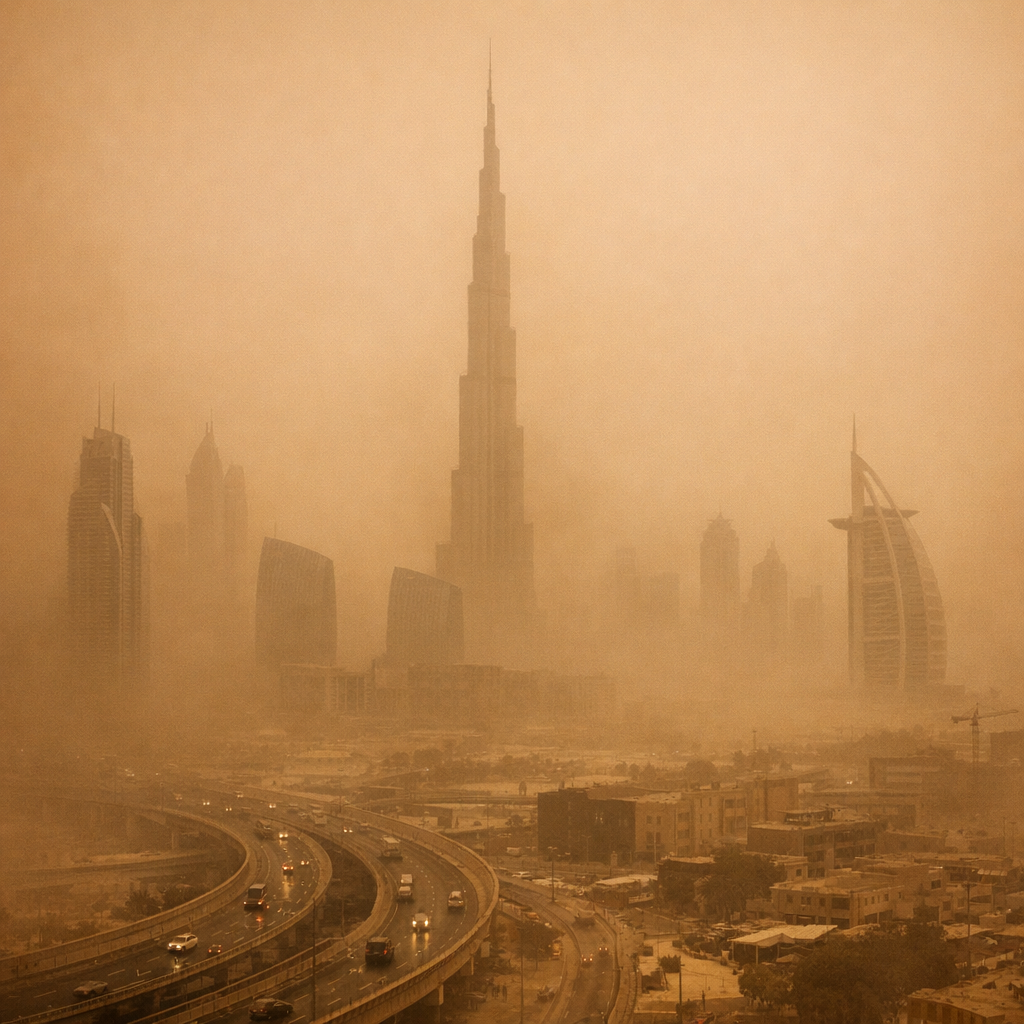
Dubai’s climate is characterized by its hot desert environment, with distinct seasonal variations that influence daily life and environmental conditions.
Seasonal Weather Patterns
Summer (June to September)
During summer, temperatures regularly exceed 40°C (104°F), with highs often reaching up to 45°C (113°F). Humidity levels are high, especially in coastal areas, making outdoor activities challenging. Rainfall is virtually nonexistent during this period.
Winter (December to February)
Winter offers a respite from the intense heat, with daytime temperatures ranging between 20°C (68°F) and 26°C (79°F). Nights can be cooler, occasionally dropping to 14°C (57°F). This season is considered the most comfortable for outdoor activities. Rainfall, though limited, occurs primarily during these months.
Environmental Challenges
Sandstorms
Dubai experiences sandstorms, particularly during the summer months. These storms, driven by strong north-westerly winds known as ‘Shamal,’ can reduce visibility and affect air quality. They are more frequent between June and September.
Air Quality
Air quality in Dubai is influenced by various factors, including vehicle emissions, industrial activities, and construction dust. The best air quality is typically recorded in December and January, following periods of rain or cooler weather.
Adaptation and Mitigation
Dubai has implemented several measures to adapt to its harsh climate and mitigate environmental challenges. These include the development of extensive indoor facilities, green building initiatives, and efforts to improve public transportation to reduce vehicle emissions.
Understanding Dubai’s climate and environmental challenges is essential for residents and visitors to navigate the city’s unique conditions effectively.