

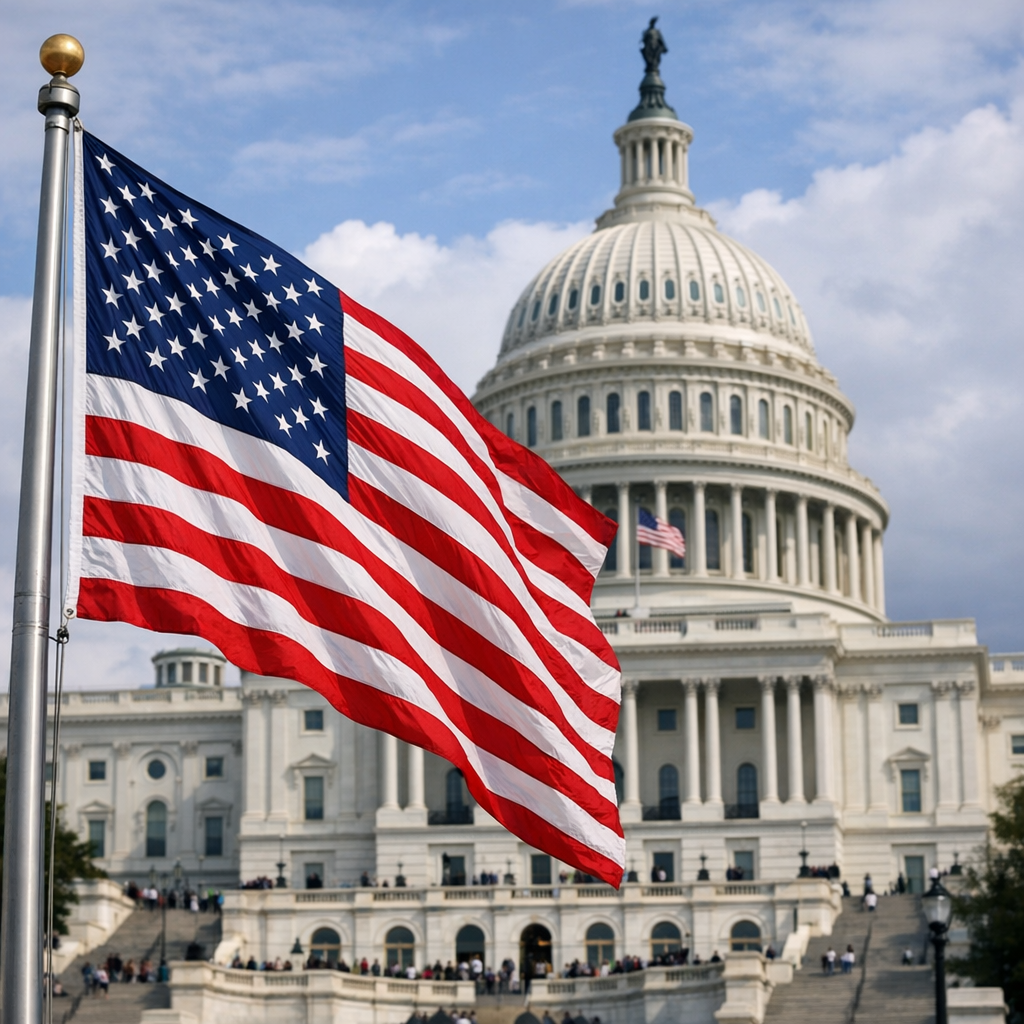
The United States, as a global economic powerhouse, continues to influence international markets and political dynamics. Understanding its current economic and political landscape is essential for global observers.
Economic Overview
Recent data indicates a mixed economic performance. The International Monetary Fund (IMF) projects U.S. gross domestic product (GDP) growth at 2.4% for the fourth quarter of 2026, an increase from 2.2% the previous year. Unemployment is expected to decline to 4.1% in 2026, down from 4.5% in late 2025. However, the IMF warns that rising federal budget debts pose a growing stability risk.
Inflation remains a concern, with consumer prices rising sharply in March 2026, reaching a 3.3% year-on-year increase. This surge is attributed to escalating energy costs following geopolitical tensions. The Federal Reserve has maintained interest rates between 3.50% and 3.75%, signaling a cautious approach amid inflationary pressures.
Political Developments
On the political front, the Trump administration faces challenges related to economic policies and international relations. The administration’s stance on tariffs and immigration has direct implications for the economy. For instance, the imposition of tariffs on imported goods and stricter immigration policies have been linked to rising inflation and a slowing job market.
Additionally, the administration’s involvement in international conflicts, such as the war in Iran, has financial repercussions. Reports indicate that the U.S. has spent $37.5 billion on the Iran war, with requests for an additional $87 billion as casualties rise.
Implications for Global Markets
The U.S. economic and political climate has a ripple effect on global markets. For instance, the Federal Reserve’s monetary policies influence global interest rates and investment flows. Moreover, U.S. trade policies and international relations can impact global supply chains and economic stability.
In conclusion, while the U.S. economy shows signs of growth, underlying challenges such as rising national debt, inflation, and political uncertainties necessitate careful monitoring. These factors not only affect domestic stability but also have significant implications for the global economic landscape.