

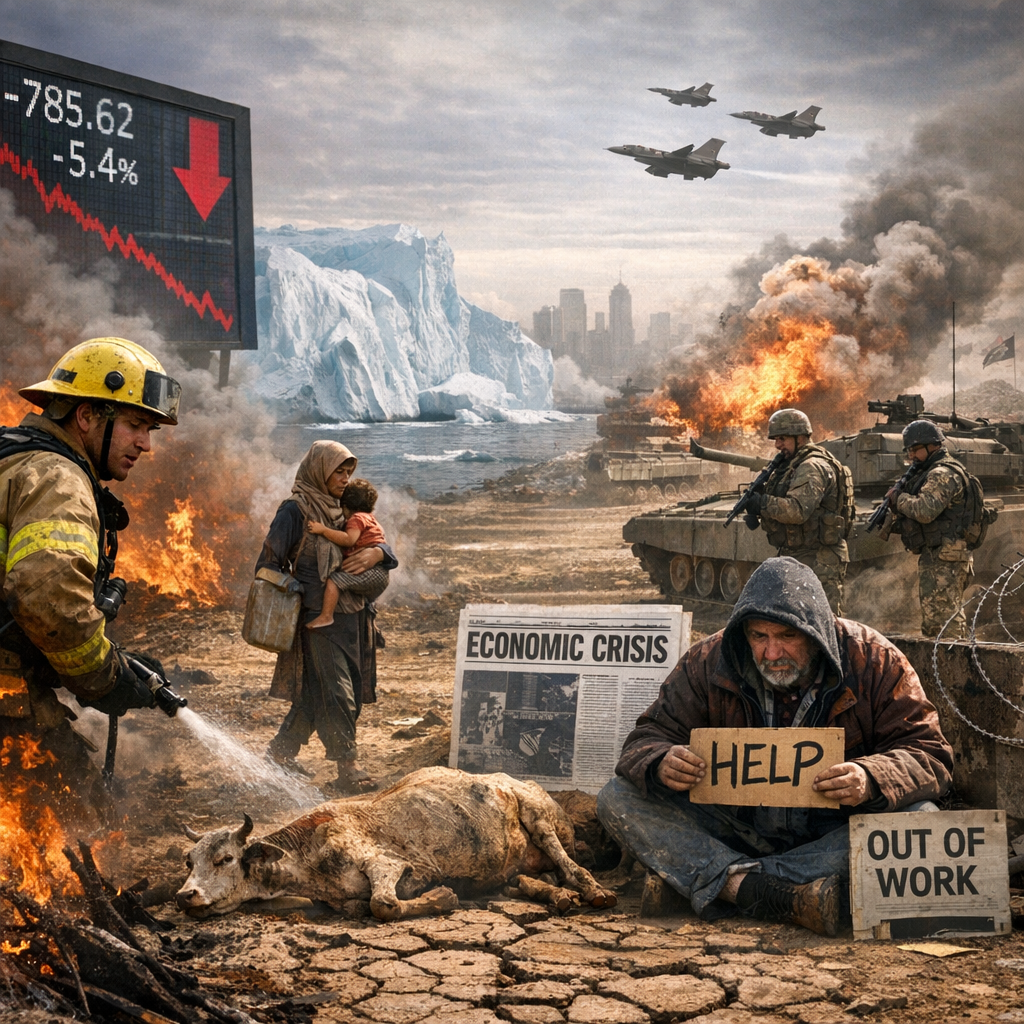
In recent years, the term ‘Era of Polycrisis’ has emerged to describe a period marked by multiple, simultaneous global crises that are interconnected, amplifying their severity and complexity. This concept underscores the challenges facing the international community as it navigates a landscape of overlapping disruptions.
Defining the Era of Polycrisis
The ‘Era of Polycrisis’ refers to a time when various global crises occur concurrently, each influencing and exacerbating the others. These crises span economic, environmental, political, and social domains, creating a web of challenges that defy simple solutions.
Key Characteristics
Several features define this era:
- Interconnected Crises: Events such as economic downturns, climate change, geopolitical tensions, and public health emergencies are no longer isolated incidents but are interlinked, leading to cascading effects across regions and sectors.
- Global Instability: The simultaneous occurrence of these crises has led to increased volatility in international relations, economic markets, and societal structures.
- Complexity in Response: Addressing these intertwined challenges requires coordinated efforts that consider the multifaceted nature of the problems, moving beyond traditional, siloed approaches.
Implications for Global Cooperation
The ‘Era of Polycrisis’ poses significant implications for global cooperation:
- Need for Multilateralism: Effective responses necessitate strengthened international collaboration, as no single nation can tackle these complex challenges alone.
- Resilience Building: Countries and organizations must invest in building resilience to withstand and adapt to the multifaceted crises, emphasizing sustainable development and inclusive policies.
- Innovative Solutions: The complexity of the crises calls for innovative, cross-sectoral solutions that address the root causes and interconnectedness of the issues.
Conclusion
Understanding and navigating the ‘Era of Polycrisis’ is crucial for fostering a more stable and cooperative global environment. By recognizing the interconnected nature of contemporary challenges, the international community can work towards comprehensive strategies that promote resilience and sustainable development.