

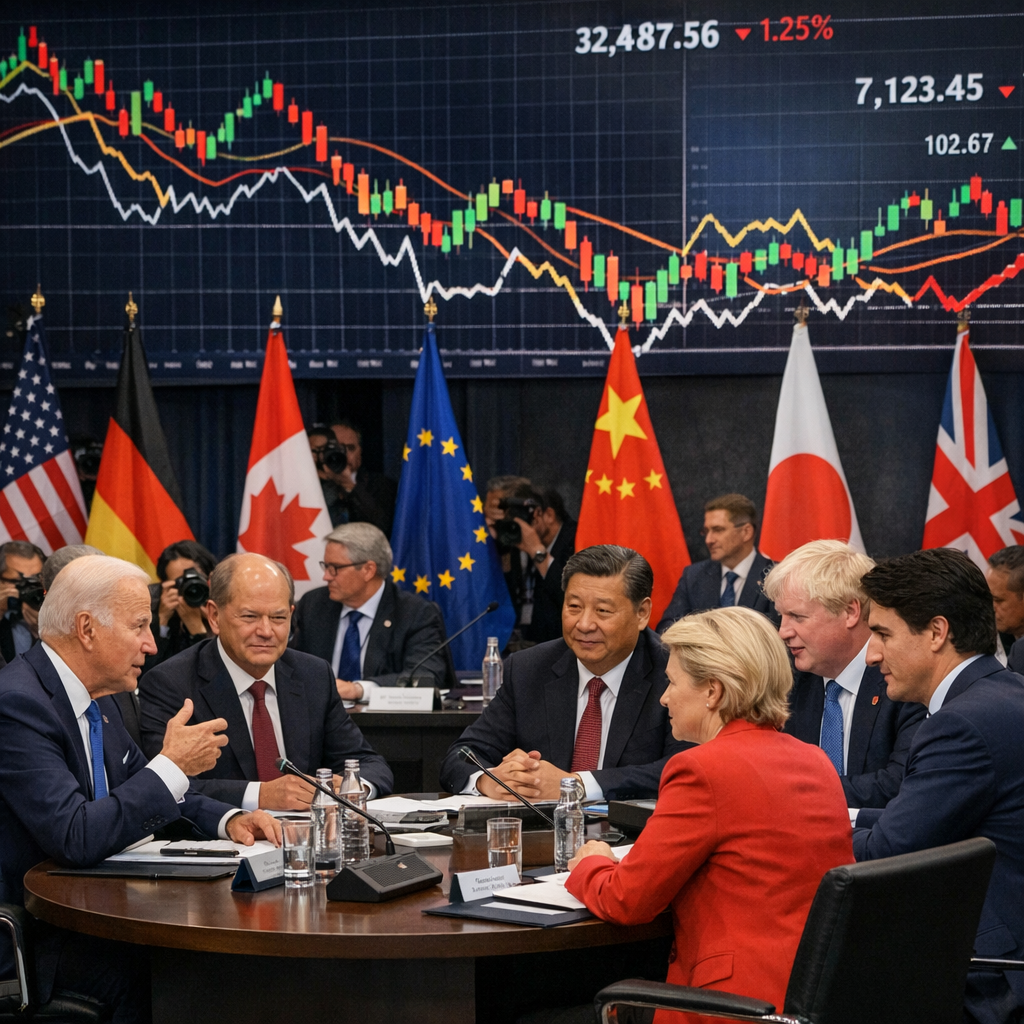
The global economy is currently navigating a complex landscape shaped by geopolitical tensions and rapid technological advancements. Recent conflicts in the Middle East have introduced significant uncertainties, particularly affecting energy markets and inflation rates. The Organization for Economic Cooperation and Development (OECD) projects global growth to slow to 2.8% in 2026, with inflationary pressures rising due to energy supply disruptions.
In the United States, resilience is evident, driven by robust consumer spending and substantial investments in artificial intelligence (AI). This momentum is expected to contribute to a projected GDP growth of 2.0% in 2026. However, the broader global outlook remains uneven. The euro area anticipates modest growth of 0.8% in 2026, as rising energy costs impact industrial output, particularly in Germany and the United Kingdom.
Asia presents a mixed picture. India is poised for strong growth, with projections indicating a 6.4% increase in GDP, fueled by domestic demand. Conversely, China’s growth is expected to moderate to 4.5%, influenced by challenges in the property sector and a shift towards green technology and AI exports.
Latin American economies face pressures from lower commodity prices and trade issues, while Japan anticipates minimal growth at 0.4%, contending with inflationary challenges.
Central banks worldwide are adopting cautious monetary policies in response to these dynamics. The U.S. Federal Reserve is expected to implement modest rate cuts, while the European Central Bank may maintain stable rates. The Bank of Japan faces the possibility of rate increases to address inflation concerns.
In this evolving economic environment, businesses and policymakers must remain vigilant, adapting strategies to mitigate risks and capitalize on emerging opportunities presented by technological innovations and shifting geopolitical landscapes.