

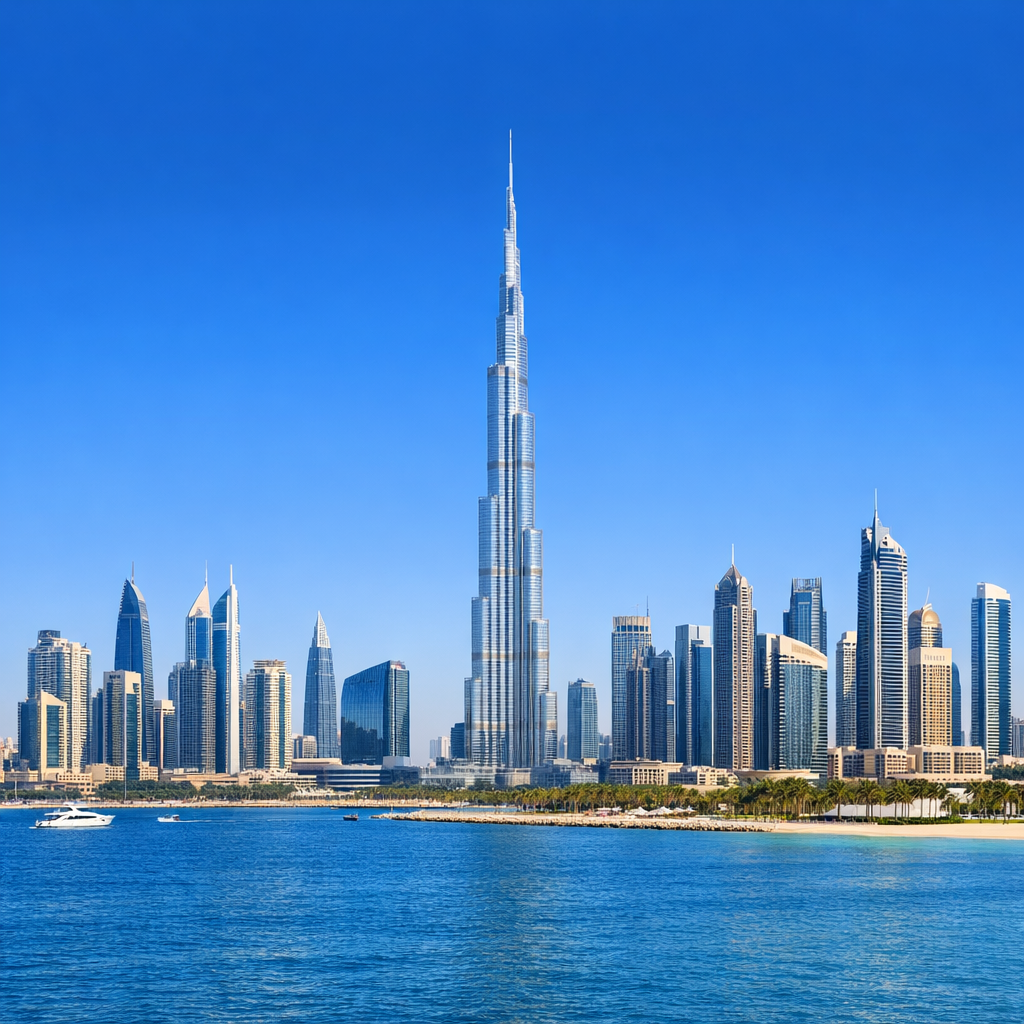
Dubai’s climate is characterized by its hot desert environment, with distinct seasonal variations that influence daily life and the environment.
Seasonal Weather Patterns
Summer (May to September)
During the summer months, Dubai experiences intense heat, with daytime temperatures often exceeding 40°C (104°F). Humidity levels are high, especially near the coast, making the heat feel more oppressive. This period is also marked by occasional sandstorms, known locally as ‘shamal’ winds, which can reduce visibility and affect air quality.
Winter (November to March)
Winter brings milder temperatures, ranging from 20°C to 26°C (68°F to 79°F), and is considered the most comfortable time of year. Rainfall is minimal but more likely during these months, typically occurring as short, heavy bursts or thunderstorms.
Environmental Challenges
Air Quality
Dubai’s rapid urbanization and industrial activities contribute to air pollution. Factors such as vehicle emissions, construction dust, and industrial outputs affect the Air Quality Index (AQI). The best air quality is typically recorded in December and January, following periods of rain or cooler weather.
Water Scarcity
As a desert city, Dubai faces challenges related to water scarcity. The region relies heavily on desalination plants to meet its water needs, which has environmental implications, including energy consumption and marine ecosystem impact.
Climate Change Impact
Dubai is vulnerable to the effects of climate change, including rising temperatures, sea-level rise, and increased frequency of extreme weather events. These changes pose risks to infrastructure, public health, and the natural environment.
Conclusion
Understanding Dubai’s climate and environmental challenges is essential for residents and visitors alike. Awareness and proactive measures can help mitigate the impacts of extreme weather and contribute to the city’s sustainability efforts.