

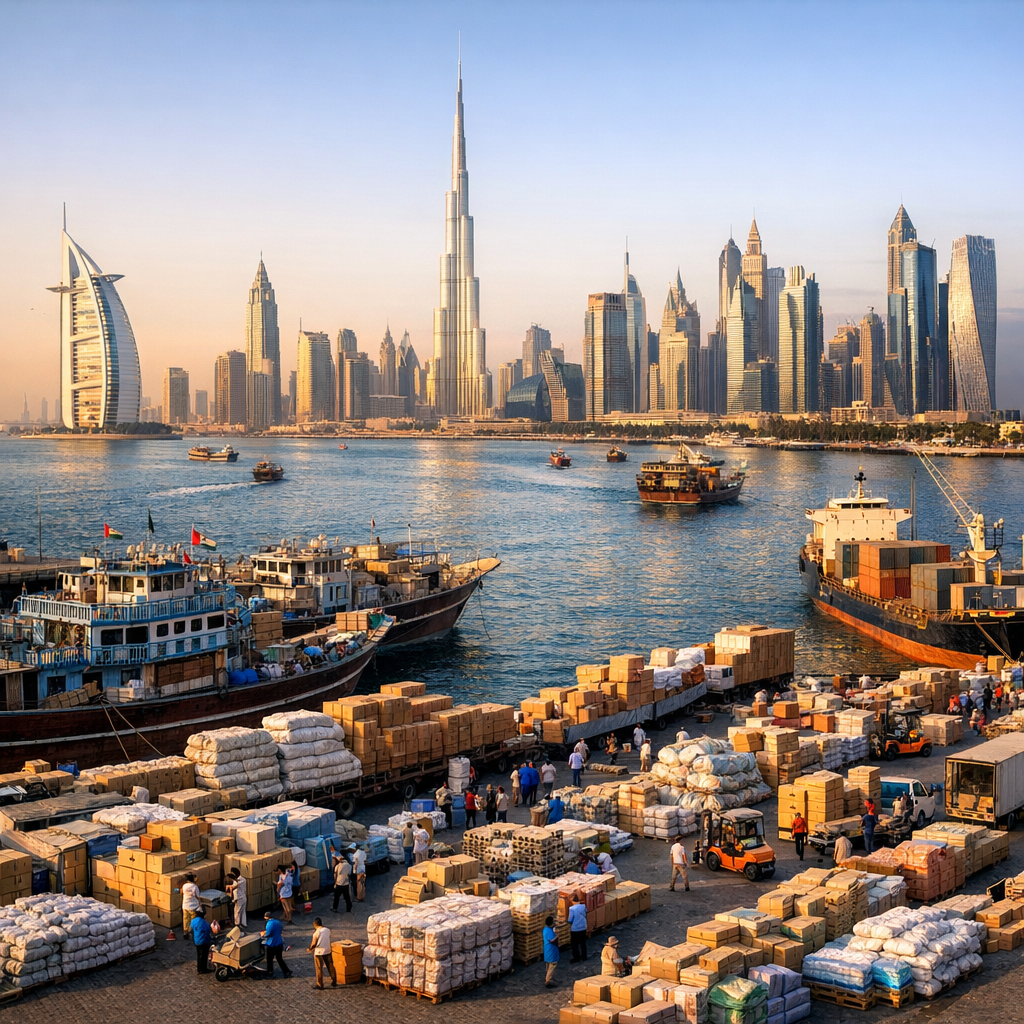
The global economy is currently navigating a complex landscape marked by geopolitical tensions, technological advancements, and fluctuating energy markets. These factors collectively influence economic growth, inflation rates, and investment patterns worldwide.
Global Economic Overview
Recent analyses indicate a modest slowdown in global economic growth. The Organization for Economic Cooperation and Development (OECD) projects a global growth rate of 2.9% in 2026, with a slight increase to 3.0% in 2027. This deceleration is attributed to factors such as energy supply shocks and geopolitical uncertainties.
Similarly, the International Monetary Fund (IMF) forecasts global growth at 3.0% for 2026 and 3.4% for 2027. The IMF highlights that while technological advancements, particularly in artificial intelligence, are driving demand in certain sectors, ongoing conflicts and energy market volatility pose significant risks to sustained economic expansion.
Regional Impacts
In the United States, consumer spending and investments in AI are expected to support moderate growth, with GDP projected to rise by 2.0% in 2026. However, inflationary pressures and labor market dynamics may temper this growth.
Europe faces a more challenging outlook, with growth projected at 0.8% in 2026. Rising energy costs and geopolitical tensions are contributing to economic stagnation in several European economies.
In Asia, India’s economy is anticipated to grow robustly at 6.4% in 2026, driven by strong consumer demand. Conversely, China’s growth is expected to slow to 4.4%, influenced by structural adjustments and external demand fluctuations.
Implications for Dubai
Dubai’s economy, characterized by its strategic location and diversified sectors, is intricately linked to global economic trends. The projected slowdown in global growth and regional economic challenges may have several implications for Dubai:
- Trade and Logistics: As a global trade hub, Dubai’s logistics sector may experience shifts in trade volumes due to changing global demand and supply chain realignments.
- Energy Markets: Fluctuations in global energy prices can impact Dubai’s energy sector, influencing both costs and revenues.
- Investment Flows: Global economic uncertainties may affect foreign direct investment (FDI) inflows into Dubai, particularly in sectors sensitive to global demand.
- Tourism: Economic conditions in key source markets can influence tourist arrivals, affecting Dubai’s hospitality and retail sectors.
To navigate these challenges, Dubai may consider strategies such as enhancing economic diversification, investing in technology and innovation, and strengthening trade partnerships to mitigate external shocks.
In conclusion, while global economic trends present certain challenges, Dubai’s proactive policies and strategic initiatives position it to adapt effectively to the evolving global economic landscape.