

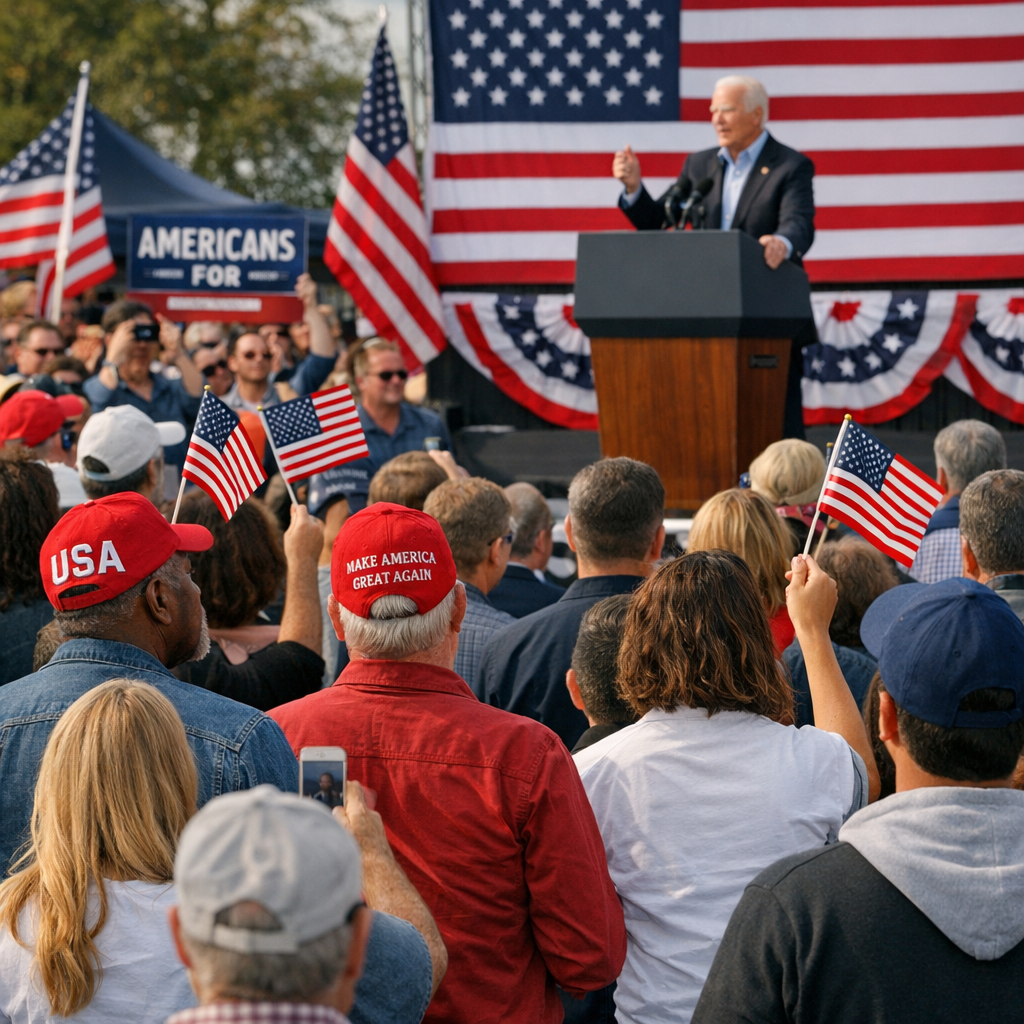
The United States is currently experiencing significant shifts in its political and economic landscapes, with recent events underscoring the dynamic nature of the nation’s affairs.
Political Developments
In the realm of politics, the upcoming 2026 midterm elections are drawing considerable attention. Redistricting efforts across various states are poised to influence the balance of power in Congress. For instance, Florida’s proposed congressional maps could potentially reduce Democratic representation, while Virginia’s recent remapping threatens several Republican incumbents. These changes are expected to have a profound impact on the political dynamics leading up to the elections.
Additionally, public sentiment reflects growing concern over the political system. A Gallup poll indicates that approximately one-third of Americans view politics and government as the nation’s most pressing issues, highlighting a significant level of anxiety about the state of democracy and governance.
Economic Landscape
On the economic front, the U.S. is facing a complex scenario. President Donald Trump’s administration has implemented sweeping tariffs aimed at revitalizing domestic industries. However, these measures have sparked debates regarding their effectiveness and potential repercussions on international trade relations.
Furthermore, the International Monetary Fund (IMF) has projected a ‘buoyant’ U.S. economy with accelerated growth and lower unemployment rates. Despite this optimistic outlook, the IMF has also cautioned about risks associated with rising federal debt and the potential impact of ongoing trade disputes.
In the energy sector, tensions in the Middle East, particularly the conflict involving Iran, have led to fluctuations in oil prices. The closure of the Strait of Hormuz has raised concerns about global energy markets and supply chains, affecting both domestic and international economic stability.
Implications and Outlook
The interplay between political decisions and economic policies continues to shape the U.S. landscape. As the nation approaches the midterm elections, the outcomes of redistricting efforts and public sentiment towards governance will likely influence future policy directions. Economically, while growth projections remain positive, vigilance is necessary to navigate the challenges posed by trade tensions and geopolitical conflicts.
Understanding these developments is crucial for stakeholders both within and outside the United States, as the ripple effects of U.S. policies and events have far-reaching implications on the global stage.