

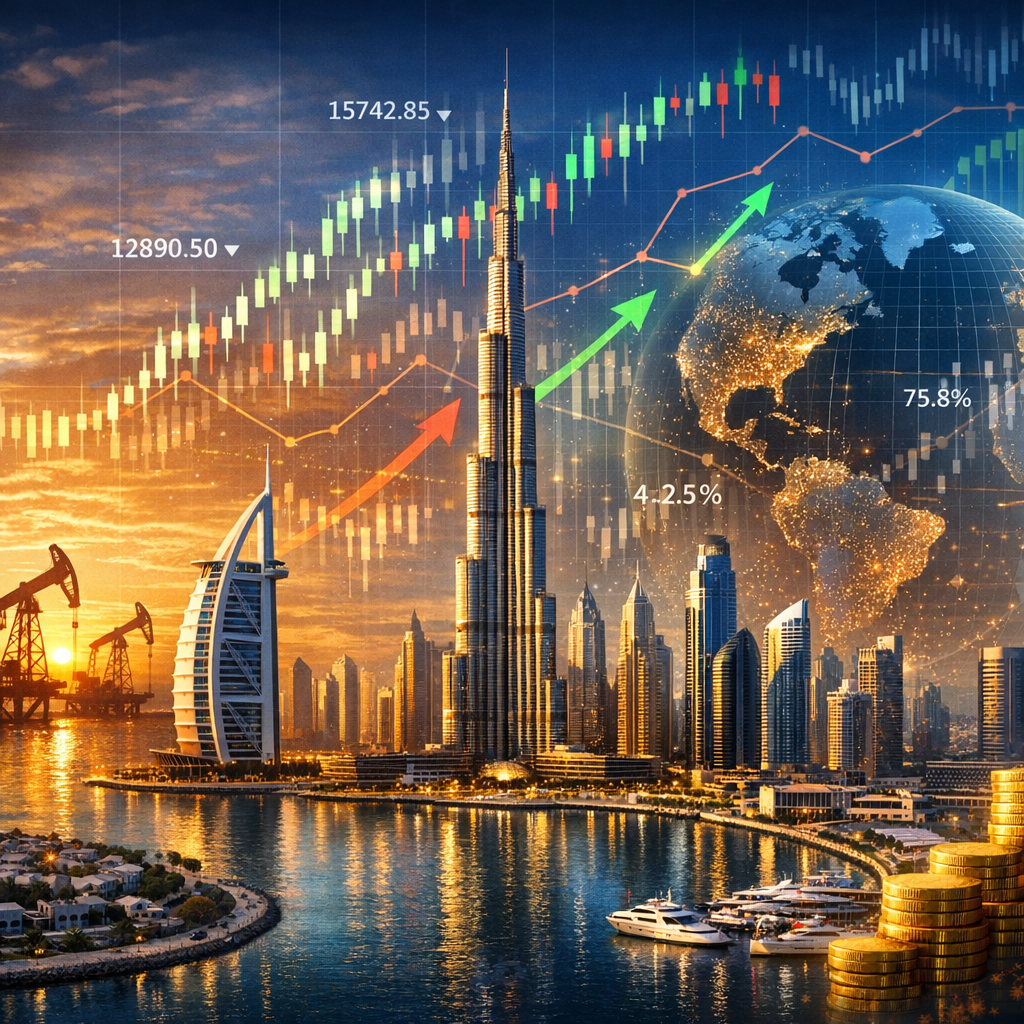
As the global economy experiences significant transformations, Dubai stands at a crossroads, poised to adapt and thrive amidst these changes. Understanding the current global economic landscape is crucial for anticipating its effects on our local economy.
Global Economic Overview
Recent forecasts indicate a moderate global growth rate of approximately 3% for 2026, with projections of 3.2% in 2027. This outlook reflects a complex interplay of factors, including geopolitical tensions, technological advancements, and fluctuating energy prices. Notably, the ongoing conflict in the Middle East has introduced volatility in oil markets, impacting economies worldwide.
Technological Advancements and AI Investment
Artificial Intelligence (AI) has emerged as a significant driver of economic growth, particularly in the United States, where AI-related capital expenditures are bolstering business investment. This trend underscores the importance of technological innovation in sustaining economic resilience.
Energy Market Volatility
The conflict in Iran has led to disruptions in oil exports, causing a surge in global energy prices. This situation has contributed to inflationary pressures, with global inflation rates projected to reach around 4.5%. Such developments have far-reaching implications for energy-dependent economies.
Implications for Dubai
Dubai’s strategic position as a global trade hub necessitates a proactive approach to these global economic shifts. The city’s diversified economy, encompassing sectors such as tourism, real estate, and finance, provides a buffer against external shocks. However, the reliance on energy markets means that fluctuations in oil prices can have direct and indirect effects on the local economy.
To navigate these challenges, Dubai can focus on several key strategies:
- Embracing Technological Innovation: Investing in AI and other emerging technologies can enhance productivity and create new economic opportunities.
- Strengthening Economic Diversification: Continuing to develop non-oil sectors will reduce vulnerability to energy market volatility.
- Enhancing Trade Partnerships: Expanding trade relations with diverse global partners can mitigate risks associated with geopolitical tensions.
By staying attuned to global economic trends and implementing adaptive strategies, Dubai can maintain its position as a resilient and dynamic economic center.