

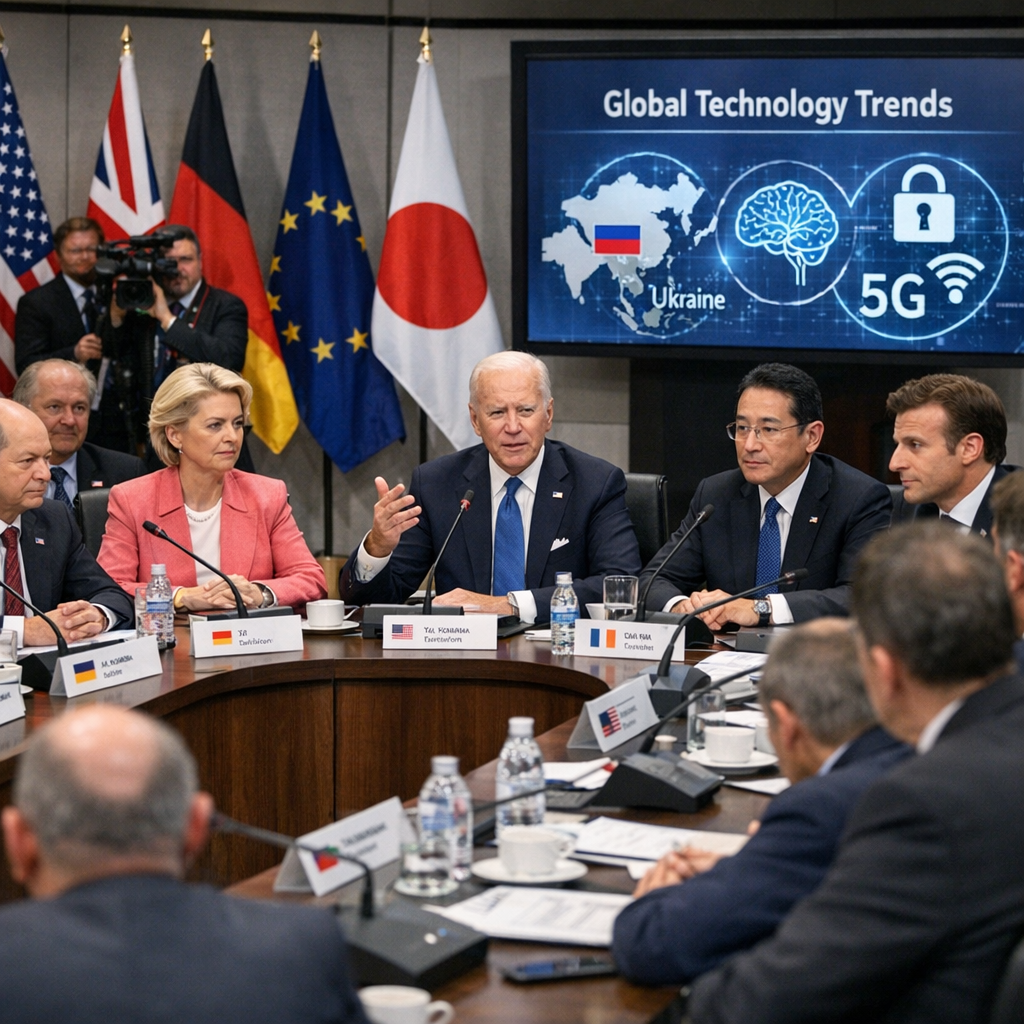
The global economy is currently experiencing a complex interplay between rapid technological advancements and escalating geopolitical tensions. This dynamic is shaping economic trajectories worldwide, with significant implications for both developed and developing nations.
Technological Innovations Driving Growth
Artificial Intelligence (AI) has emerged as a pivotal force in the global economic landscape. Major tech companies are significantly increasing their investments in AI infrastructure, leading to substantial growth in sectors such as data centers and Infrastructure as a Service (IaaS). This surge is driven by the need to support expanding AI workloads and high-performance computing, marking one of the largest AI infrastructure build-outs in history.
Geopolitical Tensions and Economic Impacts
Conversely, geopolitical conflicts, particularly in the Middle East, have introduced volatility into global markets. The ongoing Iran war has disrupted oil exports from the Persian Gulf, leading to rising commodity prices and inflationary pressures. This situation has resulted in a slowdown of global growth, with projections indicating a decrease to 2.8% in 2026. The energy crisis has also led to increased inflation, expected to reach around 4.5% globally.
Regional Economic Outlooks
In the United States, the economy remains relatively resilient due to strong domestic energy production and investments in AI, defense, and energy sectors, supporting a projected GDP growth of 2.1%. However, consumers are tightening spending due to rising inflation and unemployment. Europe is experiencing stagflation, with eurozone growth predicted at just 0.8%, as energy costs severely impact industrial output, especially in Germany and the U.K. India stands out with a projected growth of 6.5%, driven by strong domestic momentum, while China’s growth is expected to slow to 4.5% amid ongoing real estate issues but gains in green-tech and AI exports.
Policy Responses and Future Outlook
Central banks are navigating a delicate balance between controlling inflation and supporting economic growth. Interest rates are unlikely to drop soon due to added inflation concerns. Policymakers are urged to preserve price stability, rebuild fiscal space, and strengthen adaptability to navigate these crosscurrents effectively.
In conclusion, the global economic landscape is being reshaped by the dual forces of technological innovation and geopolitical tensions. While AI and other technological advancements offer avenues for growth, geopolitical conflicts pose significant challenges. Navigating this complex environment requires coordinated policy responses and strategic investments to ensure sustainable economic development.