

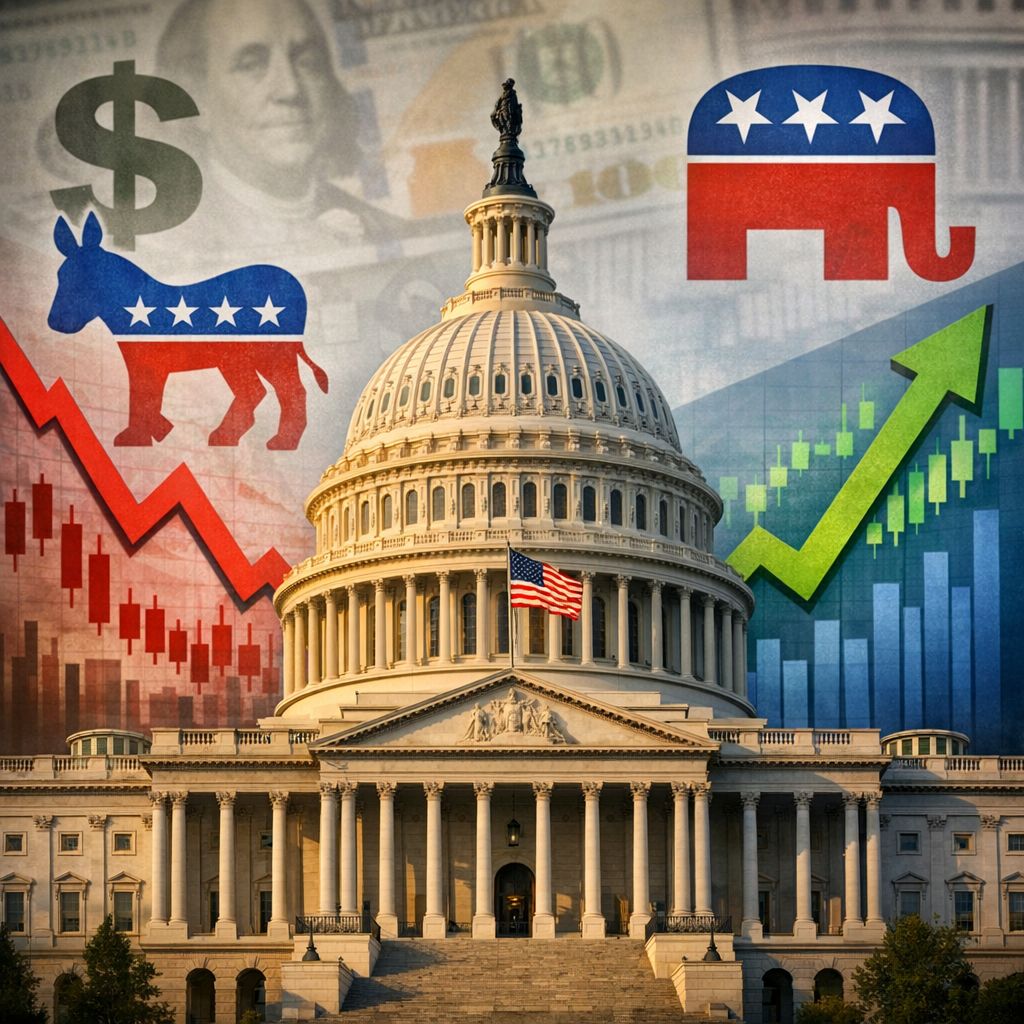
The United States continues to grapple with a multifaceted economic and political environment, marked by significant developments that have both domestic and international ramifications.
Economic Landscape
Recent assessments indicate a buoyant U.S. economy poised for accelerated growth and lower unemployment rates. The International Monetary Fund (IMF) projects the U.S. gross domestic product (GDP) to grow by 2.4% in the fourth quarter of 2026, up from 2.2% the previous year. Unemployment is expected to drop from 4.5% in late 2025 to 4.1% in 2026, with inflation anticipated to align with the Federal Reserve’s 2% target by 2027.
However, concerns persist regarding the nation’s escalating debt. BlackRock CEO Larry Fink has highlighted the potential risks associated with the ballooning U.S. national debt, emphasizing that rising debt levels could elevate interest costs, threaten confidence, and trigger rapid shifts in borrowing costs. As of January 14, 2026, the total U.S. debt outstanding stood at $38.4 trillion, with approximately $996 billion added between September 3, 2025, and January 14, 2026.
Political Developments
The political arena is equally dynamic. The upcoming 2026 midterm elections are set against a backdrop of contentious redistricting battles. In Florida, Governor Ron DeSantis has proposed new congressional maps that could potentially reduce Democratic representation in the House. Conversely, Virginia voters have narrowly approved a Democratic-led redistricting plan that poses challenges for several Republican incumbents.
Additionally, the political climate has been further charged by an alleged assassination attempt on former President Donald Trump during the White House Correspondents’ Dinner in April 2026. This incident has intensified debates over political rhetoric and violence, underscoring the deep divisions within the nation’s political discourse.
Implications for the Global Community
For international observers, including those in Dubai, these developments warrant close attention. The U.S. economy’s performance has far-reaching implications for global markets, influencing trade, investment, and economic policies worldwide. Similarly, the political stability of the United States plays a crucial role in international relations and geopolitical dynamics.
As the U.S. navigates these complex economic and political landscapes, the global community remains vigilant, recognizing that the outcomes will resonate beyond American borders, affecting international economic trends and political alliances.