

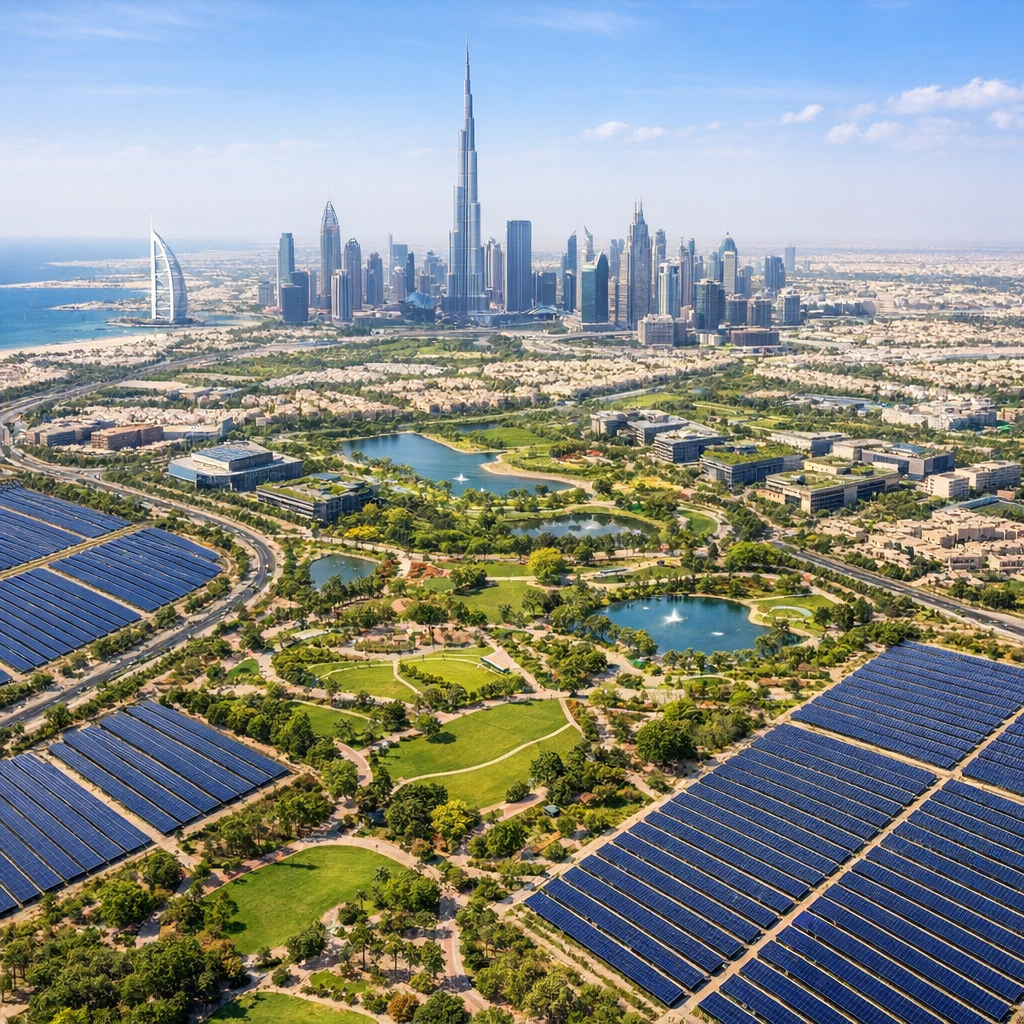
Dubai has long been recognized for its rapid development and architectural marvels. However, alongside its urban growth, the emirate has demonstrated a steadfast commitment to environmental sustainability. This article delves into the various initiatives and strategies that Dubai has implemented to promote a greener future.
Clean Energy Initiatives
One of the cornerstone projects in Dubai’s clean energy endeavors is the Mohammed bin Rashid Al Maktoum Solar Park. As the largest single-site solar park globally, it aims to achieve a production capacity of 5,000 MW by 2030. Upon completion, the park is expected to reduce over 6.5 million tons of carbon emissions annually.
Complementing this, the Dubai Clean Energy Strategy 2050 seeks to position the city as a global hub for clean energy and a green economy. The strategy outlines a roadmap to provide 100% of Dubai’s energy production capacity from clean energy sources by 2050.
Waste Management and Recycling
Dubai has made significant strides in waste management. The Integrated Waste Management Strategy 2041 focuses on encouraging innovation in waste management, recycling, and energy conversion. With a budget of AED 74.5 billion, the strategy aims to achieve zero waste to landfill by 2030.
In line with this, the Warsan Waste Management Centre stands as the world’s largest and most efficient waste-to-energy conversion facility. It has the capacity to treat around 2 million tons of solid waste annually, generating power sufficient for over 135,000 homes.
Urban Greening and Biodiversity Conservation
Recognizing the importance of green spaces, Dubai Municipality planted 216,500 new trees in 2024, marking a 17% increase from the previous year. This initiative expanded the emirate’s green spaces by 391.5 hectares, enhancing the urban landscape and improving air quality.
Furthermore, the Dubai Electricity and Water Authority (DEWA) has been proactive in marine conservation. In collaboration with the Emirates Marine Environmental Group, DEWA organized campaigns to plant mangrove trees and clean the Jebel Ali Marine Sanctuary. These efforts have led to the planting of thousands of mangrove trees and the removal of significant amounts of plastic waste from the sanctuary’s beach.
Air Quality Monitoring
To safeguard public health, Dubai has implemented real-time air quality monitoring systems. These systems provide up-to-date data on various pollutants, enabling authorities to take timely actions to maintain air quality standards.
Community Engagement and Awareness
Dubai places a strong emphasis on community involvement in its sustainability efforts. Initiatives like ‘Dubai Can’ encourage residents to reduce single-use plastic water bottle waste by promoting the use of refillable bottles and providing access to free and safe drinking water through strategically placed water stations across the city.
In conclusion, Dubai’s multifaceted approach to environmental sustainability reflects its dedication to creating a harmonious balance between urban development and ecological preservation. Through a combination of innovative projects, strategic planning, and community engagement, the emirate continues to pave the way for a sustainable future.