

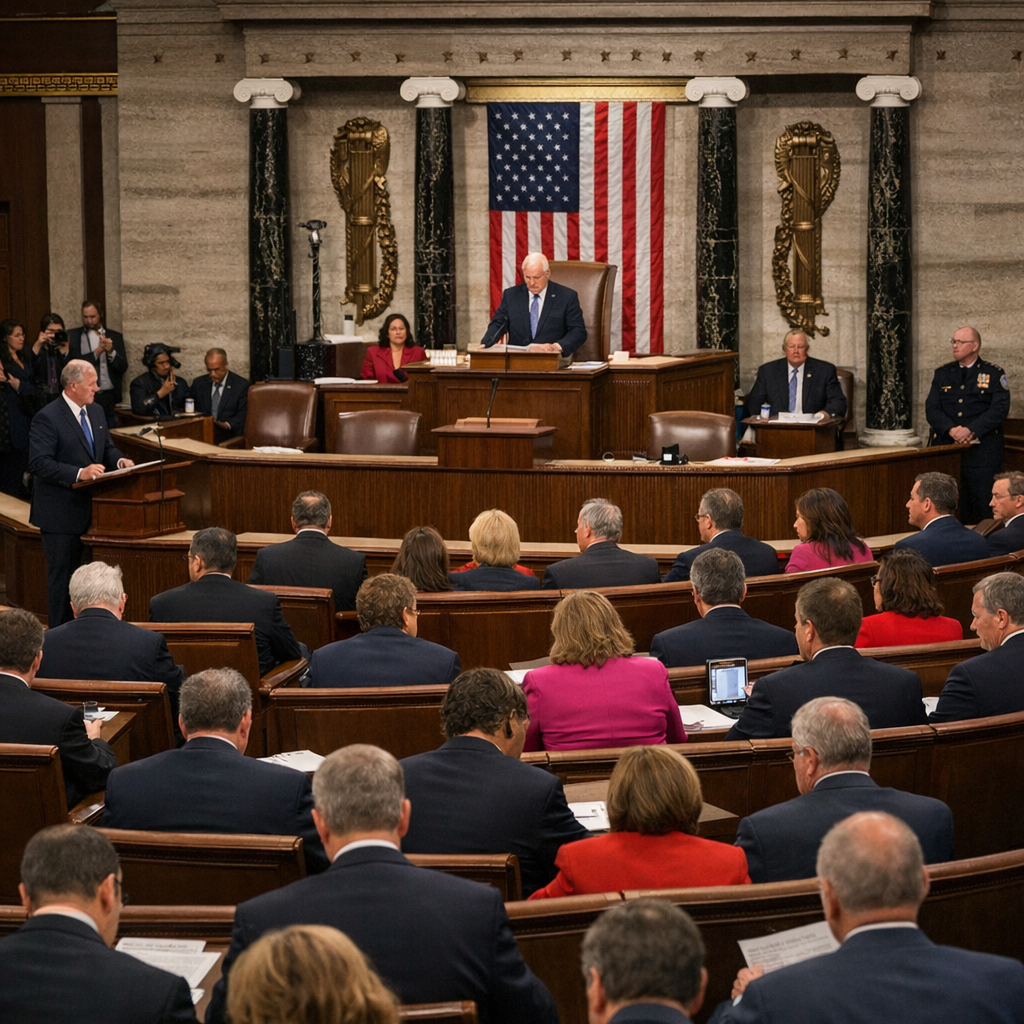
The United States is currently experiencing a dynamic political and economic environment, marked by significant developments that have both domestic and international implications.
Political Developments
As the 2026 midterm elections approach, the political landscape remains volatile. Redistricting efforts are underway across various states, with proposals that could alter the balance of power in Congress. For instance, Florida’s Governor has introduced new congressional maps that may impact party representation. Additionally, recent events have intensified debates over political rhetoric and violence, further polarizing the electorate.
Economic Overview
The U.S. economy presents a mixed picture. While certain sectors show resilience, others face challenges. Inflation rates have seen fluctuations, influenced by global events and domestic policies. The Federal Reserve has maintained interest rates but signals potential adjustments in response to economic indicators. Notably, consumer confidence has been affected by rising costs of living, prompting discussions on affordability and economic stability.
International Relations
On the international front, the U.S. continues to navigate complex relationships. Recent engagements with countries like Iran have garnered attention, with diplomatic efforts aimed at addressing longstanding issues. Additionally, trade policies, including tariffs and sanctions, remain focal points in discussions about global economic dynamics.
In summary, the United States stands at a crossroads, with political decisions and economic policies poised to shape its trajectory in the coming years. Observers both domestically and internationally are keenly watching these developments, understanding their potential ripple effects on the global stage.