

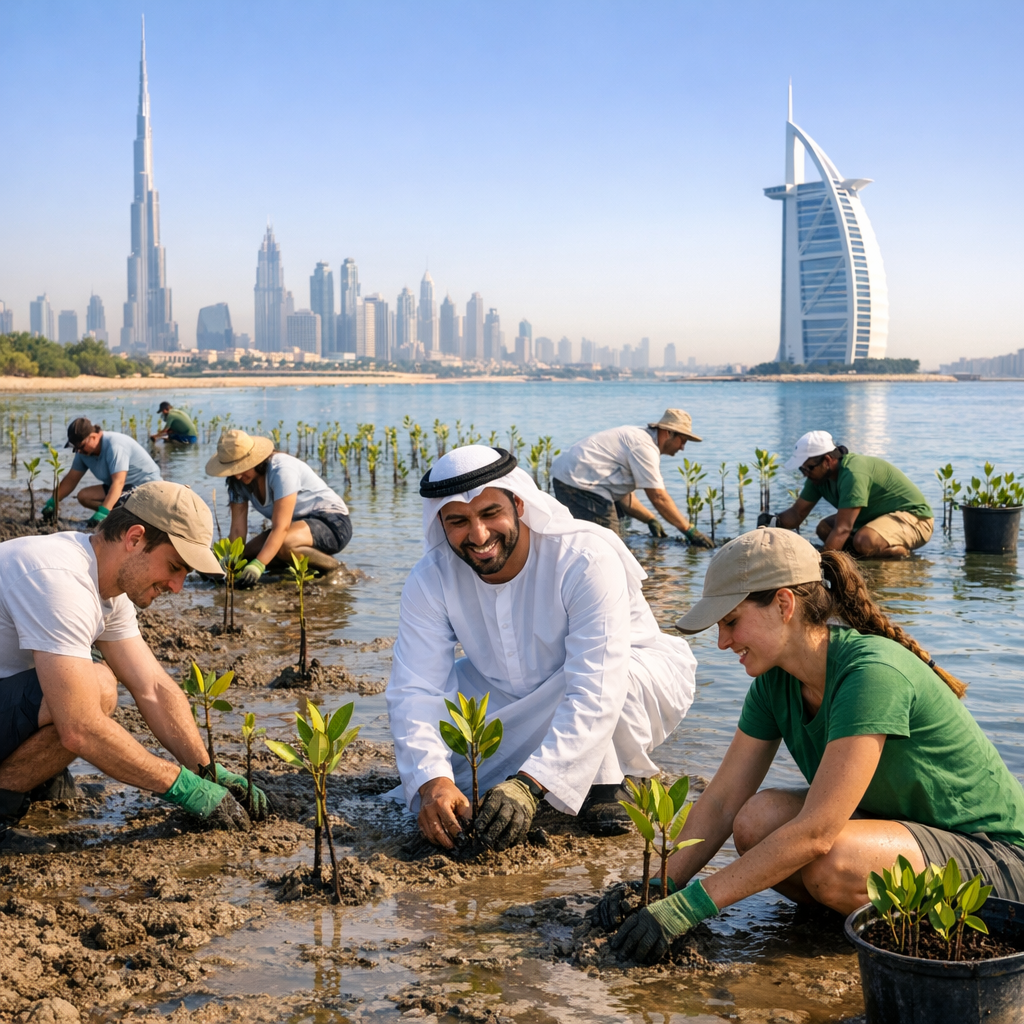
Dubai has been at the forefront of environmental sustainability, implementing a range of initiatives aimed at preserving natural resources and promoting a greener future.
Environmental Authorities and Their Roles
The Dubai Environment and Climate Change Authority (DECCA) is dedicated to protecting the environment through innovative policies that balance economic growth with conservation efforts. DECCA’s mission includes developing strategies that ensure sustainable development within the emirate.
At the federal level, the Ministry of Climate Change and Environment (MOCCAE) oversees national policies related to environmental sustainability, climate change, and food security. In Dubai, the Dubai Municipality enforces environmental regulations, monitors air and water quality, and manages waste disposal and recycling initiatives.
Key Environmental Initiatives
Mangrove Planting and Beach Clean-Up
In collaboration with the Dubai Environment and Climate Change Authority, the Dubai Electricity and Water Authority (DEWA) has undertaken significant efforts to enhance marine biodiversity. In 2026, DEWA planted 700 mangrove trees at the Jebel Ali Marine Sanctuary, involving 254 volunteers who contributed 508 hours of service. These initiatives aim to protect marine ecosystems and support the UAE’s goal of planting 100 million mangrove trees by 2030.
Clean Energy Projects
Dubai is advancing clean energy through major solar, nuclear, and efficiency projects supporting its low-carbon transition. The Dubai Clean Energy Strategy aims to position the city as a worldwide nucleus for clean energy and economy by 2050.
Waste Management
Dubai promotes recycling, waste-to-energy solutions, and reduced plastics to support a cleaner, sustainable environment. The new Waste to Energy Center in Warsan is the largest and most efficient waste-to-energy conversion facility in the world, with the capacity to treat around 2 million tons of solid waste annually to generate power that can meet the needs of more than 135,000 homes.
Community Engagement
Community involvement is a cornerstone of Dubai’s environmental strategy. Initiatives like the ‘Dubai Can’ campaign encourage residents to reduce single-use plastic water bottle waste by using refillable bottles and accessing free drinking water through public water stations. Such programs foster a culture of conscious living and sustainability among residents.
Conclusion
Dubai’s comprehensive approach to environmental sustainability reflects its commitment to balancing rapid urban development with ecological preservation. Through the concerted efforts of governmental bodies, private sector partnerships, and community engagement, Dubai continues to make significant strides toward a sustainable and environmentally responsible future.