

Dubai has long been recognized for its rapid development and architectural marvels. However, beneath the city’s skyline lies a steadfast commitment to environmental sustainability. This dedication is evident in various initiatives and projects aimed at preserving the environment and promoting sustainable practices.
Government-Led Initiatives
The Dubai Environment and Climate Change Authority (DECCA) plays a pivotal role in safeguarding the emirate’s natural resources. DECCA focuses on developing and implementing innovative environmental policies that balance economic growth with environmental conservation. Their mission is to make Dubai a global model in environmental sustainability and climate action.
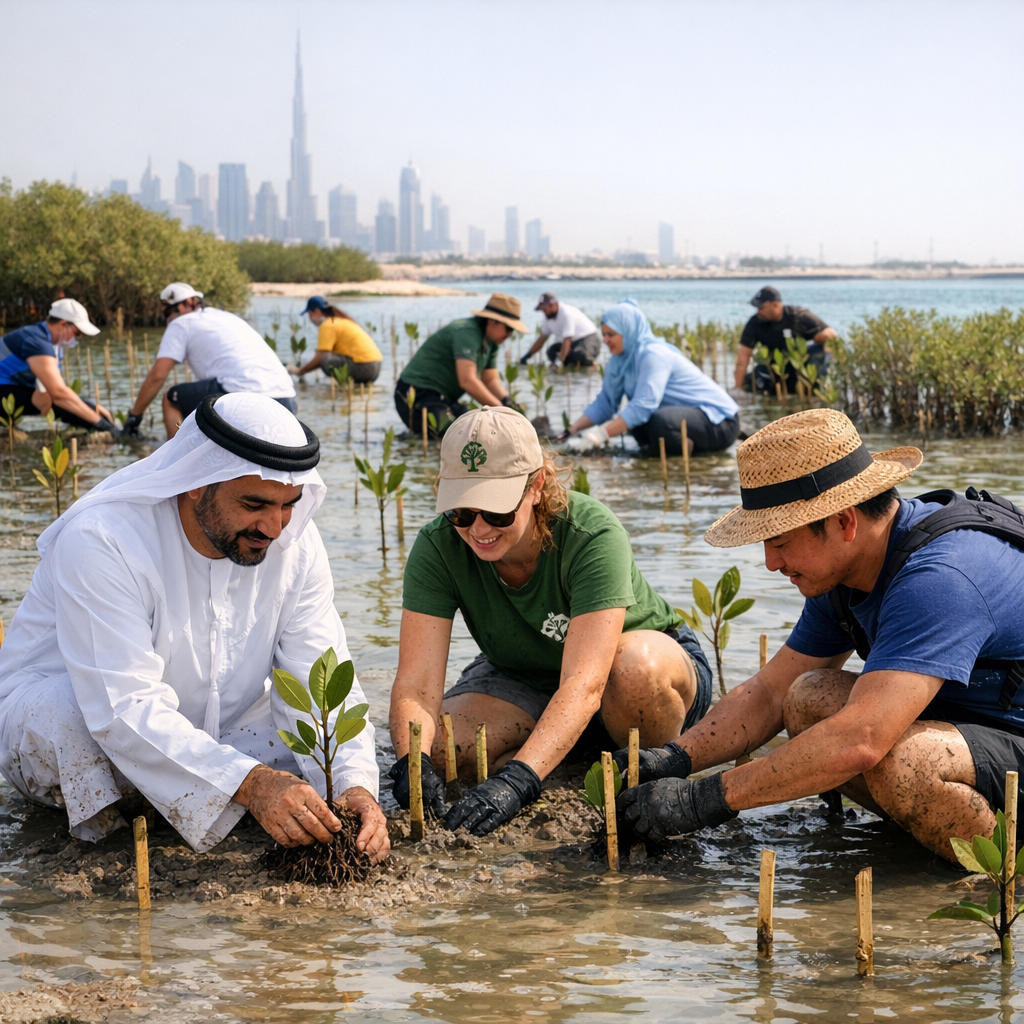
In line with this mission, the Dubai Electricity and Water Authority (DEWA) has undertaken significant projects to enhance environmental sustainability. Notably, DEWA, in collaboration with the Dubai Environment and Climate Change Authority, planted 700 mangrove trees at the Jebel Ali Marine Sanctuary. This initiative involved 254 volunteers contributing 508 hours of service, underscoring the community’s active participation in environmental conservation.
Community Engagement
Community involvement is crucial in achieving sustainability goals. DEWA’s beach clean-up campaigns have seen participation from over 2,000 volunteers, including employees, their families, and students. These efforts have resulted in the removal of more than 3,500 kilograms of waste, predominantly plastics, from Dubai’s beaches. Such initiatives not only clean the environment but also raise awareness about the importance of reducing plastic usage and promoting recycling.
Clean Energy and Waste Management
Dubai’s commitment to clean energy is evident in its ambitious projects. The city has invested over US$40 billion in the energy sector, focusing on renewable and clean energy sources. The Dubai Clean Energy Strategy aims to position the city as a global hub for clean energy by 2050, with plans to achieve the world’s smallest carbon footprint.
In waste management, Dubai has implemented the Integrated Waste Management Strategy 2041, encouraging innovation in waste management, recycling, and energy conversion. The Waste to Energy Center in Warsan is a testament to this commitment, being the largest and most efficient waste-to-energy conversion facility globally. It has the capacity to treat around 2 million tons of solid waste annually, generating power sufficient for over 135,000 homes.
How Residents Can Contribute
While government initiatives lay the foundation, the role of residents is indispensable. Here are ways individuals can contribute to Dubai’s sustainability efforts:
- Reduce Single-Use Plastics: Participate in initiatives like ‘Dubai Can,’ which encourages the use of refillable water bottles and provides access to free drinking water through public water stations.
- Engage in Community Clean-Ups: Join local beach and park clean-up events to help maintain the city’s natural beauty and protect wildlife.
- Adopt Sustainable Practices at Home: Implement energy-saving measures, such as using LED lighting, reducing water consumption, and recycling household waste.
- Support Green Spaces: Participate in tree-planting initiatives and support the maintenance of community gardens and parks.
By actively participating in these practices, residents can play a significant role in supporting Dubai’s vision for a sustainable and environmentally friendly future.