

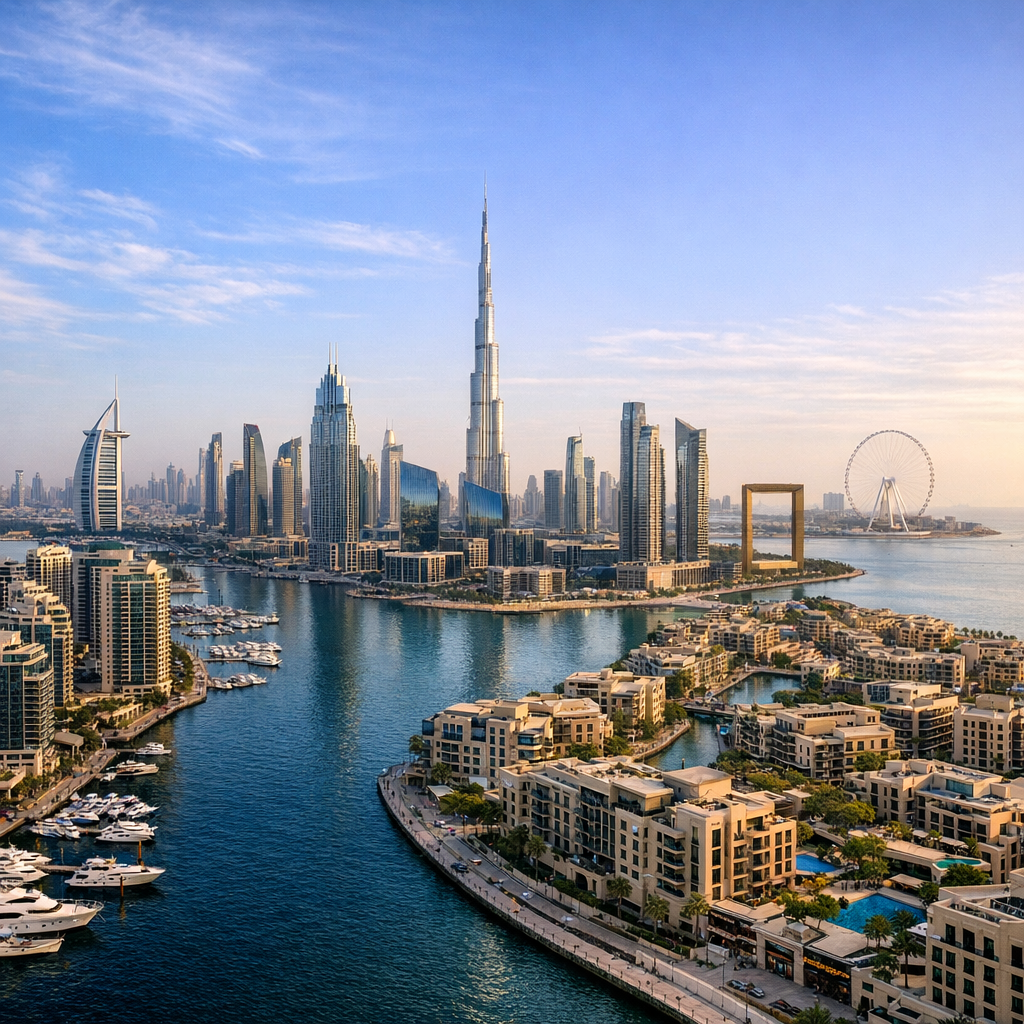
Dubai’s real estate market continues to demonstrate resilience and adaptability, reflecting the city’s dynamic growth and strategic initiatives. This article delves into the current market trends, rental dynamics, and significant development projects shaping Dubai’s housing sector.
Market Trends: A Shift Towards Homeownership
Recent data indicates a notable shift from renting to buying among home-seekers in Dubai. The share of sale-listing impressions rose from 47% in 2024 to 49% in 2025, while rent impressions declined from 53% to 51%. This trend is largely driven by favorable long-term residency policies, such as the UAE Golden Visa, and targeted initiatives like Dubai’s First-Time Home Buyer Programme, which has facilitated over 2,000 residents in purchasing their first homes, contributing more than AED 3.25 billion in residential property sales.
Additionally, there’s a growing demand for luxury and super-luxury homes priced above AED 2,500 per square foot. This surge is supported by a 46% year-on-year increase in high-net-worth individual inflows, reinforcing Dubai’s position as a global leader in wealth migration, with USD 63 billion in incoming wealth in 2025.
Rental Market Dynamics: Competitive Yet Attractive
Dubai’s rental market remains competitive, with average gross residential rental yields standing at 6.58% as of July 2026. Apartments average yields of 6.9%, townhouses at 5.1%, and villas at 4.5%. These returns are significantly higher than many established global property markets, continuing to attract international investors.
While rental growth has moderated compared to previous years, continued population growth, inward migration, and affordability constraints for some buyers support healthy occupancy levels across many established communities.
Development Projects: Expanding Horizons
Dubai’s commitment to expanding its real estate landscape is evident in the surge of new development projects. In 2025, over 25,000 new homes were launched, particularly near waterfronts and in affordable areas. However, as many of these projects are still under construction, rental prices have continued to rise, with apartment rents increasing by nearly 11% and villa rents by around 9%.
Notably, off-plan property sales surged by 17.5% quarter-on-quarter in Q3 2025, reaffirming Dubai’s position as one of the world’s most liquid and investor-centric markets. A total of 7,182 new residential units were delivered during this period, showcasing a measured supply pipeline.
Conclusion
Dubai’s real estate market is characterized by a dynamic interplay of factors, including policy-driven shifts towards homeownership, competitive yet attractive rental yields, and a robust pipeline of development projects. These elements collectively contribute to the city’s evolving housing landscape, offering opportunities for investors, homeowners, and renters alike.