

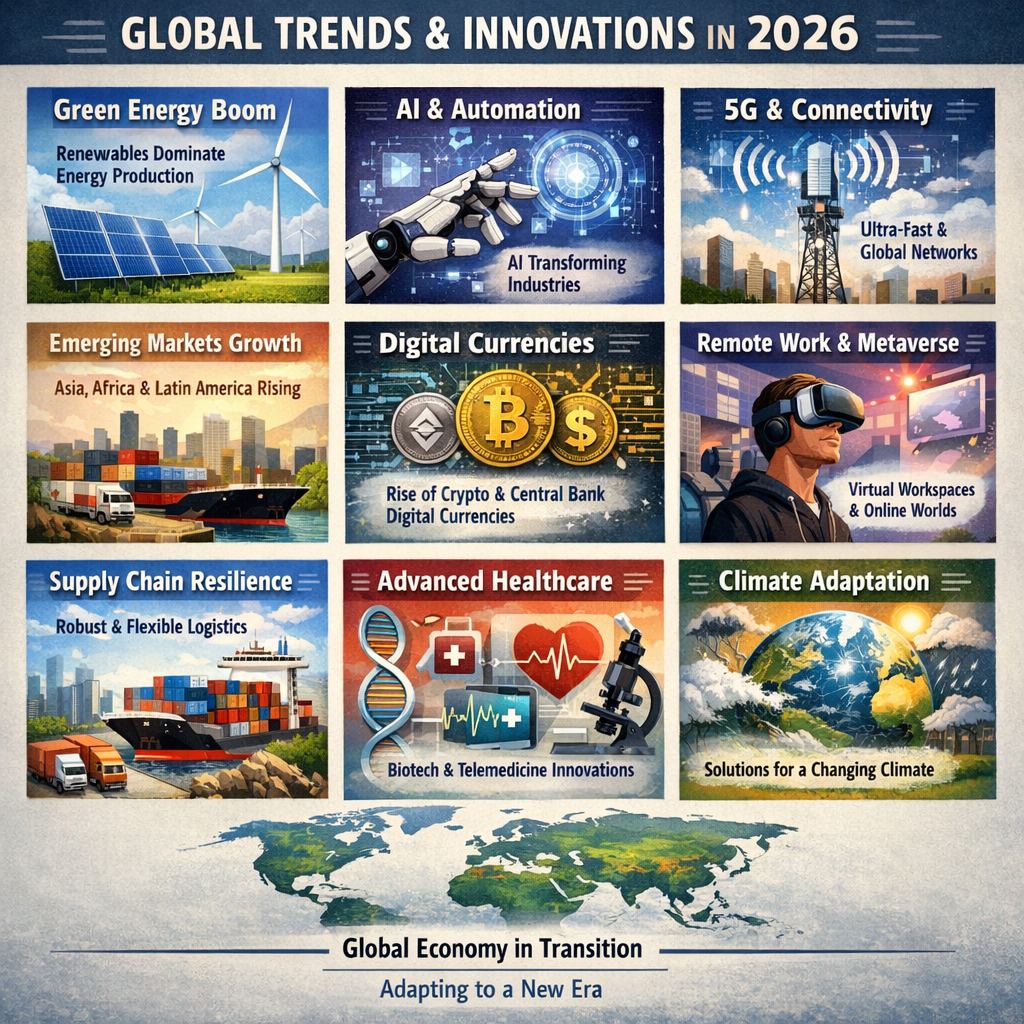
The global economy in 2026 presents a multifaceted scenario, characterized by moderate growth, technological advancements, and geopolitical tensions. Understanding these dynamics is crucial for stakeholders worldwide.
Moderate Global Growth
Global economic growth is projected to moderate to 3% in 2026, with a slight increase to 3.2% in 2027. This deceleration reflects subdued investment and structural challenges, despite easing inflation and monetary policy adjustments. Notably, the United States demonstrates resilience, driven by robust consumer spending and significant investments in artificial intelligence (AI). Conversely, Europe experiences slower growth, influenced by energy price fluctuations and geopolitical uncertainties.
Technological Innovations and AI Investments
AI continues to be a pivotal driver of economic activity. In the U.S., capital expenditures on AI are bolstering growth, with businesses investing heavily in AI-related technologies. This trend underscores the transformative impact of AI across various sectors, enhancing productivity and fostering innovation.
Geopolitical Tensions and Energy Markets
Geopolitical conflicts, particularly in the Middle East, have introduced volatility in global energy markets. The recent escalation in the region has led to higher energy prices, affecting economies dependent on energy imports. This situation underscores the interconnectedness of geopolitical events and economic stability.
Regional Economic Perspectives
In Asia, India’s economy is projected to grow robustly, driven by strong consumer demand. However, China’s growth is expected to slow due to challenges in the property sector and other structural issues. These regional dynamics highlight the diverse economic trajectories within Asia.
Policy Implications and Future Outlook
Policymakers face the challenge of balancing growth with inflation control. Central banks are likely to adjust interest rates cautiously, considering the delicate economic environment. Additionally, fostering international cooperation and addressing structural reforms remain essential for sustainable growth.
In conclusion, while the global economy in 2026 navigates through uncertainties, opportunities arising from technological advancements and strategic policy decisions offer pathways to resilience and prosperity.