

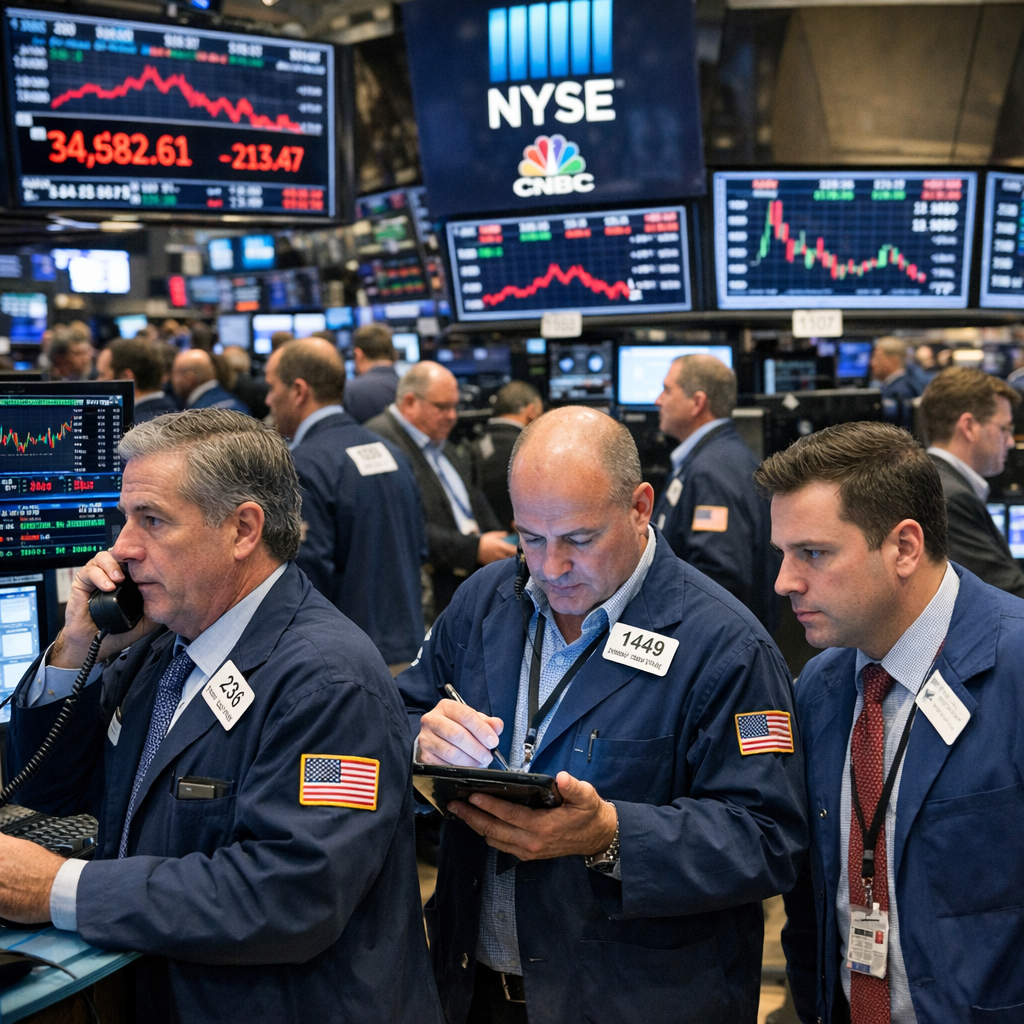
The United States economy is currently experiencing a complex interplay of factors that are shaping its trajectory. As of the second quarter of 2026, the Gross Domestic Product (GDP) growth rate has moderated to 1.5%, a decline from the 2.1% observed in the first quarter. This slowdown is primarily attributed to a surge in imports, which has offset robust consumer spending. Notably, consumer expenditure increased at a 3.2% annual rate, buoyed by a recovering job market and significant business investments, particularly in artificial intelligence (AI) technologies.
Inflationary Pressures and Federal Reserve Policies
Inflation remains a pressing concern, with the Personal Consumption Expenditures (PCE) price index indicating a 3.7% year-over-year increase. Core inflation, which excludes volatile food and energy prices, stands at 3.3%, surpassing the Federal Reserve’s long-term target of 2%. In response, the Federal Reserve has maintained its benchmark interest rates at 3.5% to 3.75%, despite internal disagreements within the Federal Open Market Committee (FOMC). This decision reflects a delicate balancing act between controlling inflation and supporting economic growth.
Impact of AI Investments
AI-related investments have emerged as a significant driver of economic activity. Businesses are heavily investing in AI infrastructure, leading to substantial productivity gains. However, the benefits of these investments are unevenly distributed, with concerns about potential job displacement and the need for effective redistribution policies to mitigate adverse effects on the labor market.
Geopolitical Influences and Energy Prices
Geopolitical tensions, particularly in the Middle East, have led to heightened energy prices, contributing to inflationary pressures. The ongoing conflict has disrupted oil supplies, resulting in increased costs for consumers and businesses alike. These developments underscore the interconnectedness of global events and domestic economic conditions.
Fiscal Policies and Trade Dynamics
Recent fiscal policies, including tax reforms and increased tariffs, have had mixed effects on the economy. While certain tax provisions have provided a modest boost to activity, higher tariffs have introduced supply shocks, raising price levels and impacting trade balances. The International Monetary Fund (IMF) projects that these policies will lead to a modest decline in the current account deficit over the medium term.
Looking Ahead
Looking forward, the U.S. economy is projected to grow at a steady pace, with forecasts indicating a 2% GDP growth into 2027. However, several risks persist, including potential consumer spending pullbacks due to low savings rates, inflationary pressures from geopolitical conflicts affecting energy prices, and possible interest rate hikes by the Federal Reserve. Additionally, the reliance on imports for business investments may limit the domestic benefits of such expenditures.
In summary, the U.S. economy is navigating a period of moderated growth influenced by a combination of strong consumer spending, significant AI investments, persistent inflation, and complex geopolitical dynamics. Policymakers face the challenge of balancing these factors to sustain economic stability and growth.