

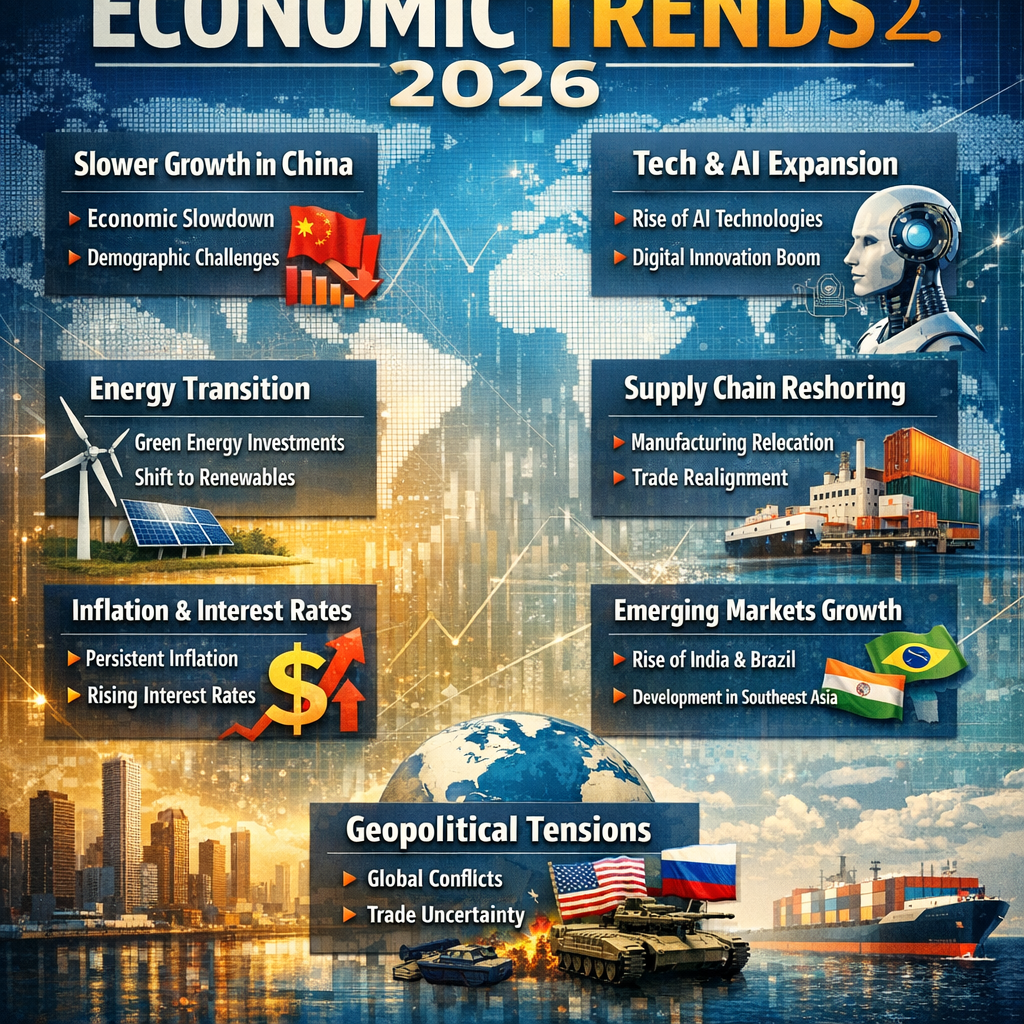
The global economic landscape is currently navigating a complex interplay of geopolitical tensions and technological advancements. Recent conflicts in the Middle East have introduced significant uncertainties, particularly affecting energy markets and inflation rates.
Impact of Middle East Conflicts
The ongoing conflict in the Middle East has led to disruptions in energy supplies, resulting in increased global energy prices. This surge has placed upward pressure on inflation, with G20 countries projected to experience a headline inflation rate of 4.0% in 2026. The energy supply shock is also expected to weigh on global growth, which is projected at 2.9% in 2026 and 3.0% in 2027.
Technological Advancements and Economic Resilience
Despite these challenges, technological advancements, particularly in artificial intelligence (AI), are contributing to economic resilience. In the United States, investments in AI and robust consumer spending are driving growth, with GDP projected at 2.0% in 2026. This trend underscores the potential of technology to offset some of the negative impacts of geopolitical tensions.
Regional Economic Projections
Economic projections vary across regions. The euro area is expected to see growth of 0.8% in 2026, while China’s growth is projected to slow to 4.4% in the same year. These figures reflect the uneven impact of current global challenges and the varying capacities of regions to adapt.
Policy Recommendations
In light of these developments, policymakers are advised to implement timely measures targeting households and businesses most in need. Recommendations include setting termination dates for fiscal support to ensure sustainability, diversifying energy sources, and promoting eco-friendly energy solutions. Such strategies aim to mitigate the adverse effects of current geopolitical tensions and foster long-term economic stability.