

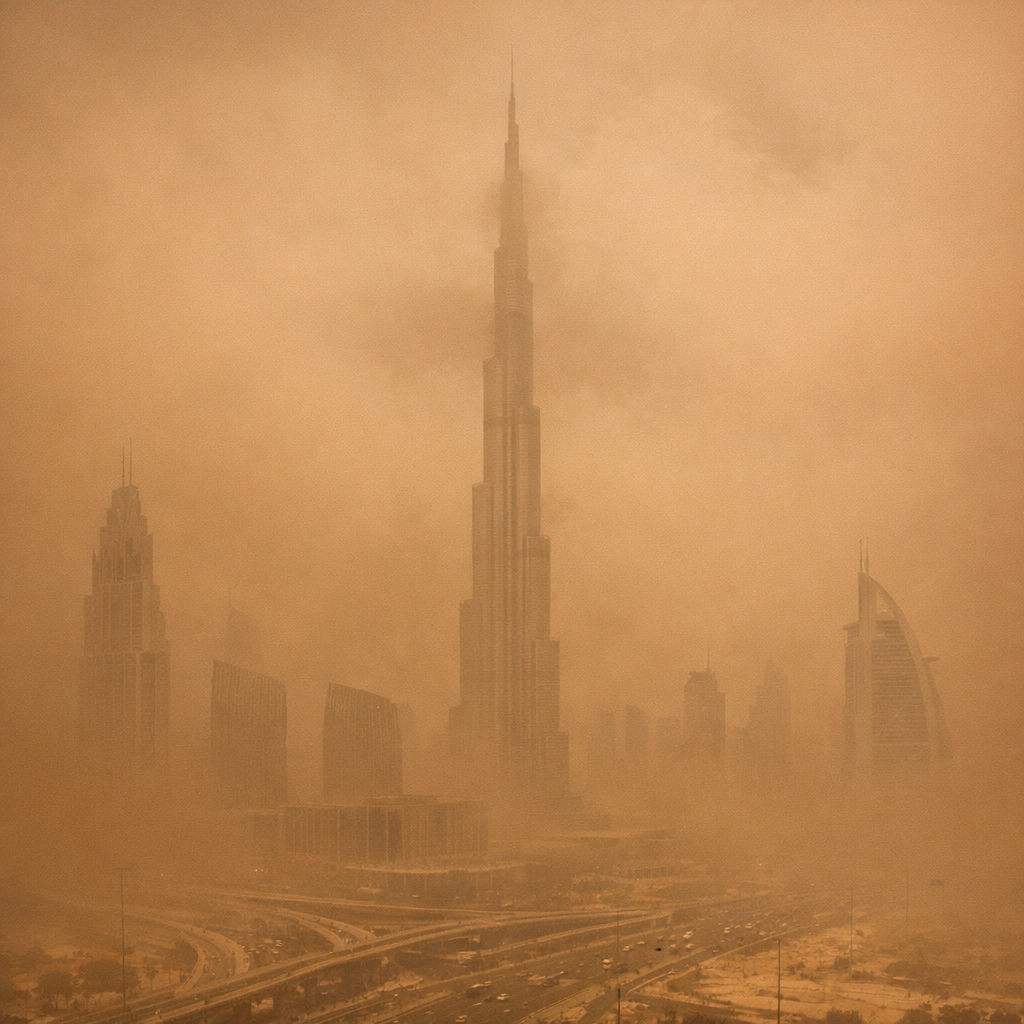
Dubai’s climate is characterized by its hot desert environment, with distinct seasonal variations and unique environmental challenges. Understanding these patterns is essential for residents and visitors alike.
Seasonal Overview
Summer (May to September)
During the summer months, Dubai experiences intense heat, with daytime temperatures often exceeding 45°C (113°F). Humidity levels can reach up to 90%, especially near the coast, making outdoor activities challenging. The combination of high temperatures and humidity can lead to heat-related illnesses if proper precautions are not taken.
Winter (November to March)
Winter offers a respite from the heat, with daytime temperatures ranging between 20°C (68°F) and 26°C (79°F). This period is marked by cooler evenings and occasional rainfall, contributing to a more comfortable climate for outdoor activities.
Environmental Challenges
Sandstorms
Dubai is susceptible to sandstorms, particularly during the summer months. These storms, driven by strong northwesterly winds known as ‘Shamal,’ can reduce visibility and impact air quality. Residents are advised to stay indoors during severe sandstorms and take necessary precautions to protect their health.
Water Scarcity
As a desert city, Dubai faces challenges related to water scarcity. The region receives minimal annual rainfall, averaging around 76 mm per year. This necessitates reliance on desalination plants and water conservation measures to meet the needs of the population.
Climate Trends
Over the past decades, Dubai has experienced a warming trend, with average temperatures increasing by approximately 2.5°C between 1940 and 2025. This trend underscores the importance of sustainable practices and climate resilience strategies to mitigate the impacts of rising temperatures.
Understanding Dubai’s climate and environmental challenges is crucial for adapting to its unique conditions and promoting sustainable living in the region.