

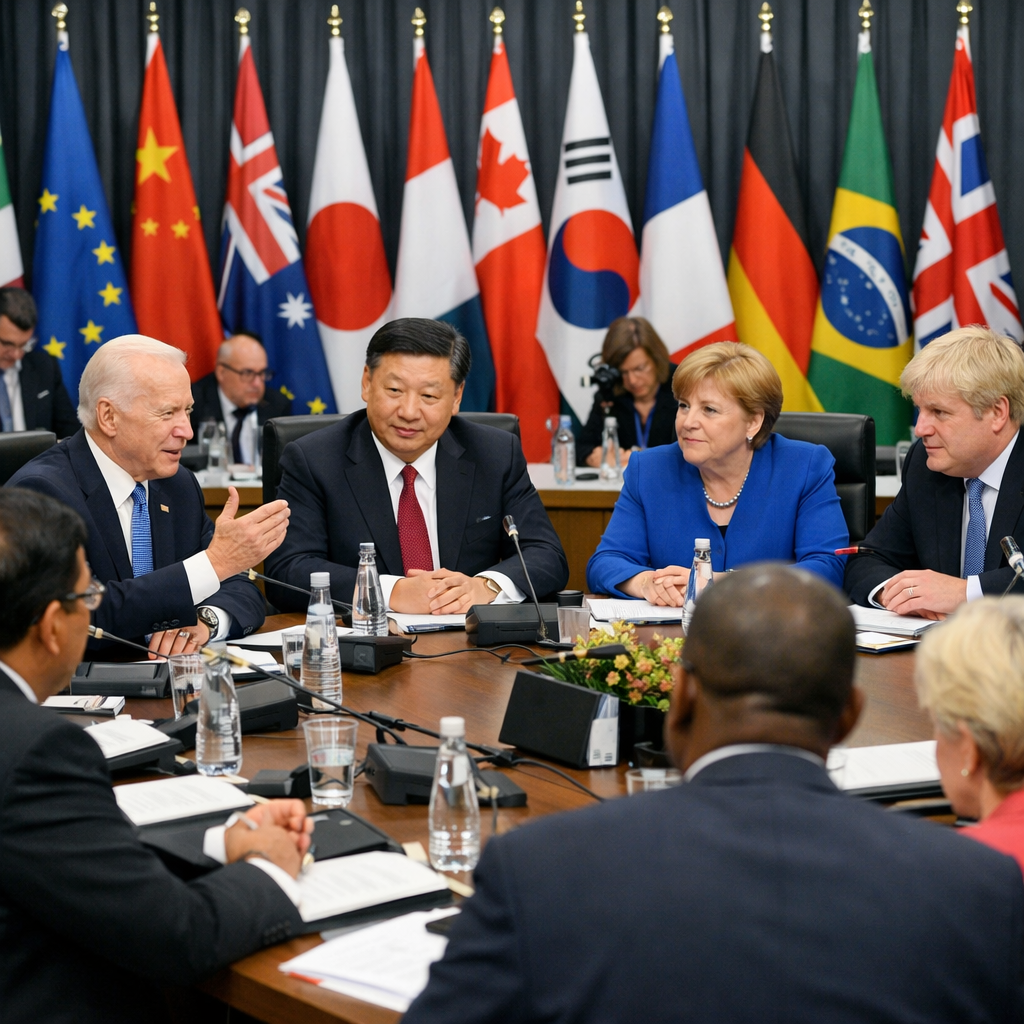
The global economy is currently navigating a complex landscape marked by geopolitical tensions, technological advancements, and varying regional growth trajectories. Understanding these dynamics is crucial for policymakers, businesses, and individuals alike.
Global Growth Trends
Recent analyses indicate a moderation in global economic growth. The United Nations Conference on Trade and Development (UNCTAD) projects a slowdown to 2.7% in 2026, influenced by subdued investment and structural challenges. Similarly, S&P Global forecasts a modest growth of 3.2% for the same year, highlighting the impact of geopolitical risks and volatile oil prices.
Regional Economic Developments
In the United States, resilience is observed, driven by consumer spending and investments in artificial intelligence (AI). However, Europe faces stagnation, with the eurozone’s growth projected at 0.8% in 2026, affected by rising energy costs and geopolitical uncertainties. Asia presents a mixed picture: India is expected to lead with a robust 6.4% growth, while China’s expansion may slow to 4.5%, hindered by property sector challenges.
Impact of Geopolitical Tensions
Geopolitical developments significantly influence economic trajectories. The Middle East conflict has disrupted oil exports, leading to rising commodity prices and inflationary pressures. This situation underscores the interconnectedness of global markets and the need for strategic responses to geopolitical events.
Technological Advancements and Economic Implications
The rapid deployment of AI is reshaping economic landscapes. While AI investments drive growth in sectors like technology and defense, they also pose challenges, including potential job displacements and ethical considerations. Balancing innovation with societal impacts remains a critical task for global economies.
Conclusion
As the world grapples with these multifaceted challenges, a nuanced understanding of regional dynamics, technological trends, and geopolitical developments is essential. Stakeholders must remain vigilant and adaptable to navigate the uncertainties of the global economic environment.