

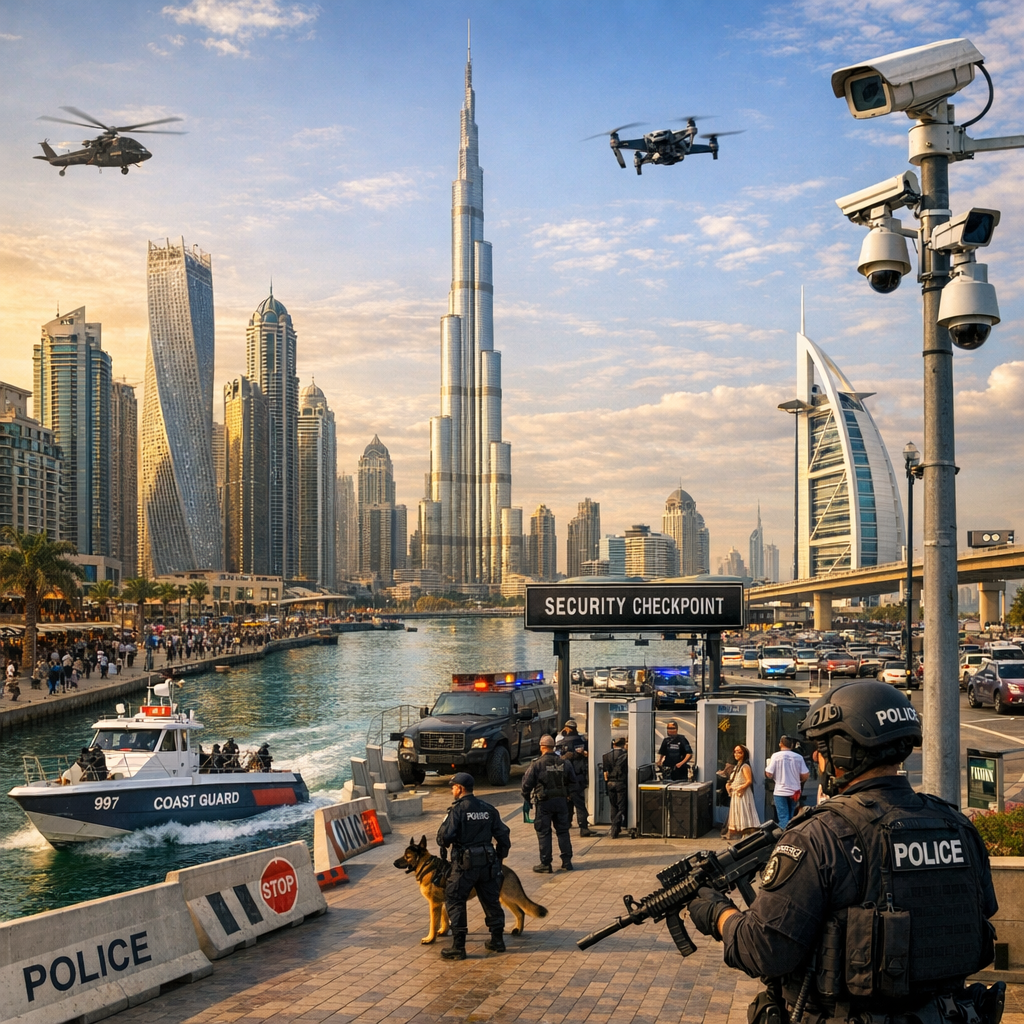
Dubai has long been celebrated as a beacon of stability and prosperity in the Middle East, attracting millions of tourists and serving as a global business hub. However, recent regional conflicts have posed significant challenges to the emirate’s economic and security landscape.
Impact on Tourism and Aviation
In 2025, Dubai International Airport set a new record by handling 95.2 million passengers, maintaining its status as the world’s busiest airport for international travel. This surge reflects Dubai’s continuing economic boom, driven by rising tourism, business, and real estate development. The city welcomed 19.6 million tourists, marking a 5% increase and a third straight year of record-breaking visitor numbers. The airport, central to “Dubai Inc.” and hub for Emirates airline, has seen consistent growth, up from 92.3 million passengers in 2024 and 86.9 million in 2023. India, Saudi Arabia, and the UK were top travel destinations in 2025. Operating with 108 airlines serving 291 cities across 110 countries, Dubai International is both a transit hub and a destination. However, growth is raising concerns about congestion and rising costs. To accommodate long-term demand, Dubai plans to relocate operations to Al Maktoum International Airport by 2032, following a $35 billion expansion project.
Economic Implications
The ongoing war with Iran is challenging Dubai’s position as a secure haven for the global elite. Known for its safety, tax-free benefits, and status as a global financial hub, Dubai saw nearly 10,000 millionaires bring in $63 billion in wealth last year. The city has successfully attracted the super wealthy by offering no income, capital gains, or inheritance taxes, and positioning itself as a hub for Persian Gulf sovereign wealth and hedge fund activity. However, fears of becoming a target in the regional conflict are now prompting some wealthy residents to flee the city. At the same time, others are attempting to return to Dubai to maintain tax residency status. The situation underscores the vulnerability of even financially robust cities in times of geopolitical instability.
Security Concerns
As tensions escalate in the Persian Gulf, Dubai’s financial sector is experiencing unease amid growing fears of prolonged conflict. Despite apparent normalcy with bustling traffic and packed public transport, the business milieu is increasingly impacted by missile threats, drone attacks—such as those on Amazon data centers in the UAE and Bahrain—and political instability. The UAE government, meanwhile, maintains strict control over public sentiment, suppressing expressions of fear and promoting a narrative of security to preserve Dubai’s image as a stable financial hub.
While Dubai has long attracted expatriates and ultra-wealthy individuals lured by tax-free income and luxurious living, growing insecurity has prompted some businesses to temporarily relocate staff. Yet most expatriates have returned, drawn by high earnings and quality of life. However, Dubai’s appeal is fading for newcomers and investors wary of regional volatility. The city’s role in facilitating money laundering and evading international sanctions—including ties to Iranian financial activities—adds to its complex financial dynamics.
As the new school year nears, experts fear that continued instability could result in an exodus of families and declining investor confidence. The uncertainty surrounding the duration of the conflict is placing Dubai’s reputation and economic vibrancy at risk.
Looking Ahead
Despite these challenges, Dubai’s leadership remains committed to reinforcing the city’s resilience. Initiatives to bolster security measures, diversify the economy, and maintain open channels of communication with international partners are underway. The coming months will be crucial in determining how Dubai navigates these turbulent times and continues to uphold its status as a global hub.