

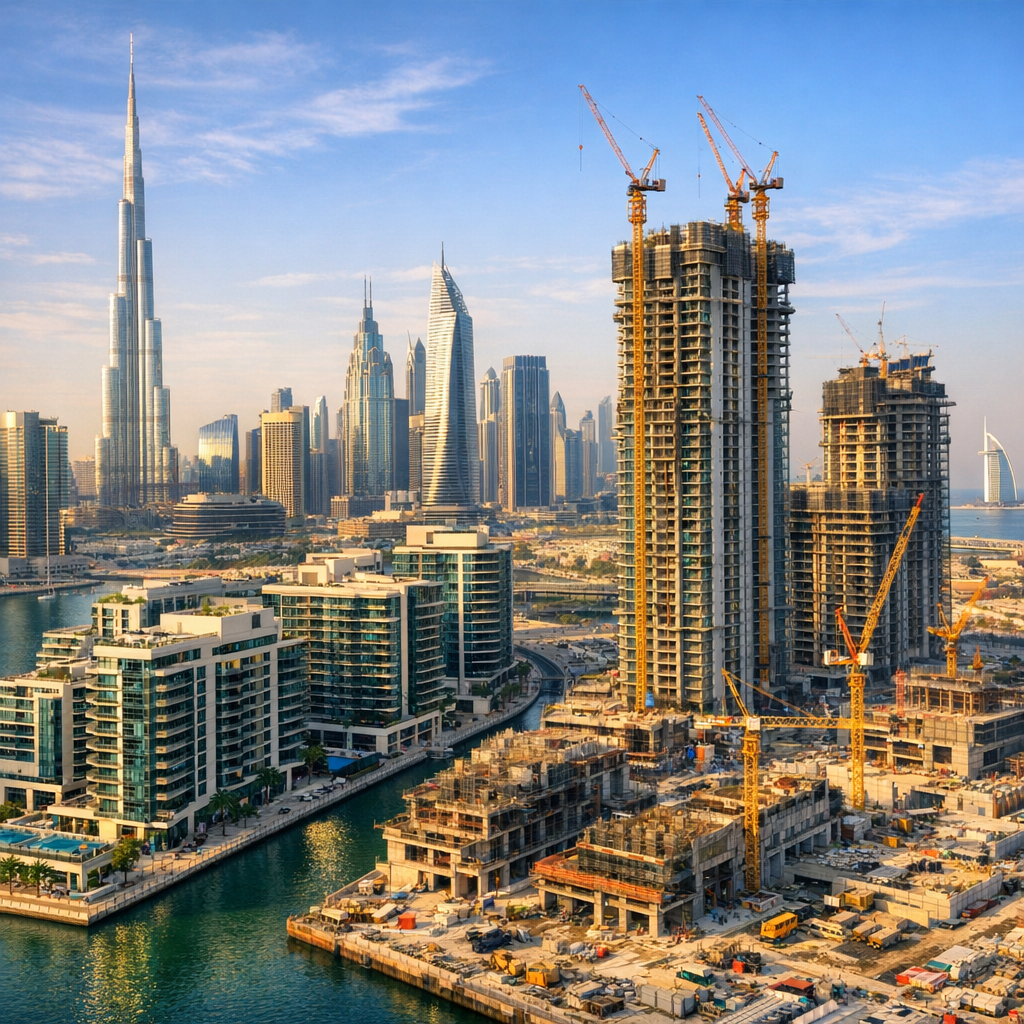
Dubai’s real estate market continues to evolve, reflecting the city’s dynamic growth and the diverse needs of its residents and investors. Understanding the current trends in market dynamics, rental patterns, home buying behaviors, and local developments is essential for making informed decisions.
Market Trends
Recent data indicates a moderation in the rapid price appreciation observed in previous years. As of Q3 2025, city-wide residential sales prices reached AED 1,871 per square foot, marking a 13% year-on-year increase. This growth is notably slower compared to earlier periods, particularly in the apartment segment. The market is also witnessing a significant pipeline of new residential units, with over 7,800 units delivered in Q3 2025 and an additional 14,900 expected in Q4, contributing to a total of 44,000 units for the year—the highest in five years. This influx of supply is anticipated to gradually temper the market, leading to a moderation in both price and rental growth.
Rental Market Dynamics
The rental sector has experienced consistent demand, with average asking rents increasing by 7–11% year-over-year across the emirate. Family-oriented communities and waterfront locations have seen the strongest growth. However, due to rising property prices, gross rental yields have slightly compressed. For instance, areas like Jumeirah Village Circle (JVC) reported an average annual rent of AED 62,000 for a one-bedroom apartment, yielding 7.8%, a slight decrease of 0.4% year-on-year. Despite this compression, Dubai’s rental yields remain attractive compared to many global markets.
Home Buying Patterns
There’s a noticeable shift from renting to buying among residents, driven by favorable long-term residency policies such as the UAE Golden Visa and home-ownership linked residency norms. The First-Time Home Buyer (FTHB) Programme has been particularly impactful, with over 2,000 residents purchasing their first home under the program in the last six months, resulting in more than AED 3.25 billion in residential property sales. Additionally, there’s an increasing preference for luxury and super-luxury homes, supported by a 46% year-on-year rise in high-net-worth individual inflows, reinforcing Dubai’s position as a global leader in wealth migration.
Local Developments
Infrastructure developments are significantly influencing property values and buyer interest. Communities linked to major projects, such as the upcoming Dubai Metro Blue Line, are expected to outperform. Areas like Dubai Creek Harbour, Festival City, and parts of Dubai Silicon Oasis and International City are already seeing renewed interest as buyers factor in commute times, walkability, and access to employment hubs more directly into their decisions. Additionally, the off-plan market is experiencing unprecedented activity, with over 28,000 new residential units launched in Q1 2026 alone. Developers are offering increasingly aggressive and buyer-friendly payment plans, including 1% per month during construction and post-handover plans extending up to five years, making home ownership more accessible to a broader audience.
In conclusion, Dubai’s real estate market is characterized by a maturing landscape with moderated growth, evolving rental dynamics, a shift towards home ownership, and strategic local developments. Staying informed about these trends is crucial for residents and investors aiming to navigate the market effectively.