

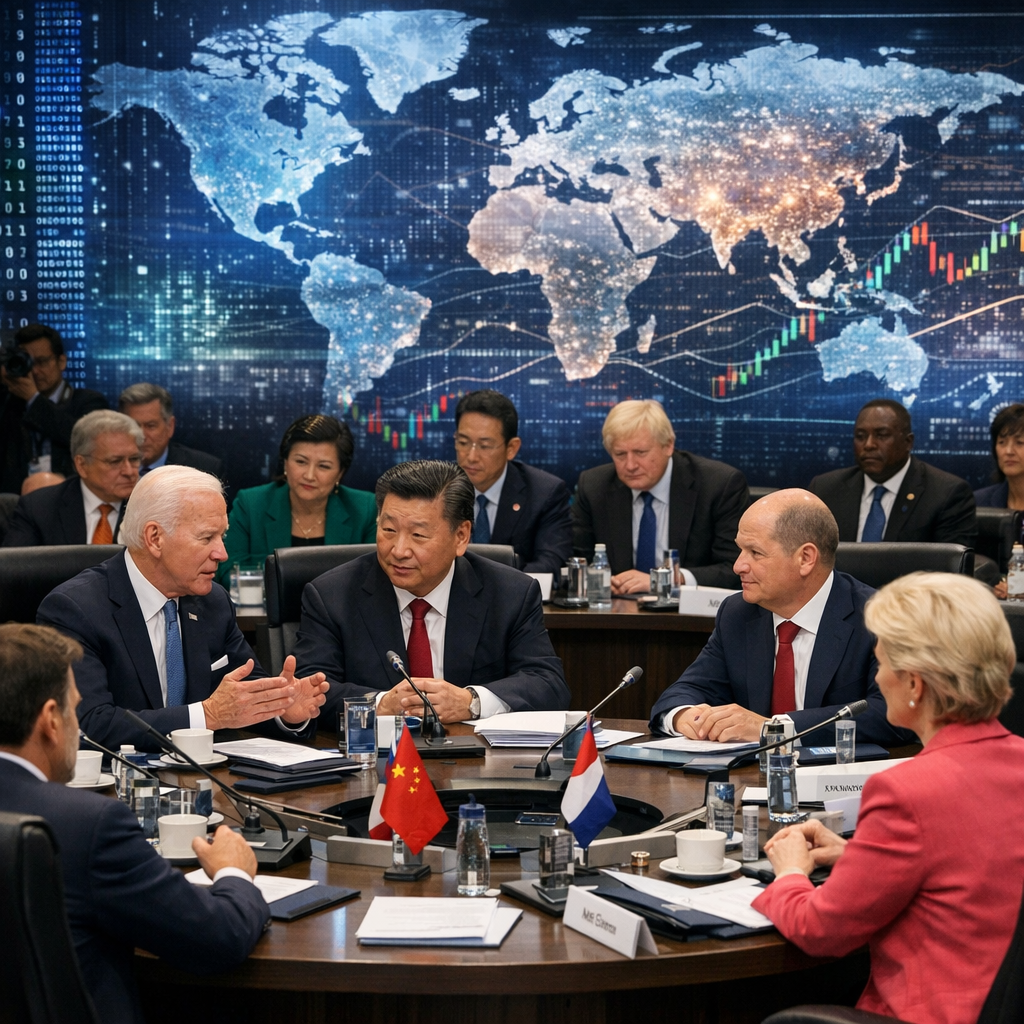
The global economic landscape is currently characterized by a blend of technological innovation and geopolitical challenges, each playing a significant role in shaping growth trajectories across different regions.
Technological Advancements and Economic Growth
Artificial Intelligence (AI) continues to be a pivotal driver of economic activity. In the United States, substantial investments in AI are bolstering business expenditures and consumer spending, contributing to a projected GDP growth of 1.8% in 2026 and 2.0% in 2027. Similarly, China’s focus on AI, aerospace, and quantum technology is expected to support its economic expansion, with a forecasted real GDP growth of 5% in 2026.
Geopolitical Tensions and Economic Impacts
Geopolitical developments are introducing uncertainties into the global economic outlook. The ongoing conflict in Ukraine has intensified, with Russia’s strikes and hybrid warfare tactics affecting not only the region but also the broader European economy. These tensions have led to increased energy prices and supply chain disruptions, contributing to a slowdown in economic growth in Europe, where GDP is projected to grow at a modest 1.1% in 2026.
In the Middle East, conflicts have disrupted oil exports, leading to rising commodity prices and inflationary pressures worldwide. This energy crisis has contributed to a global inflation rate expected to reach around 4.5%, with global growth forecasted to slow to 2.8% in 2026.
Regional Economic Outlooks
In Asia, India stands out with robust growth, projected at 6.4% in 2026, driven by strong consumer demand. Conversely, China’s growth is expected to slow to 4.5%, hindered by challenges in the property sector, despite gains in green technology and AI exports.
Latin America faces economic pressures from low commodity prices and trade issues, with growth prospects remaining subdued. In the United States, despite a resilient tech sector, the economy is experiencing a cooling labor market, affecting middle- and lower-income households.
Policy Responses and Future Prospects
Central banks are navigating a delicate balance between controlling inflation and supporting economic growth. The Federal Reserve is expected to cut rates modestly, while the European Central Bank is likely to hold rates stable. The Bank of Japan may consider increasing rates in response to inflationary pressures.
In conclusion, the global economy is at a crossroads, influenced by rapid technological advancements and complex geopolitical dynamics. Policymakers and businesses must remain agile, adapting to these evolving challenges to foster sustainable economic growth.