

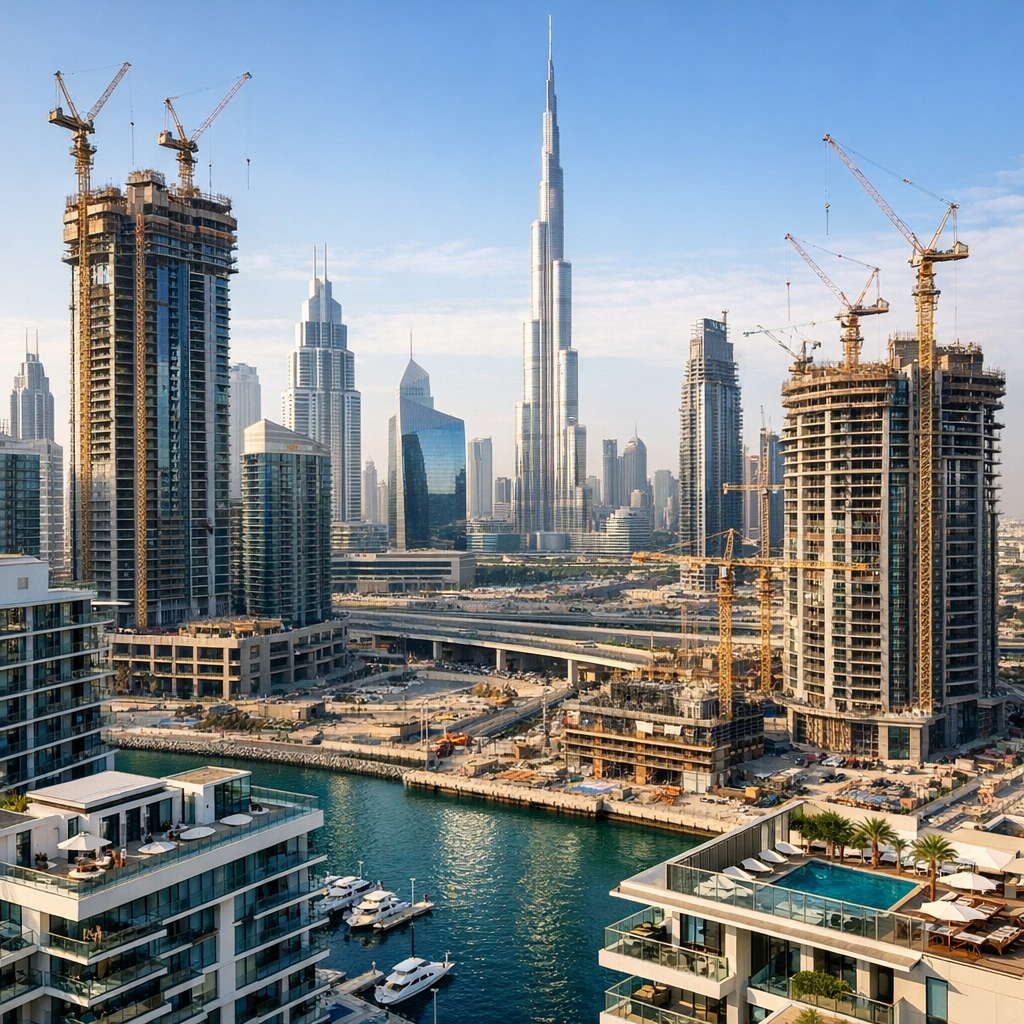
Dubai’s real estate market continues to evolve, reflecting the city’s dynamic growth and the diverse needs of its residents and investors. Understanding the current trends in market dynamics, rental patterns, home buying behaviors, and local developments is essential for making informed decisions.
Market Trends
Recent data indicates a moderation in the rapid price appreciation observed in previous years. As of Q3 2025, city-wide residential sales prices reached AED 1,871 per square foot, marking a 13% year-on-year increase. This growth, while still positive, shows signs of stabilization, particularly in the apartment segment. The delivery of over 7,800 units in Q3 2025, with an additional 14,900 expected in Q4, contributes to this trend, suggesting a gradual alignment of supply and demand.
Rental Market Dynamics
The rental market has experienced significant activity, with total tenancy contracts increasing by 6% to 1.38 million agreements in 2025. New tenancy contracts grew by 10%, reflecting strong inbound population demand, while renewals rose by 3%, indicating tenant stability and satisfaction. This robust demand has led to a 17% year-on-year rise in rental values, signaling a maturing market attractive to global property investors.
Home Buying Patterns
There’s a noticeable shift from renting to buying among home-seekers, driven by favorable long-term residency policies such as the UAE Golden Visa and home-ownership linked residency norms. The First-Time Home Buyer (FTHB) Programme has seen strong results, with over 2,000 residents purchasing their first home under the program over the last six months, driving more than AED 3.25 billion in residential property sales. Additionally, buyers are increasingly moving towards luxury and super-luxury homes, supported by a 46% year-on-year rise in high-net-worth individual inflows.
Local Developments
Infrastructure developments are playing a pivotal role in shaping the real estate landscape. Communities linked to major projects, such as the upcoming Dubai Metro Blue Line, are expected to outperform. Areas like Dubai Creek Harbour, Festival City, and parts of Dubai Silicon Oasis and International City are already seeing renewed interest as buyers factor in commute times, walkability, and access to employment hubs more directly into pricing decisions.
In conclusion, Dubai’s real estate market is entering a phase of measured growth and maturation. Stakeholders should stay informed about these evolving trends to navigate the market effectively.