

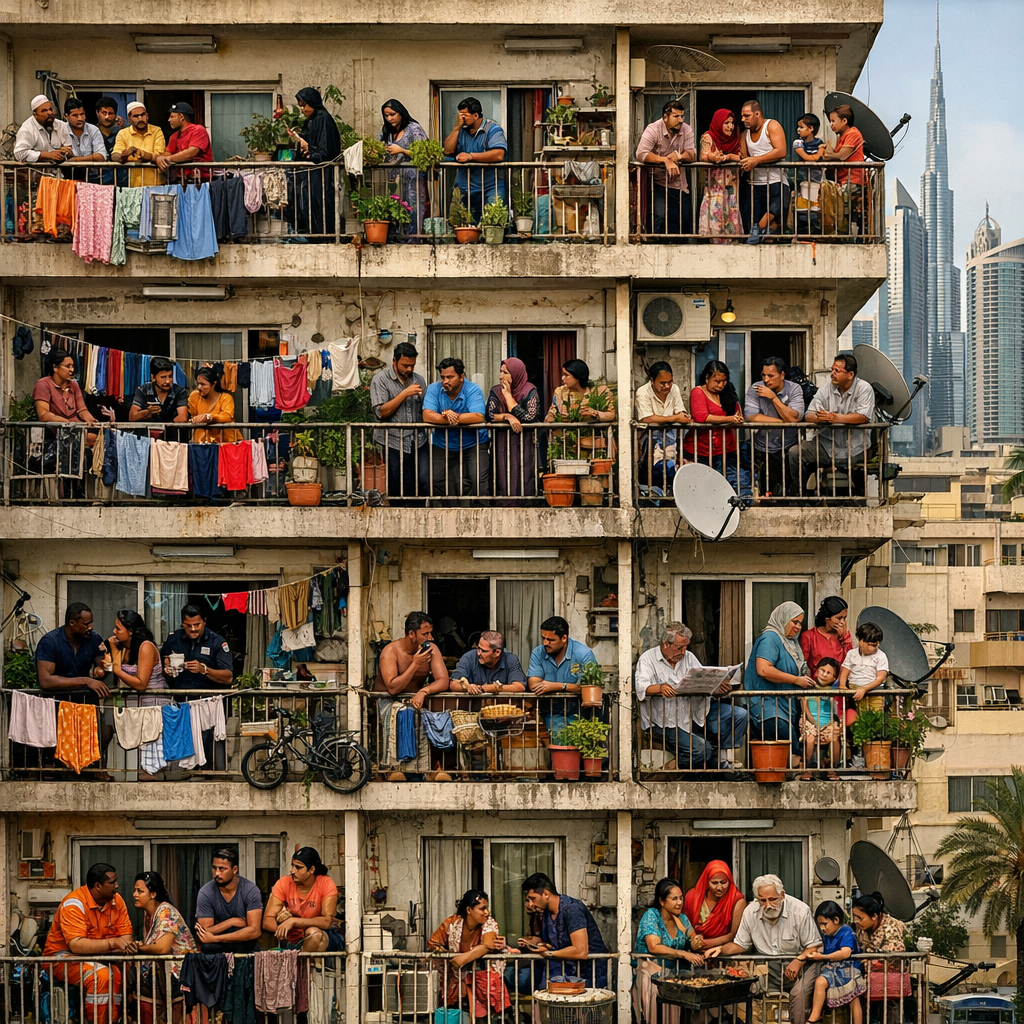
Dubai’s rapid urban expansion has brought about numerous challenges, notably the issue of overcrowding in residential communities. This phenomenon has raised significant concerns regarding safety, infrastructure strain, and overall quality of life for residents.
Overcrowding in Residential Areas
In several neighborhoods, instances of excessive occupancy have been reported. For example, in the Deira area, some apartments have been found to house over 35 individuals, leading to noise disturbances and compromised living conditions. Such overcrowding not only affects the residents’ well-being but also places undue pressure on building facilities and services.
Safety and Health Implications
The practice of partitioning apartments to accommodate more tenants has become prevalent in areas like Jumeirah Beach Residence (JBR). This has resulted in overcrowded rooms and unsanitary common areas, raising alarms about potential safety hazards and health risks. The lack of proper ventilation and increased wear and tear on building infrastructure are among the primary concerns.
Community and Government Response
Residents have voiced their grievances to building management and local authorities, seeking intervention to address these issues. The Dubai Municipality has been urged to enforce housing regulations more stringently to prevent illegal subletting and ensure that living conditions meet acceptable standards.
Moving Forward
To mitigate the challenges posed by overcrowding, a multifaceted approach is necessary. This includes stricter enforcement of housing laws, public awareness campaigns about the risks associated with overcrowded living conditions, and the development of affordable housing options to accommodate the city’s growing population. Collaborative efforts between residents, property owners, and government agencies are essential to foster a safe and healthy living environment for all.