

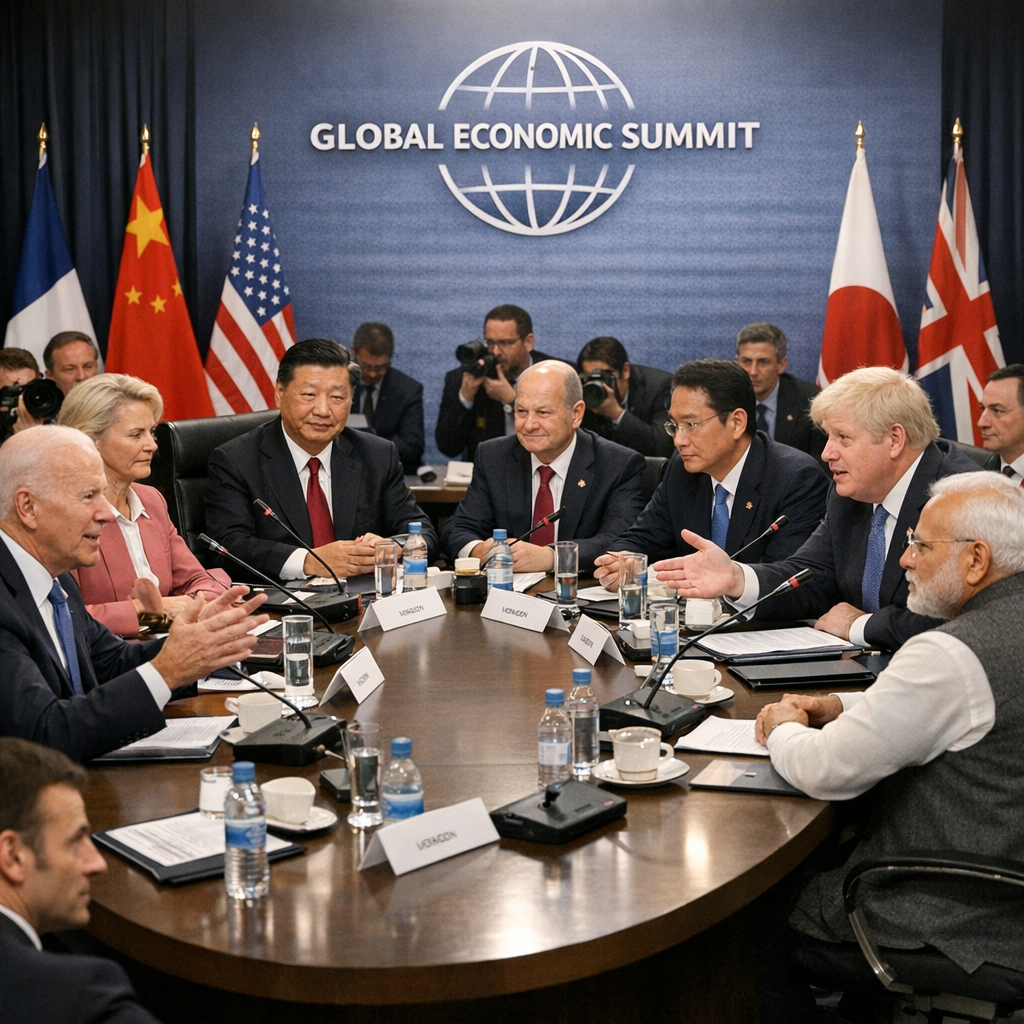
The global economy is currently navigating a complex landscape shaped by technological innovations and geopolitical developments. As nations adapt to these changes, understanding the prevailing trends and challenges becomes crucial.
Moderate Global Growth Amidst Uncertainty
Global economic growth is projected to moderate, with estimates indicating a slowdown to 2.7% in 2026, down from previous years. This deceleration is attributed to subdued investment and structural challenges, despite easing inflation and monetary policy adjustments. The outlook remains uneven across regions, with some economies demonstrating resilience while others face headwinds.
Technological Innovations Driving Economic Activity
Investments in artificial intelligence (AI) and related technologies are emerging as significant drivers of economic activity. In the United States, for instance, AI capital investment and consumer spending are bolstering growth, contributing to a projected GDP increase of 2.1% in 2026. This trend underscores the transformative impact of technology on economic dynamics.
Geopolitical Tensions and Their Economic Implications
Geopolitical developments continue to influence economic trajectories. The ongoing conflict in Ukraine has intensified, with recent Russian strikes and hybrid warfare tactics extending beyond direct military confrontations. These actions have heightened uncertainty among Ukraine’s Western allies and have broader implications for global stability.
In the Middle East, diplomatic efforts are underway to address regional conflicts. French President Emmanuel Macron, for example, is leveraging international platforms to mediate in the US-Iran conflict and to reopen critical trade routes like the Strait of Hormuz, which have been disrupted, affecting global oil markets.
Regional Economic Performances
Different regions are experiencing varied economic performances. Europe faces challenges, with the eurozone’s growth projected at just 0.8% in 2026, as energy costs impact industrial output. In contrast, India is poised for robust growth, with a forecasted increase of 6.5%, driven by strong domestic demand. China’s growth is expected to slow to 4.5%, influenced by issues in the property sector and other structural factors.
Policy Responses and Future Outlook
Central banks are adopting cautious approaches in response to these economic conditions. Interest rates are unlikely to decrease soon due to inflation concerns, and monetary policies are being carefully calibrated to balance growth and stability. The global economic outlook remains fragile, with ongoing geopolitical tensions, technological transformations, and policy decisions playing pivotal roles in shaping future trajectories.
As the world continues to adapt to these multifaceted challenges, staying informed and agile will be essential for navigating the evolving economic landscape.