

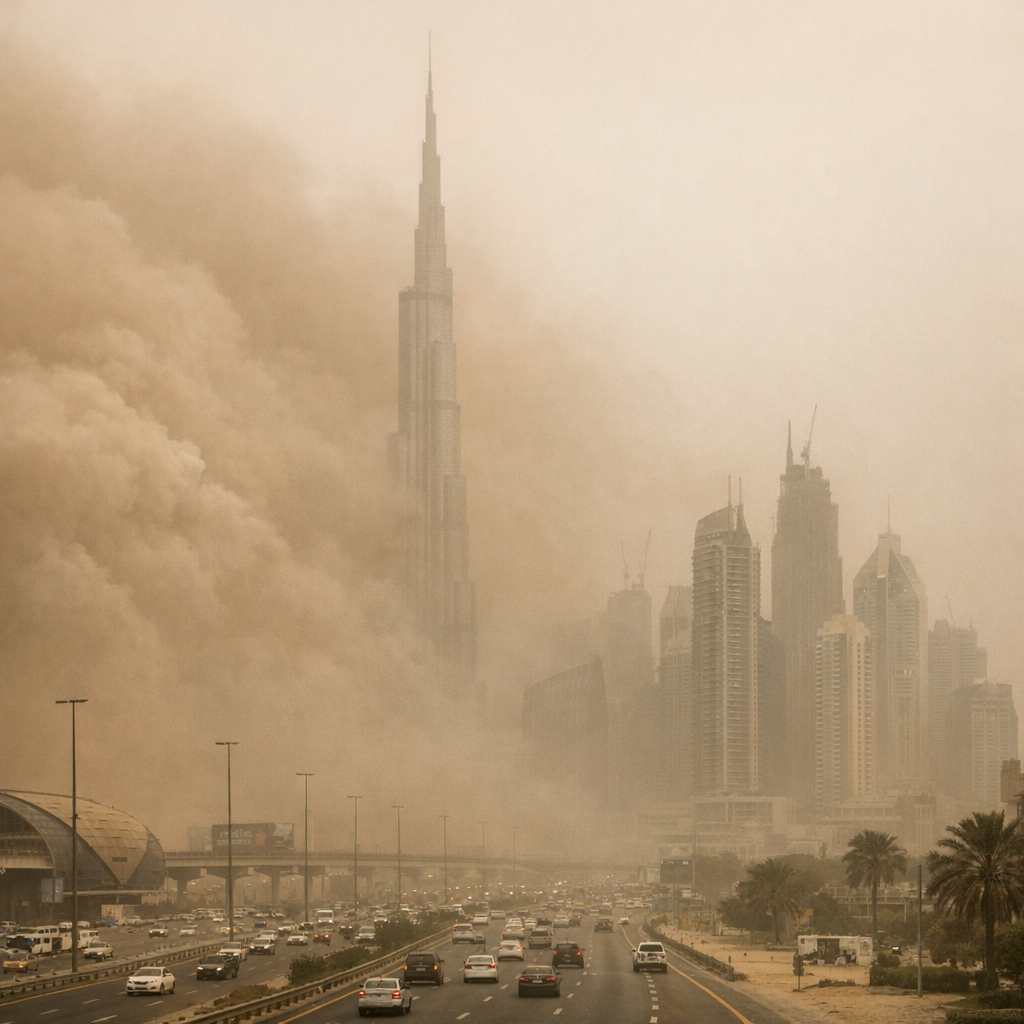
Dubai’s climate is characterized by its hot desert environment, with distinct seasonal variations and environmental challenges that residents and visitors should be aware of.
Seasonal Weather Patterns
Summer (June to September)
During the summer months, Dubai experiences intense heat, with daytime temperatures often exceeding 45°C (113°F). High humidity levels, especially near the coast, can make the heat feel even more oppressive. These conditions can pose health risks such as dehydration and heatstroke, making it essential to stay hydrated and limit outdoor activities during peak heat hours.
Winter (December to February)
In contrast, winter brings milder temperatures ranging from 14°C to 26°C (57°F to 79°F). This season is marked by cooler evenings and occasional rainfall, providing a pleasant respite from the summer heat. Rainfall during this period is minimal but can lead to temporary flooding due to the city’s infrastructure.
Environmental Challenges
Sandstorms
Dubai is susceptible to sandstorms, particularly during the summer months. These storms, driven by strong northwesterly winds known as ‘Shamal,’ can reduce visibility and affect air quality. It’s advisable to stay indoors during such events and ensure that windows and doors are securely closed to prevent dust ingress.
Water Scarcity
As a desert city, Dubai faces challenges related to water scarcity. The region receives minimal annual rainfall, averaging around 76 mm per year. This necessitates reliance on desalination plants for freshwater supply, highlighting the importance of water conservation efforts.
Adaptation and Preparedness
Understanding Dubai’s climate and environmental challenges is crucial for both residents and visitors. Staying informed about weather forecasts, taking necessary precautions during extreme weather events, and participating in conservation efforts can enhance safety and sustainability in the region.