

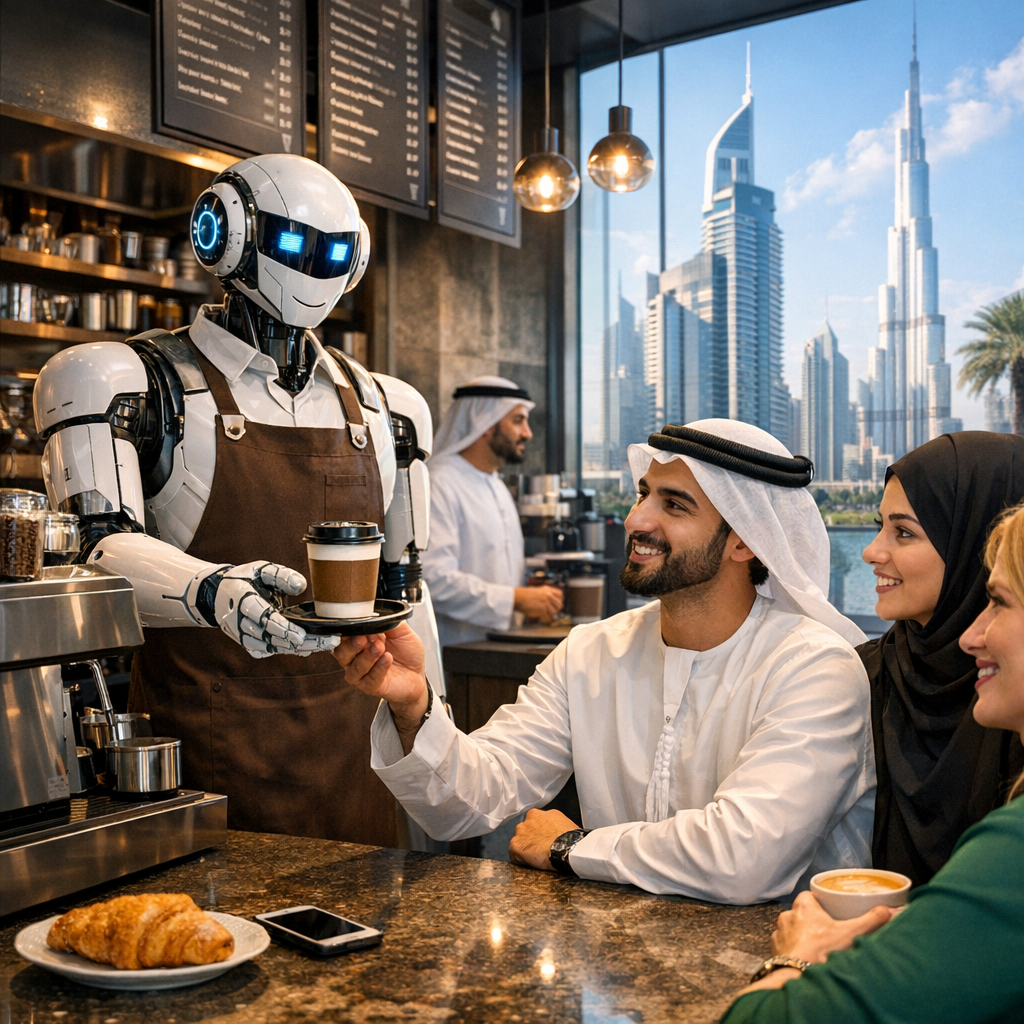
Dubai is becoming a city where artificial intelligence isn’t just a topic at conferences—it’s part of daily life. Whether you’re ordering coffee, paying bills, or choosing what to buy, AI startups and smart tools are quietly changing how people live, work, and shop.
AI startups bringing practical solutions
The city’s startup ecosystem is alive with companies turning AI into tools for daily use. The DXBStart directory tracks several firms focused on back-office automation, computer vision, real estate investments, fleet intelligence, and industry-specific platforms. Notable names include AppliedAI, Derq, G42, Prop AI, Saal.ai, and Haltia.AI. Many focus on areas like enterprise software and AI infrastructure. DLXStart shows Lyrie.ai raised $2 million in a pre-seed round this year. These are startups aiming for impact, not just hype.
AI working behind the scenes—and at the counter
AI is showing up in ordinary moments. At SOIL Café on Kite Beach, robot servers and AI assistants are helping deliver orders more efficiently. Labels and loyalty programs are managed with AI, too—whether it’s helping with product recommendations or beauty analyses. Even wellness tools use machine learning to tailor workouts and skin routines. These aren’t sci-fi luxuries anymore, but choices people can make today.
Shopping, payments and trust in the algorithm
Studies confirm what many Dubai residents already sense: AI is helping pick what to buy. According to a recent Visa-led study, about 85% of people in the UAE have used AI tools in shopping, such as comparing prices or choosing gift ideas. Over half say they’re comfortable letting an AI assistant shop for them, at least some tasks. Convenience appeals—but so does trust and transparency. People want systems that explain themselves, especially around payments and data use.
The role of government and collaboration
Dubai and other emirates have been building infrastructure and policies to support AI adoption. Registries of AI organisations—covering applications, tooling, platforms, infrastructure—are growing. Corporate partnerships, accelerators, and academic research are helping founders build solutions that respond to real needs. Dubai Silicon Oasis, for example, encourages cooperation across startups and larger companies to bring ideas from prototype to practice.
Everyday questions—and trade-offs
That said, not everyone is equally comfortable with all changes. Some people embrace AI for mundane tasks but resist replacing human interaction entirely—coffee from a robot can be fun, but not a full substitute. Others worry about security, privacy, or over-automation. As more of life becomes mediated through AI, these concerns come into sharper focus. It’s also clear that many early adopters are younger, digitally fluent, or have higher incomes. Ensuring AI works well for all remains a challenge.
Looking ahead
The direction seems clear: AI in Dubai is moving from pilot projects to utility. We can expect smarter public services (e.g. document renewals, scheduling, safety surveillance), more AI in consumer products (shopping, wellness, home automation), and deeper integration in sectors like real estate, transportation, health and finance.
As the tools improve, questions of trust, ethics, privacy and inclusion will grow louder. For everyday Dubai, the positive outcome would be a city where technology reduces friction—freeing people to focus more on being human.