

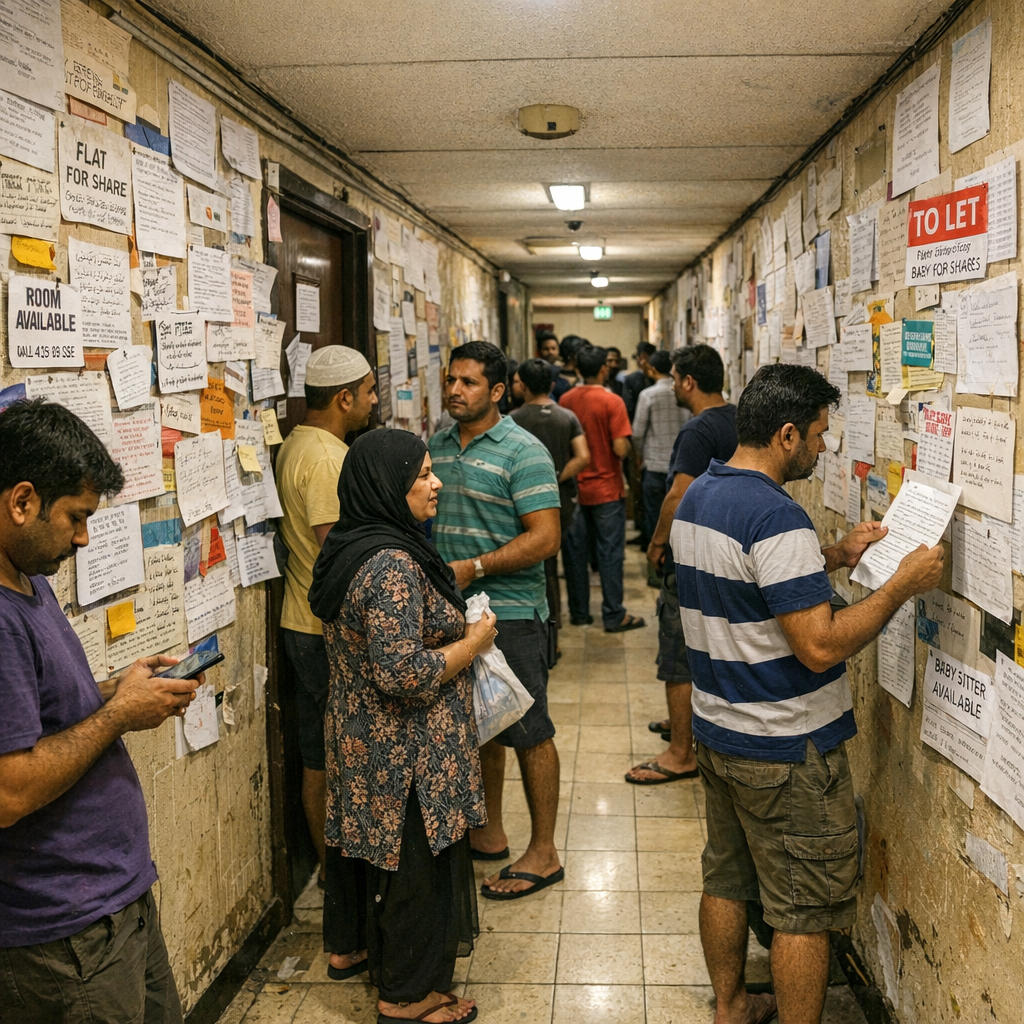
Dubai is confronting mounting concerns over overcrowded housing, especially where flats are partitioned to accommodate large numbers of tenants, often in unsafe conditions. Many long-time residents report noise, hygiene issues, and strained infrastructure in once‐quiet neighbourhoods.
What residents are saying
In places like Deira, Union Metro area and Discovery Gardens, families have described flats where more than 30 people share space originally meant for just a few. Elevator wait times stretch to 10-15 minutes, common areas grow untidy, and there are reports of partitions dividing living rooms into multiple sleeping cubicles. Rent increases for portions (“bed-spaces”) are cited to be considerable despite minimal facilities. These living arrangements are often seen as informal, and tenants say raising complaints yields little change.
New law aims to enforce better standards
In response, Dubai’s government issued Law No. (4) of 2026 regulating shared housing. It applies to owners, landlords, managers, and tenants across the emirate, with the aim of safeguarding owners’ and residents’ rights, and ensuring safe and healthy conditions in shared housing arrangements. Existing regulations are especially enforced for private development zones and free zones. Collective labour accommodation is excluded. Units licensed for shared housing or used for sub-leasing now need to follow safety codes and occupancy limits.
How enforcement is shifting
- Authorities are inspecting buildings for illegally partitioned flats, fire safety compliance, and overcrowding.
- Landlords and agents managing shared housing must register units with the Dubai Land Department’s shared housing registry.
- Residents have clearer legal recourse, with landlords facing penalties or revocation of rental licences in some cases.
Challenges ahead
While the new law makes the intention clear, residents worry about its rollout. Many people in such housing are low-income or migrants who have limited options. Crackdowns could displace tenants without available alternatives. There’s also concern over monitoring and transparency—how many units are truly compliant, and whether penalties will be enforced consistently.
What residents can do
- Keep records of rent payments and any lease or sublease agreements.
- Maintain communication with neighbours to document building conditions (e.g., lifts, corridors, common areas).
- Reach out to authorities: Dubai Land Department, Dubai Municipality, or Rental Dispute Centre, for housing complaints.
- Use registered community or residents’ groups to amplify concerns collectively and push for inspections.
As Dubai grows, balancing affordability, safety, and quality of life remains vital. This law is a step forward—but only with active oversight, community engagement, and fair access to decent housing for all will the desired improvements be felt in every building and neighbourhood.