

By Fatima Abdullah
AI’s Everyday Presence
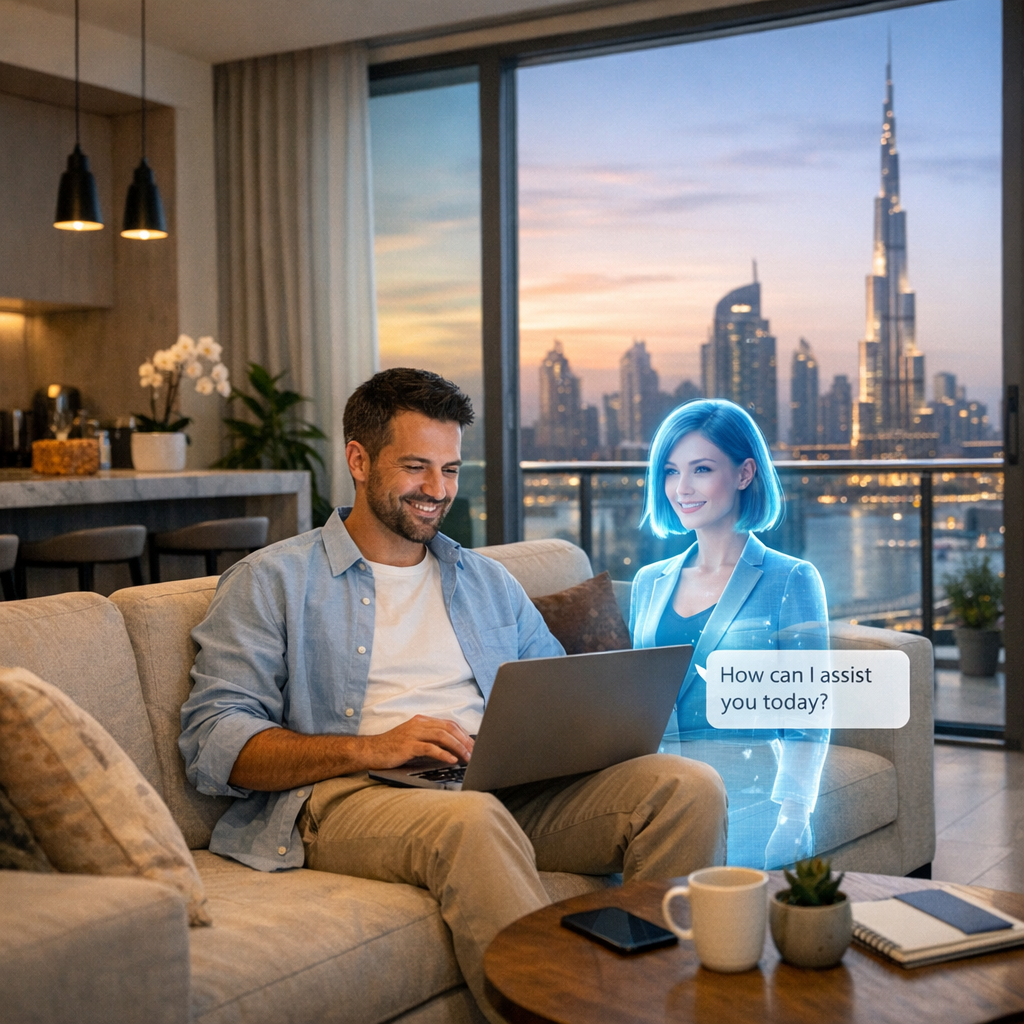
In Dubai, artificial intelligence isn’t just a futuristic ideal anymore — it’s baked into daily routines. Whether it’s biometric corridors at airports that allow travellers to move in seconds, robotic deliveries on neighbourhood pavements, or AI-powered dashboards guiding workplace wellness, many residents wake up to tools that streamline what once involved paperwork or long waits. These agents don’t replace human tasks entirely but manage enough repetitive or system-heavy work so people can focus on what humans do best. Evidence shows federal services in the UAE are routing a large share of requests through agentic AI platforms. Security, residency, travel — systems that used to require multiple steps are now faster, more seamless.
Smart Living inside Homes
Homes across Dubai, Abu Dhabi, and Sharjah are being transformed. Research covering hundreds of properties reveals smart lighting, climate control, and security systems are the fastest-growing features. Whole-home automation platforms are now more common than standalone smart gadgets. Protocols like Matter and Thread, which help devices communicate with one another, are becoming standard in many villa build projects. Retrofit installations (upgrading existing homes) are outpacing new-builds by a factor of three. And privacy is becoming more than a checkbox — one of the top concerns for buyers now is how much control, or local processing, devices allow.
Startups Driving Local Impact
Dubai’s AI startup scene is lively and diverse. Enterprise AI firms are addressing real challenges — whether it’s computer vision for safer roads, NLP tools for digital payments, or smarter systems to monitor construction fleets. Companies in applied AI, generative AI, and data intelligence are growing, many having raised funding or signed contracts locally. The wave of innovation is aligned with the UAE’s national strategies to integrate AI into education, governance, and public service delivery — meaning the tech available isn’t just being built here, it’s being used here.
What This Means for Residents
For everyday people, these shifts bring both opportunity and concern. Convenience is visible: shorter lines, home systems that stop cooling when no one’s there, devices that warn of security breaches. But so is the tension around data privacy, algorithmic transparency, and overreliance on automation. Some embrace the change eagerly, even for novelty (robotic café pickups or AI-powered skin consultations). Others find it comforting, yet wish for balance — human touch in services that matter most.
Toward a Tech-Enabled Balance
Smart adoption is key. When choosing gadgets or platforms, look for components that respect privacy, allow offline or local control, and integrate with existing smart systems. Recognizing the limits of automation helps too — not everything needs to be AI-enabled. As Dubai continues to grow into a lab for technology, its residents are shaping not only how tech is deployed, but how people live alongside it.
Dubai’s tech story is ongoing — a blend of policy ambition, startup energy, and daily life that’s ever more intertwined with smart machines. It’s about finding where AI makes life better, without letting it steal what makes life human.