

By Ali Al-Ameri
When I first arrived in Dubai, everything felt amplified—the skyline, the pace, the promise. But familiarity didn’t too. In this city of millions from everywhere, what makes something feel like “home”? Over time I’ve come to believe that it’s less about place and more about people, the daily rhythms we share, and how we let others in.
Building Community Beyond Surface Connections
Dubai is a city of movement. New faces, new jobs, new schools—change loops through the neighborhoods quicker than the desert wind. Many expats tell me it’s both the draw and the challenge: the idea of constant reinvention, and the deep desire to belong at the same time. I remember my first weekend walk in Al Fahidi, watching street artists prepare their work, elders gathering at the mosque courtyard, shopkeepers greeting each other by name. Those moments stuck.
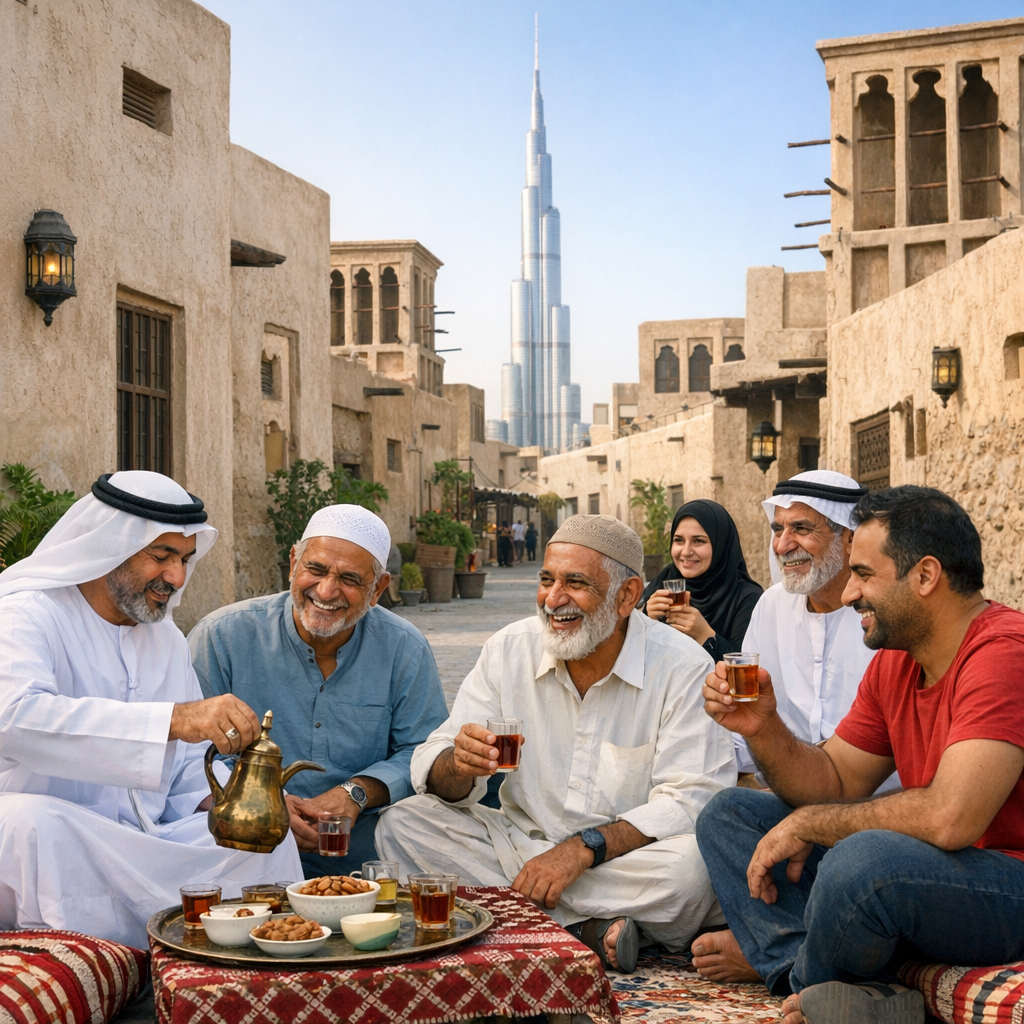
Belonging often grows not from big moments but small ones—sharing tea at a market stall, exchanging a greeting in Arabic even with imperfect pronunciation, helping carry groceries when the sun is high. These bits stitch us into the fabric of our district more firmly than just living in a desirable building or having access to cafes.
Where Identity Finds Its Ground
Dubai’s expatriate population is vast—statistics this year show nearly nine in ten residents are non-nationals. Many feel welcomed, and a similar share agree that locals are warm and friendly. But even among those figures, there’s often a separation; the ease of meeting others from similar backgrounds can both comfort and limit us. Sometimes our social circles are more bubbles than bridges.
Still, identity in Dubai is changing. We are “third-culture kids,” neighbors, co-workers, roommates from dozens of countries, sharing kitchens, customs, and stories. We bring bits of our homes here: recipes, greetings at sunrise, childhood games. But what I find most powerful is when we share more than traditions—concerns, vulnerabilities, failures, hopes. When someone admits they miss home, or worries they’ll never fit in, something real happens. In letting others see that, we knit something that feels like belonging.
The Role of Choice, Culture, and Respect
I’ve seen people stay for decades and others move on within a year—not because they could not afford it, but because they couldn’t feel it. What helps is being someone who seeks out connection, who tries something new: a public forum, a volunteering group, even a park cleanup. Dubai has platforms for voices—recent city forums and community initiatives give space for feedback, inclusion, and change.
Also crucial is respect—for local traditions and people, for those whose stories are different, for the sacred balance between adapting and staying true. We don’t all dress alike, speak alike, come from the same land—but the best moments here come when differences are met with kindness, when listening counts as much as speaking.
What I’ve Learned along the Way
- The things we avoid—loneliness, anonymity, feeling like a visitor—often come from staying within comfort zones.
- Opening up, being visible, making small efforts—learning greetings, attending a community event, giving feedback when it matters—builds roots.
- Home isn’t fixed; it moves with us as we grow, shape new relationships, and make our mark in neighborhoods.
Dubai won’t feel like home overnight. It might take a sunrise jog, a shared meal, conversations that stretch beyond small talk. But home, I believe, is always possible here—if we reach out, stay curious, and recognize the beauty in becoming part of something larger than ourselves.