

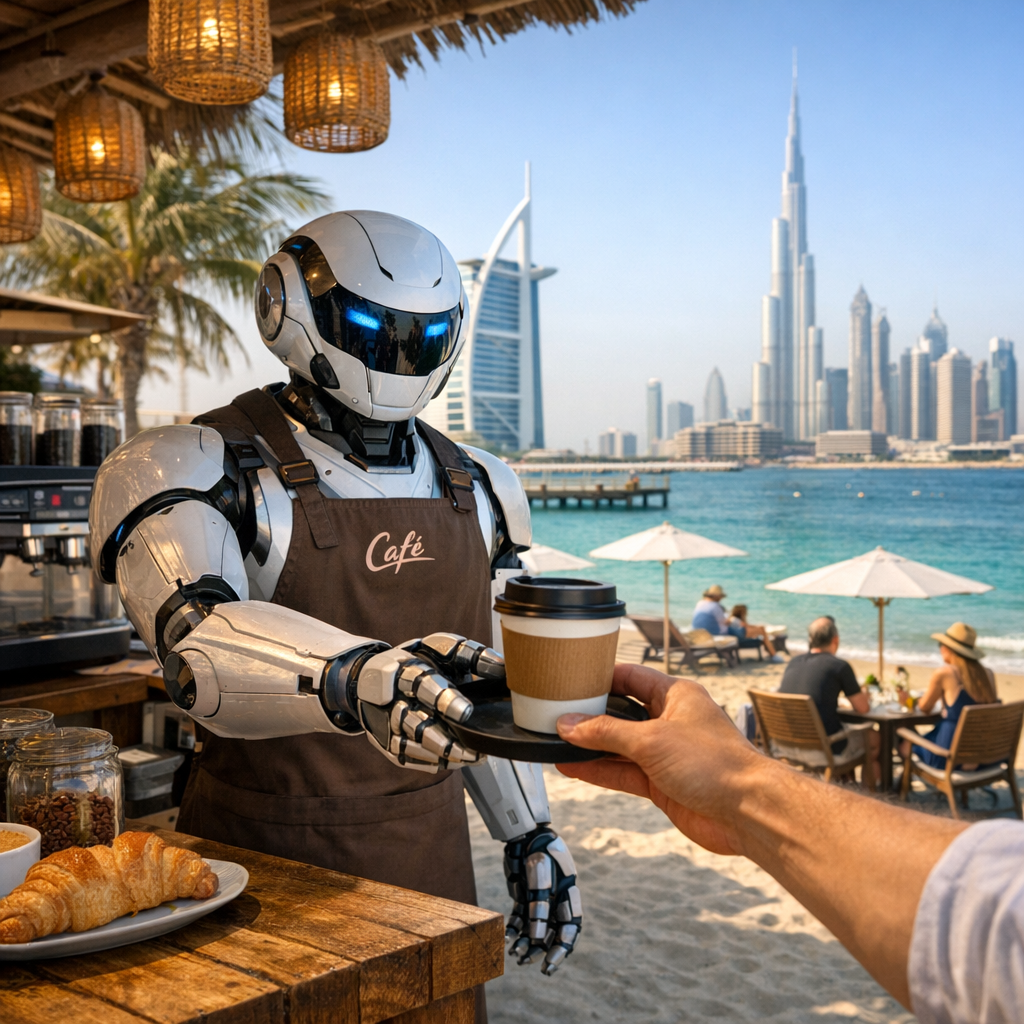
Dubai is no longer just a city where skyscrapers define the skyline—it’s becoming a place where artificial intelligence quietly reshapes daily life. From ordering coffee at a robot-powered cafe to startups using AI to unlock efficiencies, the technology is no longer optional—it’s weaving itself into routines, services, and small businesses across the city.
AI in daily life: Beyond the lab
Take for example SOIL Café at Kite Beach, where visitors are being served by AI-powered robots. At peak times, these systems are designed to reduce pressure on staff, automating simple tasks so humans can focus on experiences. Beauty salons offer AI skin analysis tools, fitness apps act as virtual trainers, and many people are using chat companions—all of these show how AI is gradually entering the personal sphere. These aren’t just novelties; they reflect how residents are becoming comfortable with AI in casual settings.
Startups leveraging AI to scale
In the UAE, many startups no longer treat AI as an add-on—they build with it from the ground up. Tasks that once required larger teams—like customer support, internal reporting, and sales lead qualification—are now handled through AI systems. Companies are using tools for predictive analytics and automations that spot trends in customer behavior and optimize operations. This way, smaller teams achieve more.
Support for these startups is strong. With programs and policies, alongside innovation hubs and government labs, there’s infrastructure, funding, and regulatory frameworks helping companies build AI safely and sustainably. The AI SMEs Ecosystem report found that regulatory agility and mature digital infrastructure are major enablers.
Real impact: How people benefit
Healthcare is seeing faster diagnoses and teleconsultations. Retail and e-commerce platforms use AI to forecast demand, manage inventory, and personalize offers. In education, AI tools are adapting content to students’ needs. Smart mobility systems optimize ride-hail routes and reduce congestion. All of these bring convenience, save time, and improve services.
Still, it’s not without challenges. Concerns around privacy, how much automation is acceptable, and how to maintain human connection are common. Many residents confidently embrace convenience, but also draw lines—for example preferring human interaction in healthcare or emotional support situations. Policy makers and companies are navigating those boundaries.
Looking ahead: What to watch
- AI first-startups are likely to continue growing, especially in deep tech, biotech and sustainability.
- More AI tools will appear in government services, making everyday tasks smoother—from licensing to utilities.
- Ethical AI practices and data governance will get more attention, as residents expect respect for privacy and transparency.
- Gadget innovation will bring smart wearable devices and better AI-assistants for home use.
For now, AI in Dubai is not about fireworks—it’s about small, visible shifts. And those shifts, from robot baristas to smarter apps, are creating a future many already live in today.