

By Khalid Al-Qasimi
Understanding Dubai’s Climate Patterns
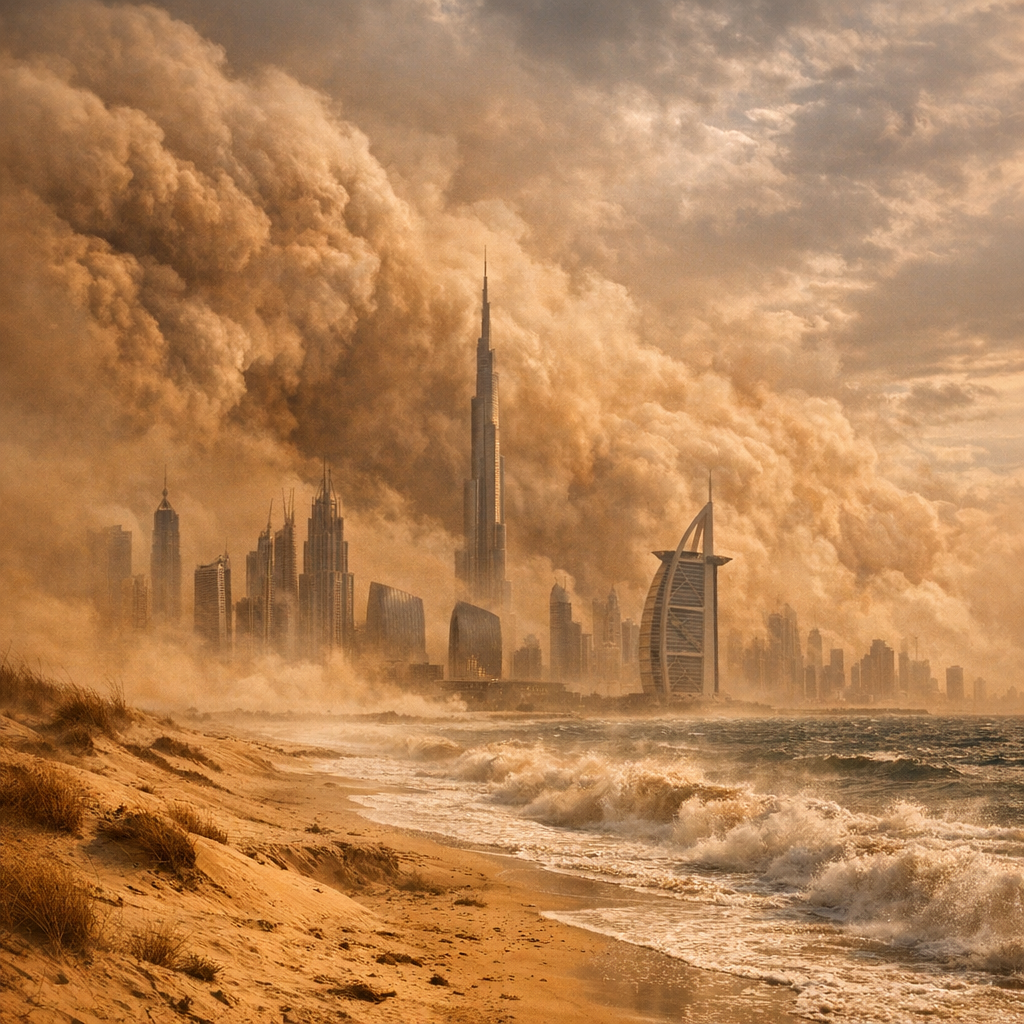
Dubai sits in a hot desert climate, featuring two main seasons: a long, sweltering summer from late April to early October, and a cooler winter stretching from late October through mid-April. Summers bring extreme heat, high humidity, frequent gusts of wind and dust; winters offer milder days and much cooler nights, especially in inland and desert areas. Rainfall is infrequent and occurs mostly between November and March in brief thunderstorms and showers. Average yearly precipitation is low, and summer months are almost always dry. Sea temperatures follow the air, climbing during summer and cooling off in winter. As a result, the Ultraviolet (UV) Index remains high for much of the year.
Emerging Environmental Stresses
Heat and Humidity Extremes
As global temperatures rise, Dubai is experiencing more frequent heatwaves and increasingly humid summers; nights are staying warmer. These extremes threaten human comfort, public health, and can overburden cooling infrastructure.
Water Scarcity and Resource Pressure
The UAE is among the world’s most water-stressed countries. With limited renewable freshwater sources, the nation depends heavily on desalination, wastewater recycling, and water-use efficiency in agriculture and urban planning. Heavy reliance on these systems comes with environmental trade-offs, including energy demand and brine discharge.
Rising Rainfall Intensity and Flash Flooding
Although rain events are rare, recent studies show that intense rainfall episodes—when they occur—are becoming stronger and more damaging due to urban growth, land-use changes, and climate change. Runoff in built-up areas struggles to drain quickly, raising flood risk during sharp downpours.
Sea Level Rise and Coastal Challenges
Dubai’s coastal infrastructure, island developments and low-lying areas face growing threats from sea level rise. Saltwater intrusion can also affect groundwater, and warmer sea temperatures stress marine ecosystems like reefs and mangroves.
What’s Being Done: Adaptation & Policy
Dubai and the UAE have launched several initiatives to respond to these climate pressures. Key examples include the National Climate Change Plan 2017-2050, efforts to improve water management through desalination and reuse, and expanding urban infrastructure like drainage systems to reduce flood risk. Policy tools aiming for net-zero greenhouse gas emissions by 2050 are also being developed, along with improvements to building standards and emissions regulations.
What You Can Do Locally
- Conserve water: take shorter showers, reuse greywater for gardening, support water-efficient landscaping.
- Reduce heat exposure: stay hydrated, avoid outdoor activity during midday heat, use shading and reflective materials.
- Support green spaces: plant native, drought-tolerant species; green roofs and trees help cool city streets.
- Reduce carbon footprint: use public transport, energy-efficient appliances, and cut down single-use plastics.
Why It Matters for Everyday Life
The changing climate in Dubai touches daily life—from how we design buildings and roads to how comfortable we feel stepping outside. Environmental health impacts—like air quality, water supply, and heat stress—are intertwined. By understanding climate trends and supporting smart policies, every resident contributes to making our city more resilient and livable.