

By Aisha Khalifa
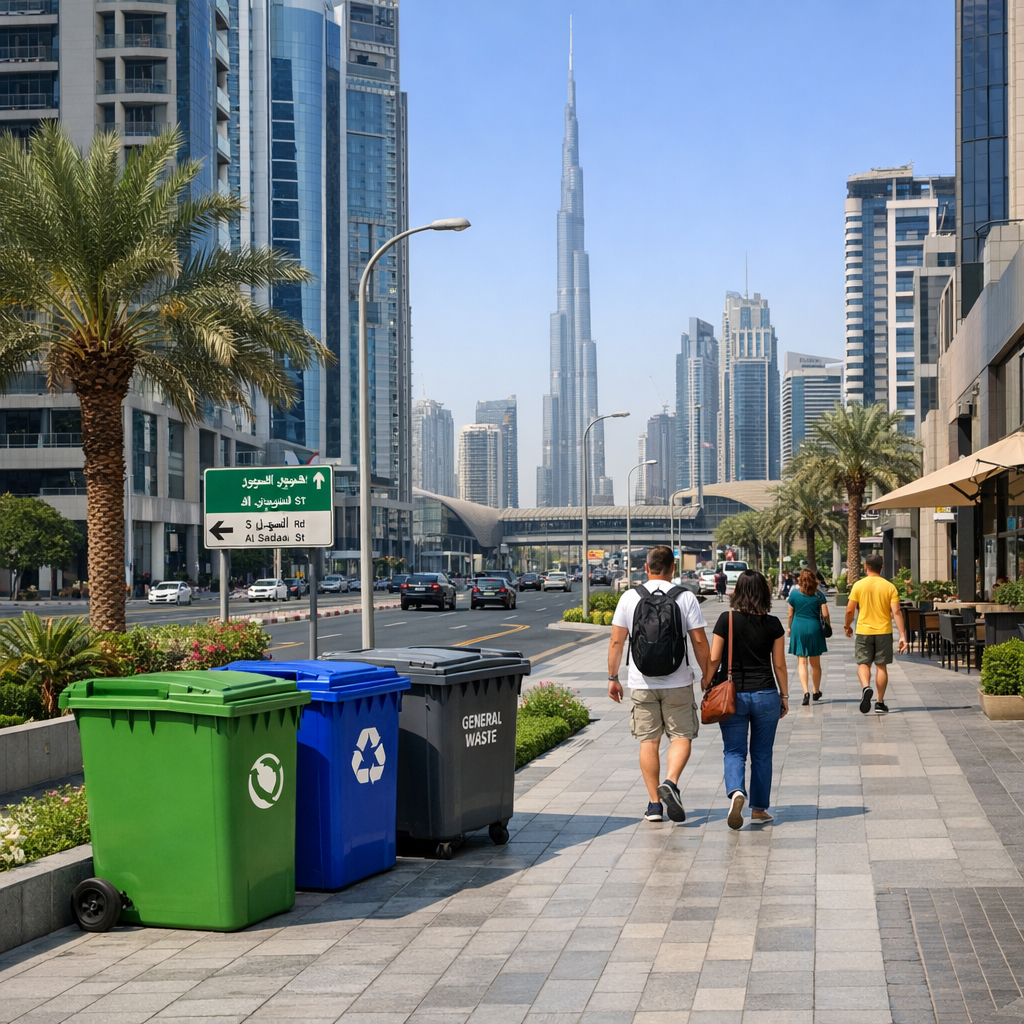
Dubai is seeing a wave of city-level updates that are quietly reshaping life in its residential communities. From waste reduction to safer street design, several municipal initiatives are helping make neighbourhoods cleaner, more liveable places. Here’s what’s happening now—and what residents can expect in the years ahead.
Smart Cameras to Clean Up Public Spaces
The Dubai Municipality has introduced a pilot program using smart cameras installed on waste collection and transport vehicles, aimed at monitoring cleanliness in streets, public squares, and near waste containers. These cameras use AI to detect littering, dumping of bulky waste, and other violations—and feed the data into a digital dashboard so that field teams can respond more quickly. Fines can reach AED 500 for littering, under the new regulation. Though still in its early phase, the project is part of the wider Integrated Waste Management Strategy 2041, which ties into Dubai’s goal to raise the efficiency of public cleanliness oversight.
Circle Dubai: Residents Leading Sustainability Efforts
In parallel, the “Circle Dubai” initiative, working in partnership with Furjan, is mobilising community members to adopt zero-waste practices. The program includes a digital education platform offering interactive content and simulations, and Sustainability Ambassadors from neighbourhoods who help run local awareness campaigns and activities. The aim is to build lasting behaviour changes in how households shop, dispose of waste, and recycle.
Upgraded Road and Mobility Plans to Connect Communities
The Roads and Transport Authority (RTA) has approved a five-year “soft mobility” plan that will upgrade walking, cycling, and first/last-mile connections in 25 residential areas and 63 public transport stations by 2030. This includes new cycling tracks, raised pedestrian crossings, shaded pathways, and improved access for people of determination. Early implementations have already begun in areas such as Dubai Marina, Al Murar, and Naif.
Major Corridor Project Promises Shorter Trips and Fewer Jams
One of the most significant infrastructure pledges is the Latifa bint Hamdan Corridor Development Project, a 12 km strategic roadway linking key arterial roads across Dubai. On completion, the upgraded corridor—with multiple bridges and tunnels—will reduce travel time between Umm Al Sheif Street and Emirates Road by more than half. The project also includes an extension of cycling paths, helping integrate sustainable mobility options alongside vehicular traffic.
What Residents Can Do
- Separate recyclables at home where collection services allow.
- Dispose of large or bulky waste properly, reporting illegal dumping when spotted.
- Use pedestrian-friendly routes and cycling tracks when available.
- Engage locally—join or support community clean-ups and awareness drives.
- Provide feedback during municipal consultations on issues like drainage, housing, and parks—Voices in neighbourhoods like Al Warqa show this can make a difference.
These changes show city officials are increasingly focusing on the quality of daily life in local neighbourhoods—balancing growth with thoughtful design, cleanliness, and sustainability. As these projects unfold over coming years, they’ll likely impact how people live, move, and feel in their own streets.