

By Fatima Abdullah
Everyday AI You Already Use
You might not notice, but AI is already part of many daily routines in Dubai. Whether it’s through government services or apps on your phone, many essential tasks are now easier, faster, and more intuitive.
- Seamless government services: Platforms like Salama let residents renew visas and manage residency without long lines—these systems use AI agents so much that half of federal services are expected to run through AI by 2028.
- Delivery on the sidewalk: Delivery robots are now active in neighbourhoods like Sobha Hartland, moving beyond pilot status into real-life operations.
- Wellness monitoring: Corporations like ADNOC are using workplace wellness dashboards that track activity and health metrics; some report fewer sick days since implementation.
Startups Leading Local Innovation
Dubai’s startup ecosystem is growing fast, especially for companies turning ideas into real solutions.
- Top AI funding rounds: In 2026, seven AI startups in the UAE raised over USD 100 million collectively. Notable names include CNTXT AI with its USD 60 million Series A, 1001 with USD 30 million, and Algebra AI with USD 7 million.
- Applied rather than speculative: Many new firms work on solving practical problems—healthcare, real estate, finance—rather than just futuristic concepts. For example, XPANCEO is developing smart lenses that could serve as interfaces for extended reality and health monitoring.
- AI startup directory: There are currently 14 funded AI-focused startups based in Dubai, working in areas like NLP (natural language processing), computer vision, digital operations, and real-estate intelligence.
Smart Gadgets That Make a Difference
Some gadgets go beyond tech showpieces and become genuine helpers in real life:
- Health wearables: Smart watches and health monitors that measure heart rate, sleep quality, and even SpO₂ help people stay informed about their well-being without constant doctor visits.
- Adaptive earbuds and AI smartphones: Devices now translate conversations, filter noise based on surroundings, or tailor notifications—making travel, work, and social time more fluid.
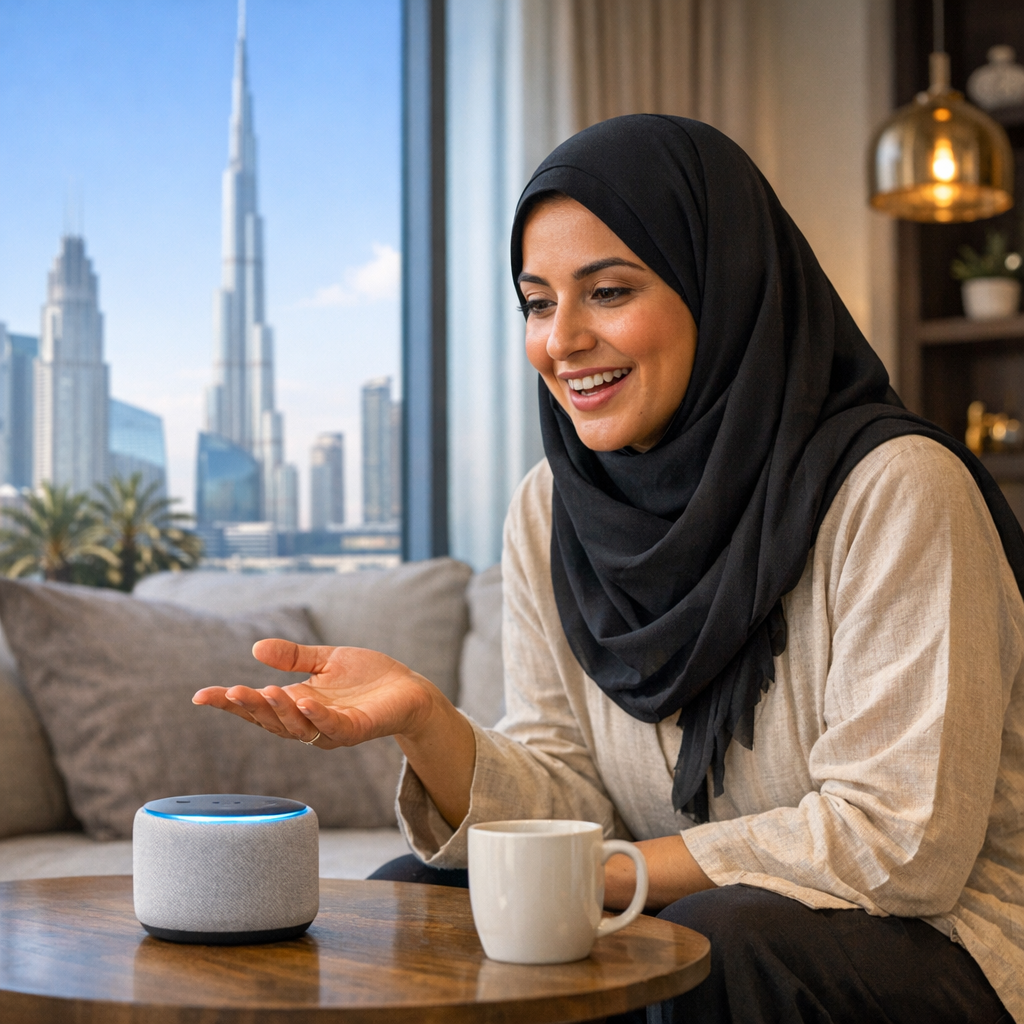
- Home-connected devices: Smart plugs, energy-monitored appliances, voice assistants—gadgets that save energy, reduce waste, or simply make tasks like lighting or climate control hands-free.
Challenges & What’s Next
Even as AI becomes more present, there are questions to address.
- Privacy & oversight: With more services using biometric data and agentic AI, ensuring that data is handled responsibly is critical.
- Environmental cost: AI infrastructure—data centres, cooling systems—requires energy and water, which are significant concerns in a region like ours.
- Bridging the access gap: Not everyone has the same access to advanced devices or high-speed internet. Ensuring equitable access will determine how broadly helpful AI can be.
When you next renew your visa via app, get a delivery without leaving home, or use a voice assistant to manage your home, remember: you’re living through quietly transformative tech shifts. These aren’t just innovations—they’re becoming the fabric of everyday life in Dubai.