

By Khalid Al-Qasimi
Dubai’s weather has long been defined by sun, heat and desert aridity — but recent research shows the familiar patterns are shifting. Here’s a guide to the most important changes in temperature, rainfall, air quality and the urban environment, and what they mean for people living in the city.
Rising Temperatures All Year Round
Recent climate analyses indicate that Dubai has warmed by around +2.5°C between 1940 and 2025. Average annual temperature now stands near 27.4°C, with both daily highs and nighttime lows trending upward, especially during summer. Nights during this season are starting to feel hotter — dubbed “tropical nights” — with minimums regularly above 20°C. These changes make it harder to find relief even after sunset.
Rainfall: Rare but More Intense
Traditionally, most of Dubai’s modest rainfall falls in winter months. January is typically the wettest month. On average, the city records around 70-80 mm of rain per year, over fewer than 15 days annually. However, extreme downpours — like those seen in April — are becoming more intense, overwhelming drainage and threatening floods in low-lying areas. Such episodes are increasingly tied to climate change.
Dust, Pollution and Airborne Hazards
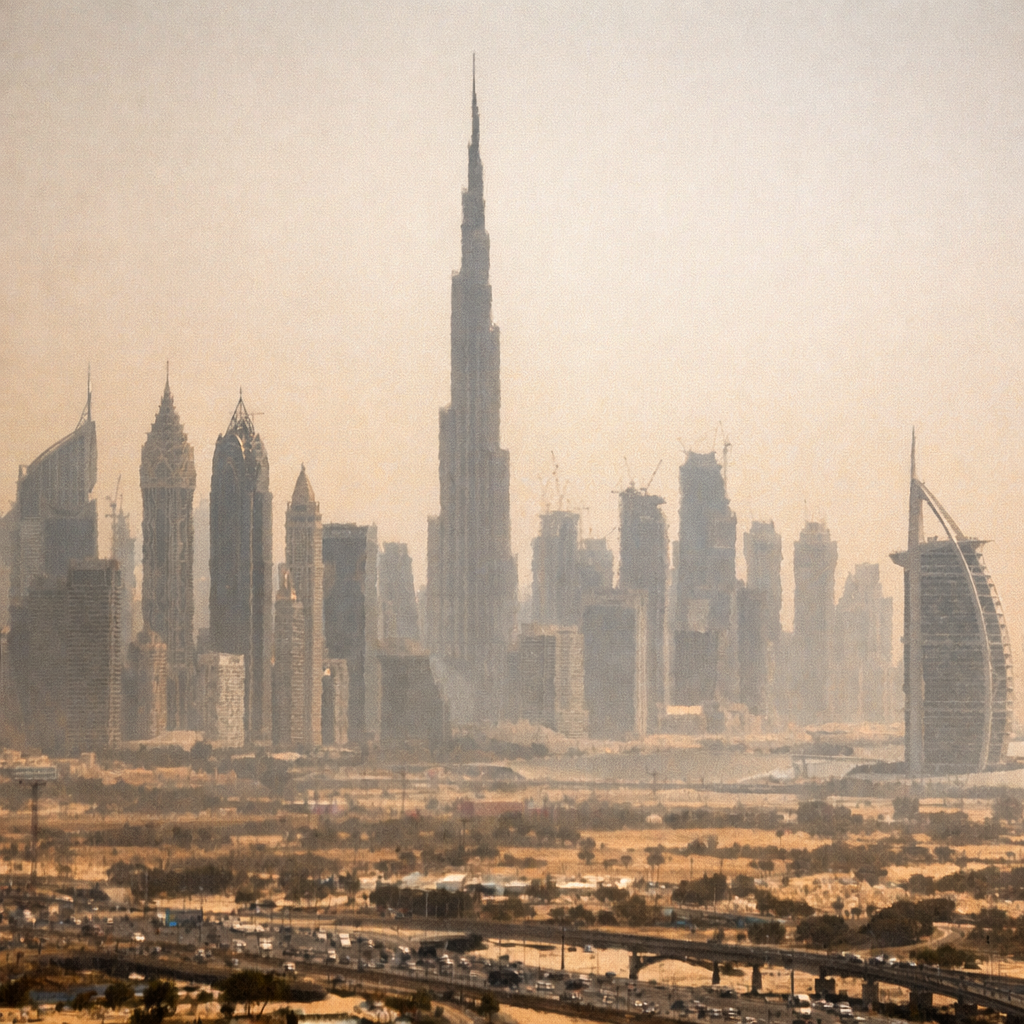
Dubai’s air quality is influenced heavily by dust storms, desert dust, and regional aerosol levels. During summer months, aerosol optical depth (AOD) can spike, driven by high temperatures, dry conditions, and wind patterns like Shamal dust winds. Such conditions raise particulate pollution, affecting respiratory health and outdoor visibility.
The Urban Heat Island Is Intensifying
The built environment is making Dubai even hotter. In densely urbanized zones, nights are significantly warmer than in suburban or rural desert areas due to thermal mass from buildings and pavement. This urban heat island effect becomes especially strong during heat waves, exacerbating discomfort and increasing energy demand from cooling systems.
Health, Lifestyle, and Planning: What You Can Do
- Stay cool and safe: Hydrate, limit outdoor activities during late afternoon and night, especially during summer.
- Air quality alerts: For sensitive individuals—children, elderly or those with asthma—keep windows closed and use air purifiers when dust storms spike.
- Urban greening: More trees and green roofs can lower temperatures, improve shade, and help with air quality.
- Infrastructure improvements: Better drainage, cooler building materials, and design that allow airflow can make neighborhoods more resilient.
- Watch the forecasts: Short-term weather predictions may suddenly become more important as intense rainfall, dust, and heat waves all grow more frequent.
Looking Ahead
While Dubai’s climate remains arid and challenging, the trends point to a more extreme future: hotter summers, hotter nights, more intense rainfall when it comes, and increasing strain from dust and air pollutants. Understanding these changes and adapting will be essential for maintaining public health, comfort, and urban livability.